Alar Cartilage
Cartilago alaris
Overview
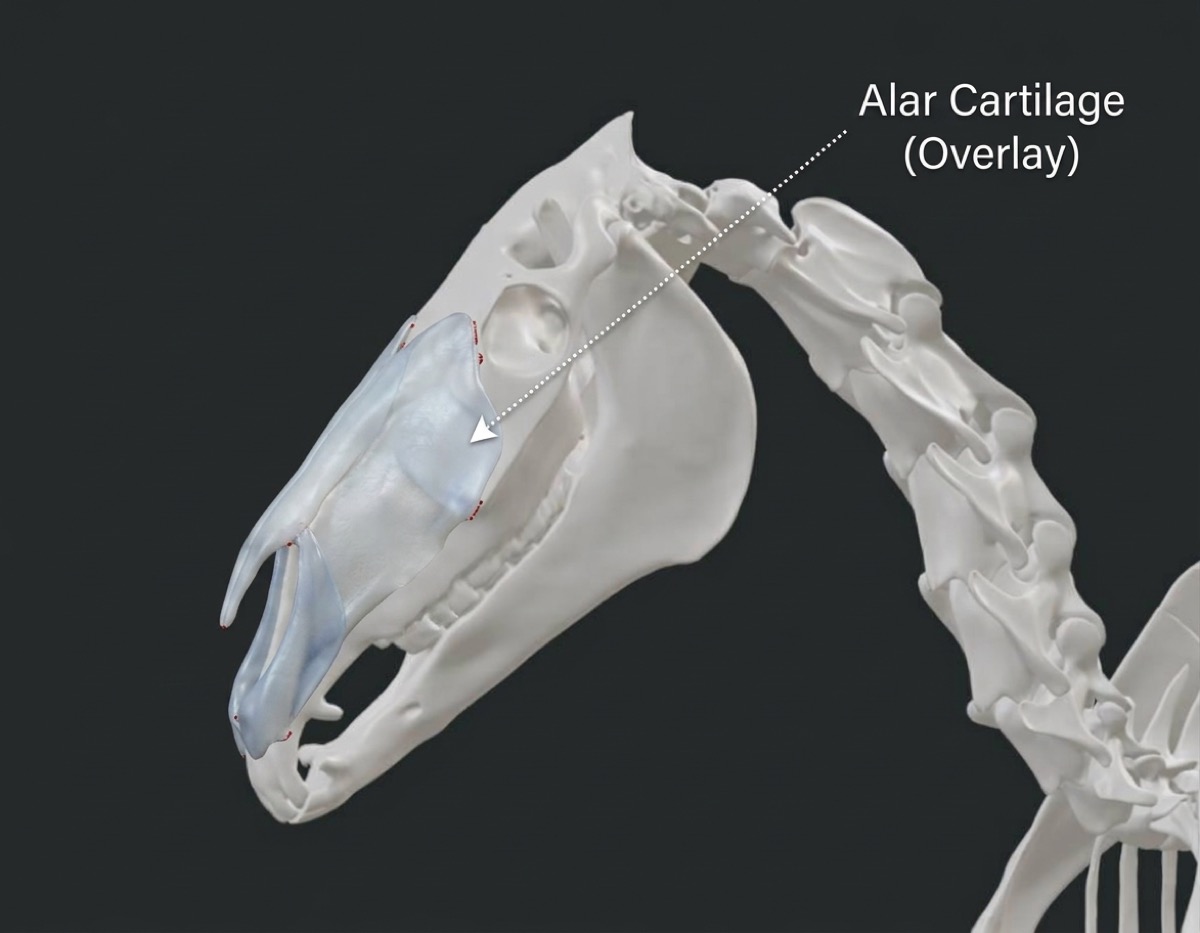
The alar cartilage (cartilago alaris) is an important nasal cartilage in the horse. It consists of a broad lamina (plate) and a projecting cornu (horn) that together form the structural skeleton of the external naris. The cartilage is continuous caudally with the ventral conchal cartilage and is covered by skin and mucosa. At rest the equine nostril is comma-shaped; during exercise the dilator muscles (transversus nasi, lateralis nasi, caninus, dilator naris apicalis, and levator nasolabialis) actively elevate and abduct the alar cartilage, converting the nostril to a more circular aperture and increasing its cross-sectional area. This dramatic increase is essential because the horse is an obligate nasal breather; the long soft palate prevents oral breathing. The alar cartilage also helps define the false nostril (diverticulum nasi), a blind dorsal pouch. Functionally, adequate rigidity and muscular control of the alar cartilage minimize inspiratory resistance at high airflow rates. When the cartilage is insufficiently rigid or the dilator muscles fatigue, dynamic collapse of the alar folds or external nares can occur, producing characteristic fluttering noise and elevated expiratory nasopharyngeal pressures. Alar-fold collapse has been reported in several breeds, including Standardbreds. Diagnosis is confirmed by exercising endoscopy or temporary mattress sutures that hold the alar folds dorsally; surgical resection of redundant alar folds frequently restores normal airway pressures and performance. The cartilage itself has limited intrinsic blood supply and relies on the overlying soft tissues; trauma or congenital weakness can therefore compromise its supportive role.
Clinical Significance
Dynamic alar-fold or external-nares collapse is diagnosed by high-speed treadmill or overground endoscopy and by the temporary-suture test. Nasopharyngeal airway-pressure measurements show elevated expiratory pressures that normalize after dorsal fixation or resection. Surgical options include complete alar-fold resection (standing or under anesthesia) using traditional or bipolar vessel-sealing devices. Prognosis for return to racing is good in uncomplicated cases. Congenital weakness or trauma to the cartilage itself is less common but can produce permanent asymmetry. Differential diagnoses include other dynamic upper-airway disorders (dorsal displacement of the soft palate, nasopharyngeal collapse, laryngeal hemiplegia).
What Horse Owners Should Know
Watch for flaring nostrils that collapse or flutter noisily during canter or gallop, especially if the horse seems to tire quickly or makes a buzzing sound. Temporary sutures placed by a veterinarian can test whether alar-fold collapse is the problem. Keep the nostrils clean and free of flies; any persistent discharge or asymmetry should be examined.
Frequently Asked Questions
What are the clinical concerns for the Alar Cartilage?
Dynamic alar-fold or external-nares collapse is diagnosed by high-speed treadmill or overground endoscopy and by the temporary-suture test. Nasopharyngeal airway-pressure measurements show elevated expiratory pressures that normalize after dorsal fixation or resection. Surgical options include complete alar-fold resection (standing or under anesthesia) using traditional or bipolar vessel-sealing devices. Prognosis for return to racing is good in uncomplicated cases. Congenital weakness or trauma to the cartilage itself is less common but can produce permanent asymmetry. Differential diagnoses include other dynamic upper-airway disorders (dorsal displacement of the soft palate, nasopharyngeal collapse, laryngeal hemiplegia).
What should horse owners know about the Alar Cartilage?
Watch for flaring nostrils that collapse or flutter noisily during canter or gallop, especially if the horse seems to tire quickly or makes a buzzing sound. Temporary sutures placed by a veterinarian can test whether alar-fold collapse is the problem. Keep the nostrils clean and free of flies; any persistent discharge or asymmetry should be examined.
Explore This Structure in 3D
See the Alar Cartilage on our interactive 3D horse model. Open 3D Model