Horse Colic Surgery: What to Expect, Survival Rates, and Real Costs
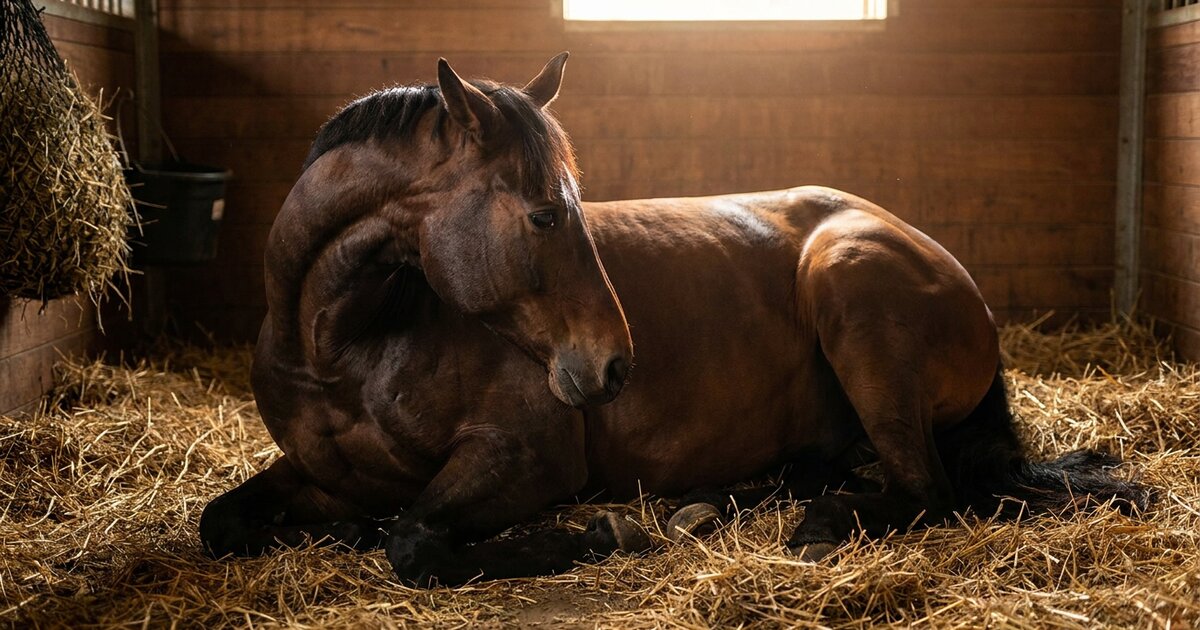
The vet is on the phone with a referral hospital, your horse is pawing and looking at his flank, and someone is asking whether you want to "consider surgery." That is one of the hardest moments in horse ownership, and it arrives with almost no warning. Understanding what colic surgery involves before you are ever standing in that stall gives you a real advantage, because the decision is far easier when it is not the first time you have thought about it. For more details, see our guide on How to Recognize and Respond to Horse Colic. For more details, see our guide on Equine Colic. For more details, see our guide on Colic Emergency Signs. For more details, see our guide on Colic First Aid.
When does colic actually need surgery?
Colic needs surgery when the problem is mechanical rather than functional, meaning something is physically blocking or twisting the intestine and medicine alone cannot undo it. The large majority of episodes are gas, spasm, or a simple impaction that responds to pain relief, fluids, and time. Surgery enters the picture in the minority of cases where the gut is displaced, trapped, twisted (a volvulus), or strangulated so that blood can no longer reach a section of bowel. You may also find our article on Thrush in Horses helpful.
The most important idea for owners is the difference between a simple obstruction and a strangulating lesion. A simple obstruction, like an impaction or a displacement, blocks the passage of ingesta but leaves the blood supply intact. A strangulating lesion, such as a twist or a fatty tumor (a lipoma) wrapped around a loop of small intestine, cuts off circulation. Strangulated tissue begins to die within hours, which is exactly why colic surgery is so time sensitive. The longer it goes uncorrected, the more gut may need to be removed and the worse the outlook becomes.
How does the vet decide surgery is needed?
The decision rests on a handful of specific findings rather than a single test. No one number sends a horse to surgery, but several red flags stacked together make the case clear. These are the ones veterinarians weigh most heavily.
- Uncontrollable pain. Pain that returns quickly and severely despite appropriate medication is one of the strongest indicators that a horse needs surgery.
- Heart rate. A persistently elevated heart rate is a warning sign. In one large case review, non-survivors had a median heart rate of 72 beats per minute compared with 52 in survivors, which shows how much this single number reflects the severity underneath.
- Nasogastric reflux. When the vet passes a tube up the nose and into the stomach and retrieves several liters of fluid, it signals a backup in the small intestine. Horses cannot vomit, so this fluid has nowhere to go and can become life threatening.
- Rectal palpation findings. Feeling distended loops of bowel, a displacement, or a tight band of tissue points toward a surgical problem.
- Belly tap (abdominocentesis). A sample of the fluid in the abdomen can show rising protein and changing color when gut tissue is being damaged.
- Ultrasound and gut sounds. Distended, motionless loops on ultrasound and a silent abdomen on the stethoscope both suggest the gut has stopped working normally.
| Feature | Medical colic | Surgical colic |
|---|---|---|
| Pain | Mild to moderate, eases with medication | Severe, returns quickly despite drugs |
| Heart rate | Usually under 50 bpm | Often above 60 bpm and climbing |
| Gut sounds | Present, sometimes increased | Often absent (a "quiet" belly) |
| Response to treatment | Improves and stays improved | Little or no lasting improvement |
| Underlying problem | Gas, spasm, or simple impaction | Twist, trapped loop, or strangulation |
What happens when you arrive at the referral hospital?
The first thing the hospital team does is repeat the exam, because a horse's status can change dramatically during a trailer ride. Even if your regular vet already passed a tube and did a rectal, the surgeons will do their own assessment so they are working from the most current picture. Expect them to check heart rate and gums, listen to the abdomen, pass a stomach tube again, palpate rectally, run bloodwork, and often perform an abdominal ultrasound and a belly tap.
An intravenous catheter goes into the jugular vein so the team can give fluids and medications quickly. Bloodwork looks at hydration and circulation through values like packed cell volume and total protein, which help the surgeons judge how sick the horse truly is. This whole workup usually takes well under an hour, because if surgery is needed, minutes matter.
This is also where the honest conversation about cost, prognosis, and your wishes happens. Good hospitals talk you through the likely findings, realistic outcomes, and financial commitment before anyone heads to the operating room. It is a heavy conversation, but far better to have thought about your limits in advance.
What actually happens during colic surgery?
Colic surgery is an exploratory laparotomy, which means the surgeon opens the abdomen to find the problem and correct it. The horse is placed under general anesthesia and positioned on its back. The surgeon makes an incision along the ventral midline, the lowest point of the belly directly along the middle, because this gives the best access to the intestines while passing between muscle groups rather than cutting through them.
Once inside, the surgeon works systematically through the abdomen to locate the trouble. What happens next depends entirely on what they find:
- An impaction may be gently broken down and moved along, sometimes after making a small controlled opening in the gut to remove the blockage.
- A displacement or twist is repositioned or untwisted so normal flow and blood supply are restored.
- An enterolith (a stone that forms in the gut) is removed through a controlled incision in the bowel wall.
- Dead or dying intestine from a strangulation is cut out (a resection) and the healthy ends reconnected (an anastomosis). This is the most involved scenario and lengthens both surgery and recovery.
The abdomen is checked, cleaned, and closed in layers. From the start of anesthesia through recovery, the entire process commonly takes two to four hours. One of the riskier moments is anesthetic recovery itself, when a heavy horse has to stand back up on legs that are not fully coordinated. Hospitals use padded recovery stalls to protect the fresh incision during those first shaky attempts to rise.
What does recovery and aftercare look like?
Recovery from colic surgery is a months-long project, not a matter of days. The incision through the abdominal wall (the linea alba) needs time to regain strength, and rushing that is how hernias and breakdowns happen. Most horses need a minimum of three months of restricted activity before any real return to work.
The first days in hospital
The horse stays hospitalized for roughly 5 to 10 days in uncomplicated cases, longer if there are problems. The team watches for pain, monitors gut function, reintroduces food slowly, and manages the risk of complications. This is the window when issues like reflux, fever, or a return of colic tend to appear.
Home and the months after
- Month 1: Strict stall rest with short hand walks. Daily incision checks for heat, swelling, or discharge.
- Month 2: If healing is clean, small paddock turnout and controlled walking may begin.
- Month 3: Larger turnout is usually allowed, and light work often starts near the end of this period.
- Months 4 and beyond: A gradual return to full work over several weeks, guided by your veterinarian.
Aftercare also means feeding changes, monitoring manure output, and watching for complications for months. Common post-operative issues include incisional infection (roughly a quarter of cases in some studies), another bout of colic, reflux, diarrhea, and less commonly an incisional hernia. Horses over about 20 years carry a higher risk of incision infection, though age by itself is not a reason to rule out surgery.
What are the survival rates and prognosis?
For horses that make it through anesthesia, survival to hospital discharge is commonly about 80 to 85 percent, and this figure has improved substantially over the decades. Two things drive most of the variation: whether the lesion was strangulating, and which part of the gut was involved.
When you count every horse that goes to surgery, including those too compromised to save, the numbers are more sobering. A multicentre study of 451 horses reported overall short-term survival of about 68 percent, but 80 percent among horses that recovered from anesthesia. A review of 254 cases found 61 percent recovered from anesthesia and 52 percent survived to discharge, climbing to 83 percent counting only horses that made it off the table. The gap reflects how sick some horses already are on arrival.
Lesion location matters enormously.
- Large colon problems such as displacements, impactions, and enteroliths often carry an excellent prognosis, with discharge above 90 percent in favorable cases.
- Small intestinal strangulations are tougher, with higher complication rates and often the need to remove damaged bowel.
The long view is encouraging for horses that recover well. In a Finnish study of operated colic horses, about 84 percent of discharged horses returned to their previous or intended activity, and roughly 79 percent regained their pre-surgery performance level. Other data commonly cite around 75 percent returning to their prior level of athletic work within a year. Colic surgery is genuinely no longer a death sentence or the end of a career for most horses that come through it.
What does horse colic surgery really cost?
A straightforward colic surgery commonly costs in the range of $5,000 to $10,000, while complicated cases involving bowel resection or longer hospital stays can climb to $15,000 to $25,000 or more. The wide spread reflects real differences: the size of the horse, the complexity of the lesion, how long the horse stays in intensive care, and whether complications develop.
Surveys have repeatedly found that owners underestimate this cost, which is exactly the trap you want to avoid. The decision is far harder to make well at 2 a.m. in a hospital hallway than around your kitchen table months earlier. Two steps make an enormous difference. First, look into colic surgery insurance or a reimbursement plan, several of which cover a portion of surgical costs for a modest annual premium. Second, decide in advance what you would want for each of your horses, so the people caring for your horse in an emergency are not left guessing.
Frequently Asked Questions
How quickly does a horse with a strangulating colic need surgery?
As fast as possible, ideally within a few hours. When blood supply to a section of gut is cut off, the tissue starts to die within hours, and every hour of delay can mean more bowel needing removal and a worse prognosis. This is why quick recognition and rapid referral matter so much.
Is my horse too old for colic surgery?
Age alone is not a reason to rule out surgery. Studies show that older horses can have survival rates comparable to younger ones. The main age-related concern is a higher risk of incisional infection in horses over roughly 20 years, which your veterinary team will factor into aftercare rather than treat as a dealbreaker.
Can a horse return to riding and competition after colic surgery?
Yes, for most horses that recover well. Research shows roughly 75 to 85 percent of discharged horses return to their previous or intended activity, and many regain their former performance level. The path back typically takes at least three to four months of controlled rehabilitation guided by your veterinarian.
Why does the vet keep passing a tube up my horse's nose?
The nasogastric tube both diagnoses and treats. Because horses cannot vomit, fluid can build up in the stomach behind an intestinal blockage and become dangerous. Retrieving several liters relieves that pressure and, at the same time, tells the vet there is likely a small intestinal problem that may need surgery.
Does colic surgery mean my horse will just colic again?
Not necessarily, though a repeat colic episode is one of the more common post-operative concerns and can occur in a notable minority of cases. Many horses go on to live long, comfortable lives after surgery. Good aftercare, careful feeding, and a management plan from your veterinarian all help reduce the risk.
Sources
- Merck Veterinary Manual. Colic in Horses (Horse Owners edition). Merck & Co.
- Spadari, A. et al. (2023). Short-Term Survival and Postoperative Complications Rates in Horses Undergoing Colic Surgery: A Multicentre Study. Animals, multicentre review of 451 horses.
- University of Illinois College of Veterinary Medicine (2020). Colic Survival Rate: Review of 254 Cases. Veterinary Medicine at Illinois.
- Immonen, I.A. et al. (2017). Long-term follow-up on recovery, return to use and sporting activity in operated colic horses in Finland. Acta Veterinaria Scandinavica, retrospective study of 236 horses.
- SmartPak Equine. Your Guide to Colic Surgery in the Horse. SmartPak Learn & Health.