Feeding the Hard Keeper: Strategies for Horses That Won't Gain Weight
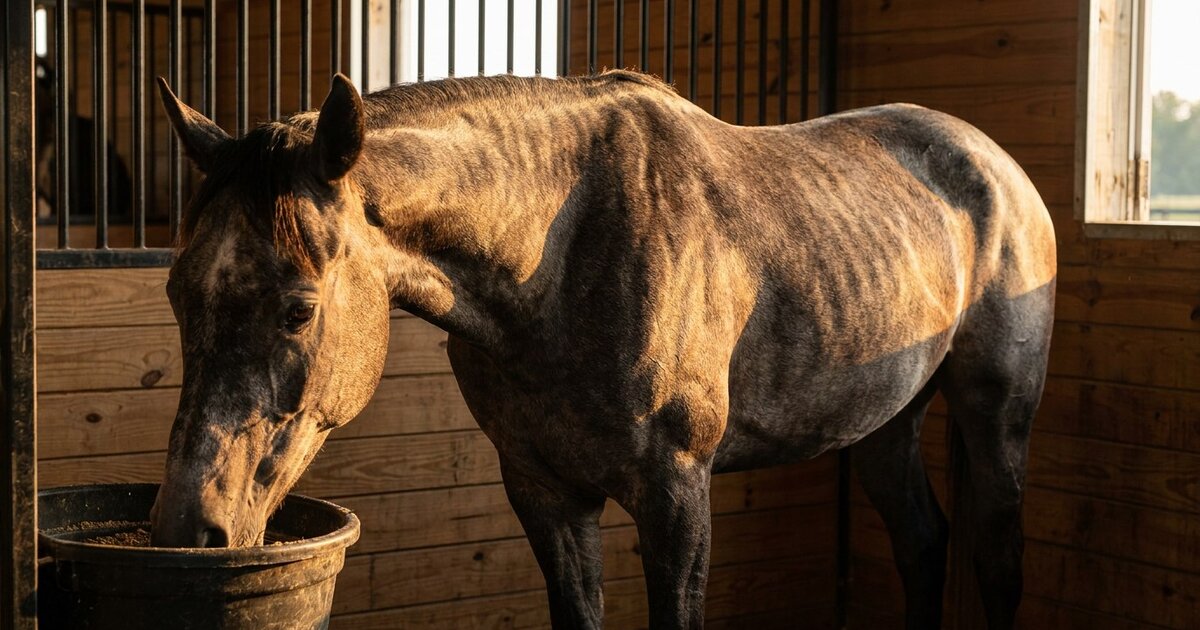
You're dumping grain twice a day, the hay net is always full, and your horse still looks like a greyhound in a field of golden retrievers. Meanwhile, the pony next door gains weight by looking at grass. Life isn't fair, and neither is equine metabolism. Hard keepers are genuinely frustrating to manage, but there's almost always a reason they're thin, and almost always a solution that doesn't involve mortgaging your house on premium feed.
First Things First: Rule Out Medical Problems
Before you overhaul the feed program, check the basics. I've seen people spend hundreds on supplements when the real problem was a tooth with a sharp edge slicing the cheek, making every bite painful.
Dental Check
Horses need dental floats every 12-18 months. Sharp points, wave mouth, missing teeth, or hooks can all make chewing painful or inefficient. A horse that quids (drops partially chewed food) is telling you something. Get the teeth checked. An equine dentist or vet with dental training should evaluate any horse struggling to maintain weight.
Parasite Load
A fecal egg count costs about $15-25 and takes 24 hours. Large strongyles, tapeworms, and other internal parasites literally steal nutrition from your horse's gut. Even with a regular deworming schedule, resistance is increasingly common. Test, don't just dose. If the egg count comes back over 200 eggs per gram, you've likely found at least part of your problem.
Gastric Ulcers
Equine squamous gastric disease (ulcers) affects an estimated 60-90% of performance horses and 37% of leisure horses, according to multiple studies. Symptoms include poor appetite, girthiness, attitude changes under saddle, and weight loss. A definitive diagnosis requires gastroscopy, which runs $250-400 at most clinics. If ulcers are the issue, no amount of feed will fix the weight until the ulcers are treated. Omeprazole (GastroGard) is the gold standard treatment, typically administered for 28 days.
Other Medical Causes
Cushing's disease (PPID), chronic infection, liver or kidney issues, and even chronic low-grade pain can suppress appetite and increase caloric burn. Blood work and a thorough vet exam can rule these out. A complete metabolic panel costs roughly $150-200 and is worth every penny if you've been battling weight issues for months.
The Foundation: Forage, Forage, Forage
Hay should make up the bulk of your horse's diet. Not grain. Not supplements. Hay. A 1,100-pound horse at maintenance needs approximately 16,500-22,000 calories per day, and good-quality hay provides roughly 800-1,000 calories per pound. That means 17-22 pounds of hay daily just to maintain weight.
Hard keepers should have access to as much good hay as they'll eat. Free-choice hay is ideal. If your horse is the type that actually self-regulates (unlike most easy keepers), leave the hay out 24/7. The equine digestive system is designed for near-constant forage intake. Long gaps between meals increase cortisol, promote ulcer formation, and actually slow metabolism.
Hay Quality Matters
Get your hay tested. A forage analysis costs $25-40 through your local agricultural extension office and tells you exactly what your horse is getting. You want to see:
Crude protein: 10-14% for most adult horses
Digestible energy: 0.9-1.0 Mcal/lb for a good grass-timothy mix
ADF (acid detergent fiber): Below 35% means more digestible
NDF (neutral detergent fiber): Below 55% is ideal for palatability
If your hay tests low in energy, consider mixing in some alfalfa. Alfalfa runs about 1.0-1.1 Mcal/lb and 15-22% protein. A 50/50 mix of grass hay and alfalfa can boost caloric intake significantly without changing the overall volume much. The extra protein also supports muscle development.
Hay Alternatives
Hay cubes, hay pellets, and chopped forage products all count as forage. For horses with dental issues that can't chew long-stem hay effectively, soaked hay cubes are a lifesaver. Beet pulp (without molasses, or with, your call) is another excellent forage-based calorie source. It provides roughly 1,000 calories per pound when dry and is highly digestible. Start with 1-2 pounds dry weight per day and increase gradually over 2 weeks.
Adding Calories: The Fat Strategy
Here's where hard keeper management gets interesting. You can only stuff so much hay into a horse. At some point, you need calorie-dense additions, and fat is king.
Fat provides 9 calories per gram. Carbohydrates and protein provide about 4 calories per gram. So pound for pound, fat delivers more than twice the energy. And unlike starch-heavy grain, fat doesn't cause the insulin spikes, hindgut acidosis, or hot behavior that loading up on sweet feed can trigger.
Top Fat Sources for Horses
Vegetable oil. Cheap and effective. Corn oil, soybean oil, or canola oil all work. Start with 1/4 cup per feeding and increase to 1 cup per feeding over 2-3 weeks. One cup of vegetable oil adds roughly 2,000 calories. That's significant. Downside: it's messy, some horses hate the taste, and very high amounts (over 2 cups daily) can interfere with fiber digestion.
Rice bran. Stabilized rice bran is about 20% fat and very palatable. Feed 1-2 pounds daily for a meaningful calorie boost. It adds roughly 1,500 calories per pound. The calcium-to-phosphorus ratio is inverted (more phosphorus than calcium), so choose a stabilized product that's been calcium-fortified, or add a calcium supplement.
Flaxseed. Ground or milled flaxseed provides omega-3 fatty acids along with calories. Feed 4-8 ounces daily. It also improves coat quality noticeably within 3-4 weeks. Must be ground or milled for the horse to digest it; whole seeds pass right through.
Commercial fat supplements. Products like Cocosoya, Cool Calories, and similar blends are convenient but pricier per calorie than straight oil or rice bran. They do tend to be more palatable, though, which matters if your horse is picky.
Grain and Concentrates: Use Wisely
Grain is not evil. But it's also not magic. Many people overfeed grain and underfeed hay, which is exactly backward for digestive health and long-term weight maintenance.
If your hard keeper needs concentrate feed, look for options with at least 6-8% fat content and moderate starch (under 20% NSC if possible). Feed by weight, not volume. A coffee can of one feed might weigh 1.5 pounds while the same scoop of another weighs 3 pounds. Weigh your feed. Always.
Split grain meals into 2-3 feedings daily. The equine stomach holds only 2-4 gallons, and large grain meals overwhelm the stomach's limited capacity, pushing undigested starch into the hindgut where it ferments and causes problems. No single grain meal should exceed 4-5 pounds for an average-sized horse.
Environmental and Management Factors
Stress Burns Calories
A nervous horse burns more calories standing in its stall worrying than a calm horse does. Herd dynamics, isolation, frequent trailering, competition schedules, and even noisy barn environments increase cortisol and metabolic rate. Some hard keepers are hard keepers primarily because they're anxious. Addressing turnout, social needs, and routine can make a bigger difference than any feed change.
Weather and Shelter
Cold weather dramatically increases caloric needs. For every degree below the lower critical temperature (approximately 30-45°F depending on coat and acclimation), a horse needs roughly 1% more energy. A horse standing in a 10°F windchill with a moderate winter coat might need 15-20% more calories than in mild weather. Blankets, shelter, and windbreaks are calorie-savers.
Workload Assessment
A horse in heavy work (eventing, racing, intense daily training) can need 25,000-33,000 calories per day. That's nearly double maintenance. If your horse is working hard and looking thin, the answer might simply be that you're not feeding enough for the workload. Recalculate needs based on actual work intensity. Most people underestimate how much energy their training program demands.
A Sample Hard Keeper Feeding Plan
For a 1,100-pound Thoroughbred in moderate work:
Hay: 25-28 lbs daily, free choice (mix of grass and alfalfa)
Concentrate: 6-8 lbs daily of a high-fat performance feed, split into 2-3 meals
Fat supplement: 1 cup vegetable oil OR 1.5 lbs stabilized rice bran daily
Beet pulp: 2 lbs dry weight, soaked, divided between meals
Ground flaxseed: 4 oz daily for omega-3s and coat quality
Salt: 1-2 oz loose salt daily (not a block; hard keepers often don't lick enough)
Vitamin/mineral supplement: As needed based on forage analysis
This plan provides roughly 28,000-32,000 calories daily. Adjust up or down based on the scale and your eyes. Weigh your horse every 2 weeks using a weight tape (they're not perfectly accurate, but they track trends). Aim for gradual gain of 0.5-1 pound per day. Rapid weight gain stresses joints and metabolism.
When Nothing Seems to Work
If you've addressed dental issues, parasites, ulcers, optimized forage, added fat, and the horse still won't gain, it's time for a deeper veterinary workup. Chronic inflammatory conditions, malabsorption syndromes, liver disease, and even certain cancers can prevent weight gain despite adequate nutrition. It's rare, but it happens. Don't keep throwing feed at a problem that might be medical.
Also consider age. Senior horses (20+) often struggle with weight due to decreased digestive efficiency, dental deterioration, and hormonal changes from PPID. Senior-specific feeds and management strategies exist for good reason.
Frequently Asked Questions
How long should it take to see weight gain?
With proper dietary changes, you should see improvement within 3-4 weeks. Visible weight gain (filling in over the ribs, topline improvement) typically takes 6-8 weeks. If you've changed the diet and see zero improvement after 4-6 weeks, something else is going on. Don't just keep adding more feed without investigating further.
Is it safe to feed straight corn oil every day?
Yes, in reasonable amounts. Up to 2 cups per day for an average-sized horse is well-tolerated. Introduce it slowly over 2-3 weeks to avoid loose stools. Some nutritionists prefer soybean or canola oil for a better omega-3 to omega-6 ratio, but corn oil is perfectly functional as a calorie source.
Can feeding too much grain cause colic?
Absolutely. Large grain meals, especially those high in starch, can overwhelm the small intestine's digestive capacity. Undigested starch reaching the hindgut causes rapid fermentation, gas production, pH changes, and potentially colic or laminitis. Keep individual grain meals under 5 pounds and prioritize fat for extra calories over simply piling on more grain.
Should I use a weight builder supplement?
Most "weight builder" supplements are just fat in a convenient (and expensive) package. Compare the cost per calorie against straight rice bran or vegetable oil. If the supplement is more convenient and your horse likes it, fine. But don't pay $50 for something that provides the same calories as $8 worth of oil. Read labels and do the math.
My horse is thin but has a hay belly. What's going on?
A hay belly with visible ribs usually indicates poor-quality forage. The horse is eating volume but not getting enough calories or protein from it. The gut distends from all the low-quality fiber sitting in the hindgut. Get your hay tested. You likely need higher-quality forage, not more of the same stuff. Adding alfalfa or a concentrate feed can help shift the body condition from "belly with no topline" to more even coverage.
📝 Explore more in our Courses. Check it out here.
Sources
- National Research Council. Nutrient Requirements of Horses. 6th Revised Edition. National Academies Press, 2007.
- Merck Veterinary Manual. "Nutrition of Horses." merckvetmanual.com
- University of Kentucky Equine Science Program. "Feeding the Thin Horse." equine.ca.uky.edu
- American Association of Equine Practitioners. "Nutrition Guidelines." aaep.org
Last reviewed: April 2026