Fly Management for Horses: Strategies That Actually Work
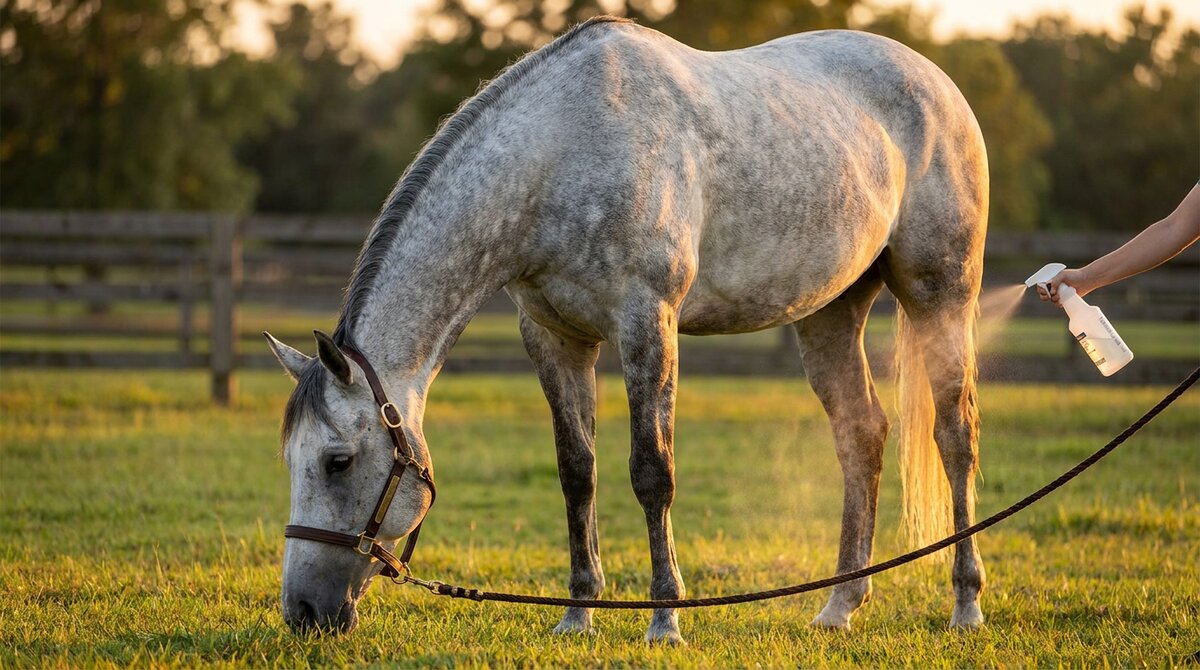
Flies impose significant costs on the U.S. horse industry through lost performance, treatment, and management time. Estimates from university entomologists put the annual impact in the hundreds of millions when you are watching your horse stomp, shake, and refuse to stand still for five seconds in July. The frustrating part is that most fly control programs fail because they only attack one piece of the problem. Spraying alone does not work. Traps alone do not work. You need a layered approach, and once you understand fly biology, the strategy makes itself obvious.
Know Your Enemy: Fly Species That Target Horses
House Flies (Musca domestica)
The most abundant fly around any barn. They do not bite, but they feed on eye and wound secretions, spreading bacteria and contributing to summer sores (habronemiasis). A single female lays 500 eggs in her lifetime. Eggs hatch in 8 to 20 hours in warm conditions. From egg to adult takes only 10 to 14 days at 80 degrees Fahrenheit. This reproductive speed is why populations explode seemingly overnight.
Stable Flies (Stomoxys calcitrans)
These bite. Hard. They look almost identical to house flies but have a forward-pointing proboscis that cuts through skin to feed on blood. They prefer legs and flanks. Horses stomp, kick, and bunch together when stable flies are active. One study from the USDA found that 50 or more stable flies per horse reduced grazing time by 30% and caused measurable weight loss.
Horse Flies and Deer Flies (Tabanus and Chrysops species)
The big, aggressive ones that take actual chunks out of skin. Only females bite. They are strong fliers, covering several miles to find a blood meal. Chemical repellents offer limited protection because these flies are so determined. Traps and physical barriers work better than sprays for these species.
Face Flies (Musca autumnalis)
They cluster around eyes, nostrils, and lips to feed on secretions. They are the primary vector for Moraxella bovis, which causes pinkeye, and contribute to the spread of Habronema larvae. Face flies are notoriously difficult to control because they only visit the horse to feed, spending the rest of their time on vegetation.
Bot Flies (Gasterophilus species)
The ones that lay tiny yellow eggs on your horse's legs and jaw. The eggs do not hatch until the horse licks them, at which point larvae enter the mouth and eventually attach to the stomach lining. Bot flies are seasonal (late summer through fall) and managed through deworming rather than fly control measures.
Environmental Management: The Foundation
This is where 80% of your results come from. Flies breed in decomposing organic matter, and a horse produces 35 to 50 pounds of manure daily. That is roughly 9 tons per year per horse. Every pile left sitting is a fly nursery.
Manure Management
Remove manure from stalls daily. Pick paddocks at least twice weekly, three times is better during peak fly season. Compost manure properly: internal temperatures of 130 to 150 degrees Fahrenheit kill fly larvae and eggs. If composting is not feasible, spread manure thinly on fields where it dries quickly in sunlight, which also kills larvae through desiccation and UV exposure.
Do not pile manure near the barn. A manure pile 50 feet from the barn door is still producing flies that will reach your horses in seconds. Aim for 200 feet minimum distance, downwind if possible.
Moisture Control
Stable flies breed preferentially in wet, rotting organic material: spilled feed, old hay, wet bedding, and grass clippings mixed with manure. Fix leaky waterers immediately. Grade barn aisles and paddock areas so water drains away from buildings. Fill muddy low spots in turnout areas. Every standing water source that mixes with organic material becomes a breeding site.
Vegetation and Shade
Trim grass and weeds around barns and fence lines. Long grass harbors resting flies and increases humidity at ground level, creating favorable breeding microenvironments. However, do provide shade structures in turnout areas, since horses under shade attract fewer flies than horses standing in open sun (flies are visual hunters and bright, sunlit horses are easier targets).
Biological Controls
Fly Predators (Parasitic Wasps)
Tiny wasps in the genera Muscidifurax and Spalangia that lay their eggs inside fly pupae, killing the developing fly before it ever hatches. They are commercially available and shipped as parasitized pupae that hatch on your property. The wasps are too small to sting humans or horses (1 to 3 millimeters long) and do not build nests.
Release rates vary by company, but the general recommendation is 5,000 to 10,000 predators per horse per month during fly season. Scatter them near manure storage areas, compost piles, and around the barn perimeter. They work best as a preventive measure started 4 to 6 weeks before fly season peaks. Once populations are already high, predators alone cannot catch up.
Cost runs approximately $20 to $40 per horse per month for a typical 5-horse property. The return on investment is excellent when combined with good manure management.
Diatomaceous Earth
Food-grade diatomaceous earth can be sprinkled on manure piles and around stall bases. The microscopic silica particles damage fly exoskeletons, causing dehydration. It is not a silver bullet, but it adds another layer of larval control. Must be reapplied after rain.
Physical Barriers
Fly Masks
Non-negotiable during fly season. A well-fitted fly mask protects the eyes and ears from face flies, which reduces the risk of conjunctivitis and summer sores. Look for masks with UV protection (beneficial for horses with light-colored faces or those prone to squamous cell carcinoma around the eyes), fine mesh that excludes gnats, and secure closures that do not rub. Check masks daily for damage and debris trapped inside.
Fly Sheets
Lightweight mesh sheets that cover the body, neck, and sometimes belly. Particularly useful for horses with insect bite hypersensitivity (sweet itch). Choose breathable materials with a belly guard option. Dark-colored sheets attract more heat than light-colored ones, so opt for white, gray, or light tan.
Fans
A 20-inch box fan or larger barn fan creating airflow of 5 to 8 mph across stall openings dramatically reduces fly entry. Flies are weak fliers and cannot maintain flight in wind above 5 mph. Position fans to blow across doorways and stall fronts rather than directly at horses. Enclosed, dust-sealed motors are safest in barn environments.
Screens and Curtains
Strip curtains on barn doorways reduce fly entry by 70% to 90% according to studies from Kansas State University. Screens on windows and stall openings add another layer. These physical barriers are one-time investments that pay dividends every season.
Chemical Controls: The Last Layer
Topical Sprays and Wipes
Pyrethrin-based sprays provide immediate knockdown but wear off within hours. Permethrin-based products last longer, typically 3 to 7 days depending on sweating and rain exposure. Cypermethrin offers the longest residual activity among common equine fly sprays, up to 14 days on hair coat.
Apply sprays to dry horses for maximum adhesion. Focus on legs, belly, chest, and around the ears. Avoid spraying directly into the face; instead, apply to a cloth and wipe around eyes and ears. Rotate between active ingredients every 4 to 6 weeks to reduce resistance development.
Feed-Through Products
These contain insect growth regulators like cyromazine or diflubenzuron that pass through the horse's digestive system into manure, preventing fly larvae from developing. They work well for house flies but have limited effect on stable flies (which breed in wet organic matter beyond just manure). The key limitation: every horse on the property must be on the product, and neighboring properties contribute flies too. Feed-throughs work best in isolated or rural settings.
Spot-On Products
Cypermethrin spot-on treatments applied along the topline provide 2-week residual protection with a single application. They are convenient but more expensive per application than sprays. Good option for horses that object violently to spray bottles.
Frequently Asked Questions
When should I start fly control in spring?
Begin environmental management and fly predator releases when daytime temperatures consistently reach 65 degrees Fahrenheit, typically 4 to 6 weeks before you see significant fly populations. Proactive control is ten times more effective than reactive control.
Are natural fly sprays effective?
Sprays containing citronella, eucalyptus, or neem oil provide short-term repellency (30 minutes to 2 hours) but do not kill flies. They can supplement a chemical program but should not replace it if fly pressure is moderate to heavy. Some horses react to essential oil-based products with skin irritation, so patch test first.
Do fly traps work?
Sticky traps and baited traps reduce localized fly numbers and provide useful monitoring of species and population levels. Place them along barn exteriors, near manure areas, and around breeding sites rather than near horses (baited traps can actually attract more flies to the immediate area). Expect to capture thousands of flies per trap per week during peak season.
My neighbor's property is filthy. Can I still control flies?
You will fight harder, but yes. Flies from neighboring properties travel up to a mile, so barrier methods (fans, screens, masks) become more important. Talk to your neighbor if possible. Some states have nuisance fly ordinances that local agricultural extension offices can help enforce.
📝 Explore more in our Courses. Check it out here.
Sources
- Kaufman, P.E., et al. "Stable Fly Biology and Management." University of Florida IFAS Extension, 2021. edis.ifas.ufl.edu
- Taylor, D.B., et al. "Stable Flies (Stomoxys calcitrans) and Their Effects on Cattle." USDA-ARS, 2012.
- Kansas State University Agricultural Experiment Station. "Fly Control in Horse Facilities." k-state.edu
- Merck Veterinary Manual. "Flies of Horses." merckvetmanual.com
- Pugh, D.G. and Hu, X.P. "Integrated Pest Management for Horses." Auburn University Extension, 2019.
Last reviewed: April 2026