The Icelandic Horse: Tölt, Five Gaits and a Thousand Years of History
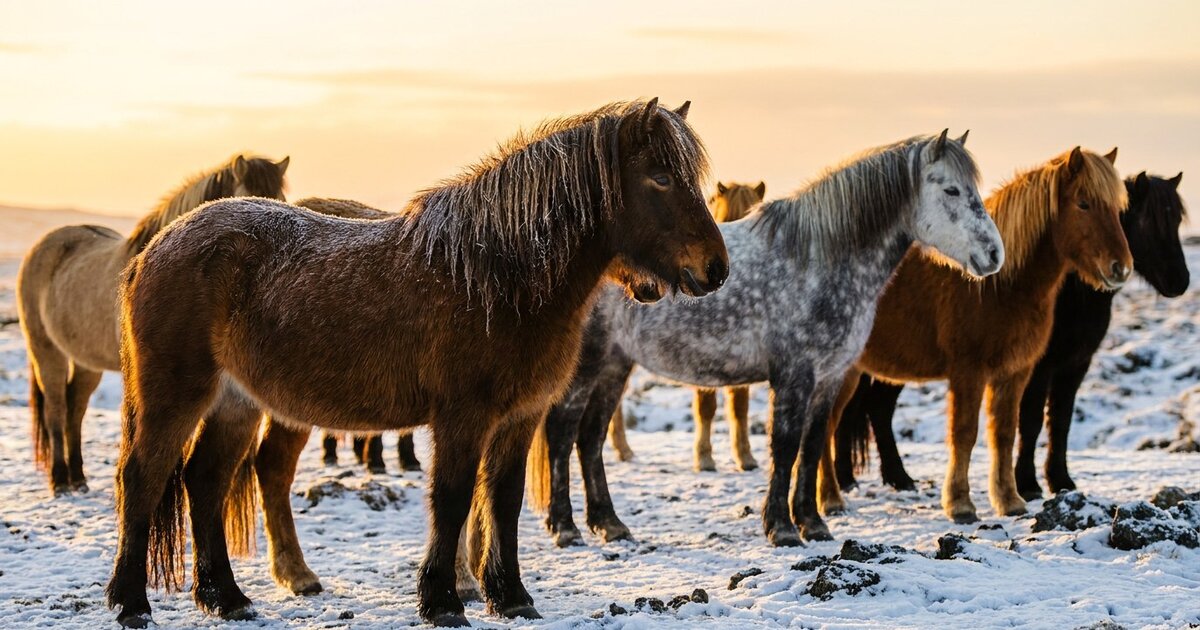
Watch an Icelandic horse in tölt and notice how quietly the rider sits while the legs move beneath them. This distinctive gait is one reason the breed attracts riders far beyond Iceland. Its story also connects island life, centuries of breeding, and research into how the nervous system coordinates movement.
Watch: Inside The Equine’s Icelandic horse video
Watch the full video on YouTube
Use the guide below to compare the gaits and follow the sources behind the breed’s history and movement.
Where did the Icelandic horse come from?
FEIF traces the breed’s ancestors to horses brought to Iceland during the settlement period of 874–930. The population then developed in isolation from other breeds for more than a thousand years. Riding qualities mattered: willingness, strength and comfortable, ground-covering movement were valuable for long journeys. [1]
Isolation did not stop selective breeding. People continued choosing which animals to breed, and today Icelandic horses are used for leisure riding, travel and competition around the world. [1]
Why can’t Icelandic horses return to Iceland?
Once a horse leaves Iceland, it cannot return, even if it was born there. The restriction protects the isolated population against imported diseases. A horse exported for riding, breeding or competition therefore makes a permanent move abroad. [6]
Visitors also have responsibilities. Iceland’s veterinary authority, MAST, prohibits used riding equipment such as saddles and bridles, and used riding gloves. Riding clothes, helmets and boots have cleaning requirements. Check MAST’s current instructions before travelling; disinfecting an item does not automatically make prohibited equipment admissible. [5]
What are the five gaits of the Icelandic horse?
The traditional list is walk, trot, canter/gallop, tölt and flying pace. Canter and gallop are grouped in this breed description, although their footfall patterns differ. The list describes the breed’s repertoire; an individual may be four-gaited or five-gaited. [2]
What is tölt, and why is it smooth?
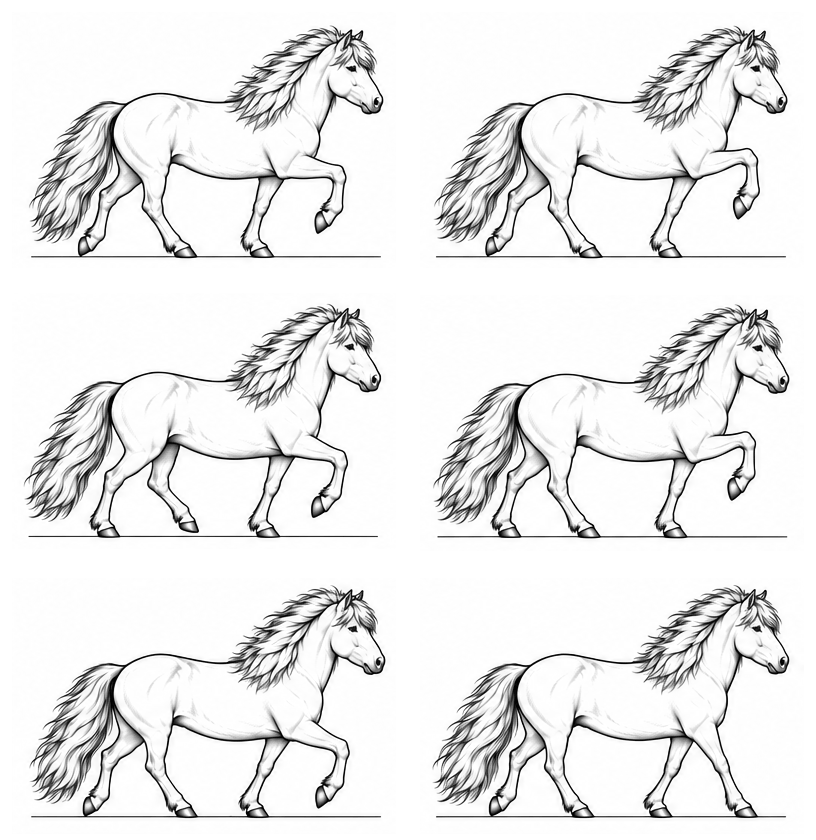
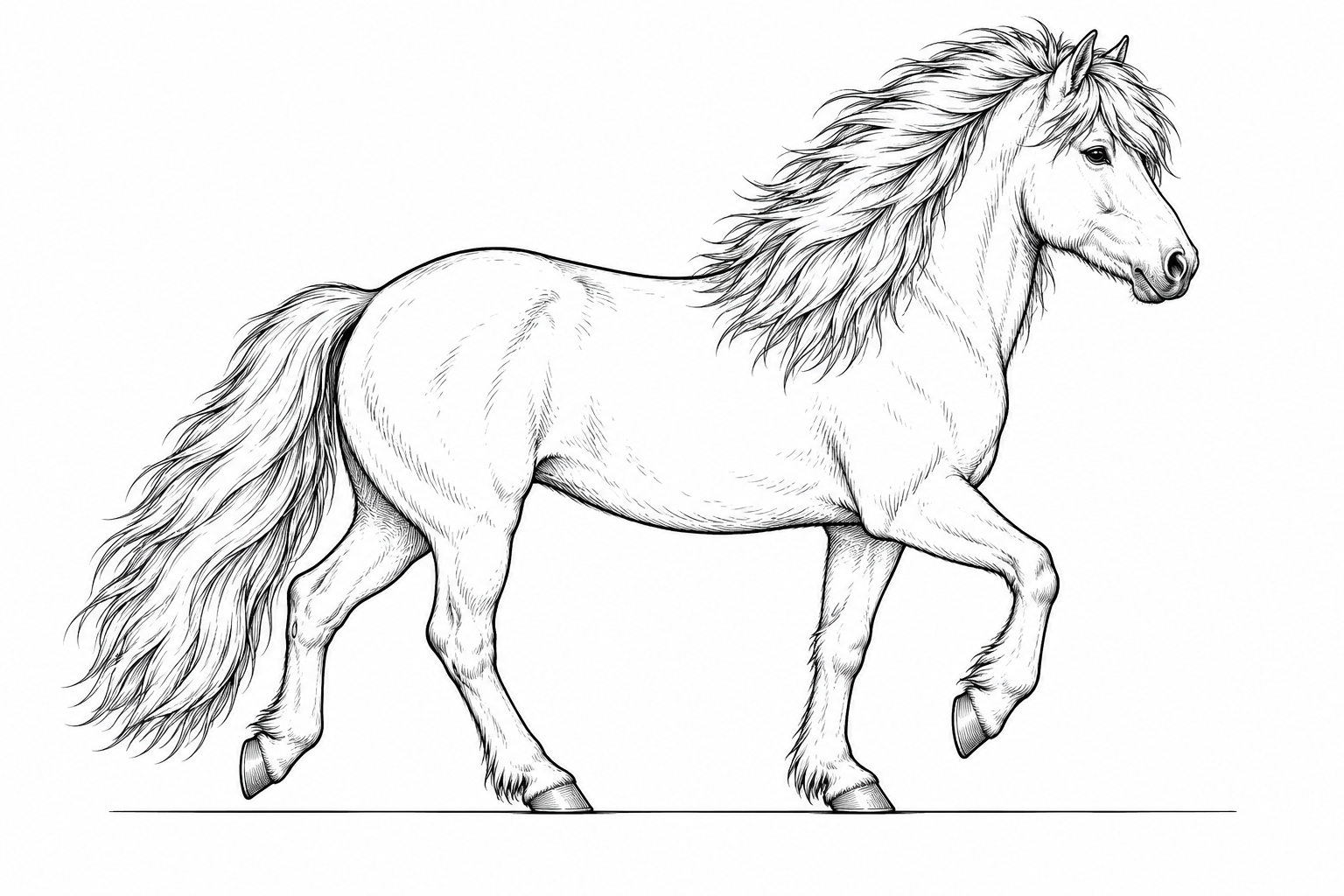
Tölt, often typed as tolt, has four separate, evenly spaced beats. Starting with the left hind hoof, the sequence is left hind → left fore → right hind → right fore. Unlike flying pace, the feet do not land as lateral pairs. At least one hoof stays on the ground, which helps explain the smooth ride. [2]
Horses can tölt at different speeds, depending on the individual and its training. Smoothness does not mean every stride is identical or every rider will feel no movement. [3]
What is flying pace?
Flying pace, or skeið, is a fast lateral gait with suspension: the legs on one side act as a pair, followed by the opposite pair. It is used over short distances, including races of 100–250 metres. It is a different gait from tölt, rather than simply a faster version of it. [3]
Icelandic horse gaits compared
| Gait | Beat & footfall | Suspension? | What it feels like |
|---|---|---|---|
| Walk | Four evenly spaced contacts | No | Steady walking rhythm |
| Trot | Two-beat diagonal pairs | Usually; slow trot may lack it | Diagonal pairs; riders may sit or rise |
| Canter / gallop | Three-beat (canter), four-beat (gallop) | Yes | Rolling and powerful |
| Tölt | Four separate beats in a lateral sequence | No | Usually smooth; varies with horse and rider |
| Flying pace (skeið) | Two lateral pairs; contacts can differ slightly | Yes | Fast efforts over short distances |
Gait descriptions: IHSGB, Horses of Iceland and FEIF. The slow-trot exception is described by the University of Minnesota. [2] [3] [8] [9]
How does tölt differ from trot?
In trot, diagonal legs work together: left hind with right fore, then right hind with left fore. In tölt, the four contacts are separate. Watch the feet across a whole stride rather than judging the gait from a raised foreleg or the horse’s speed. [8] [2]
For flying pace, look for lateral pairing and suspension. Slow motion may reveal a small difference between the contacts within a pair; FEIF notes this in its gait description. [9]
What is the DMRT3 “gait keeper” gene?
A 2012 study identified a variation in DMRT3 with a major effect on horse gait patterns. Research in mice also helped establish the gene’s role in the development of spinal circuits that coordinate limb movement. [4]
This does not mean a single gene guarantees five excellent gaits. The researchers found that some Icelandic horses with the genotype associated with pacing were classified as four-gaited. Other genetic influences, maturity and environmental factors, particularly training, also matter. The variation is found in other horse breeds, too. [4]
Why is it called a horse rather than a pony?
Icelandic horse is the established breed name used by FEIF and the breed community, even though many individuals fall below the height often used to distinguish horses from ponies. Height alone does not change the breed’s name. [1] [6]
The breed is ridden by adults as well as children, but that is not a blanket claim about carrying capacity. Horse–rider suitability needs individual assessment, including the horse’s condition, fitness, conformation, the rider and the work involved. [7]
Does hardiness mean Icelandic horses need less care?
A breed reputation cannot tell you whether an individual horse is comfortable, fit or suitable for a particular job. Assess the horse in front of you. FEIF’s breeding goals explicitly include health, durability, functional conformation and balanced movement. [1] [9]
Why does biosecurity matter so much?
Protection from infectious disease is a central reason for Iceland’s restrictions on horses and used equipment. Avoid interpreting isolation as immunity to illness, or suggesting the breed has no immune defences. MAST’s travel rules are practical measures intended to reduce the chance of bringing infectious agents to Iceland’s horses. [5] [6]
Frequently Asked Questions
Do all Icelandic horses have five gaits?
No. Four-gaited horses perform walk, trot, canter and tölt. Five-gaited horses also perform pace. [3]
What is tölt?
Tölt is an even four-beat gait without suspension. The contacts follow a lateral sequence, with each hoof landing separately. [3]
Is tölt the same as flying pace?
No. Flying pace uses lateral pairs and an airborne phase; tölt has individual contacts and continuous ground support. [3]
Can an Icelandic horse return to Iceland after export?
No. The restriction applies even to a horse born in Iceland and helps protect the population from imported diseases. [6]
Does DMRT3 guarantee a horse can pace?
No. The gene variation is influential, but genotype alone does not guarantee that an individual will perform pace. Other factors contribute. [4]
Can adults ride Icelandic horses?
Yes, adults ride the breed. Suitability still depends on the particular horse, rider and workload; assess the combination individually. [7]
Explore the horse behind the movement
Continue learning about equine anatomy and movement with Inside The Equine, or explore the iPhone and iPad app.