Laminitis in Horses: Causes, Signs, Treatment, and Prevention
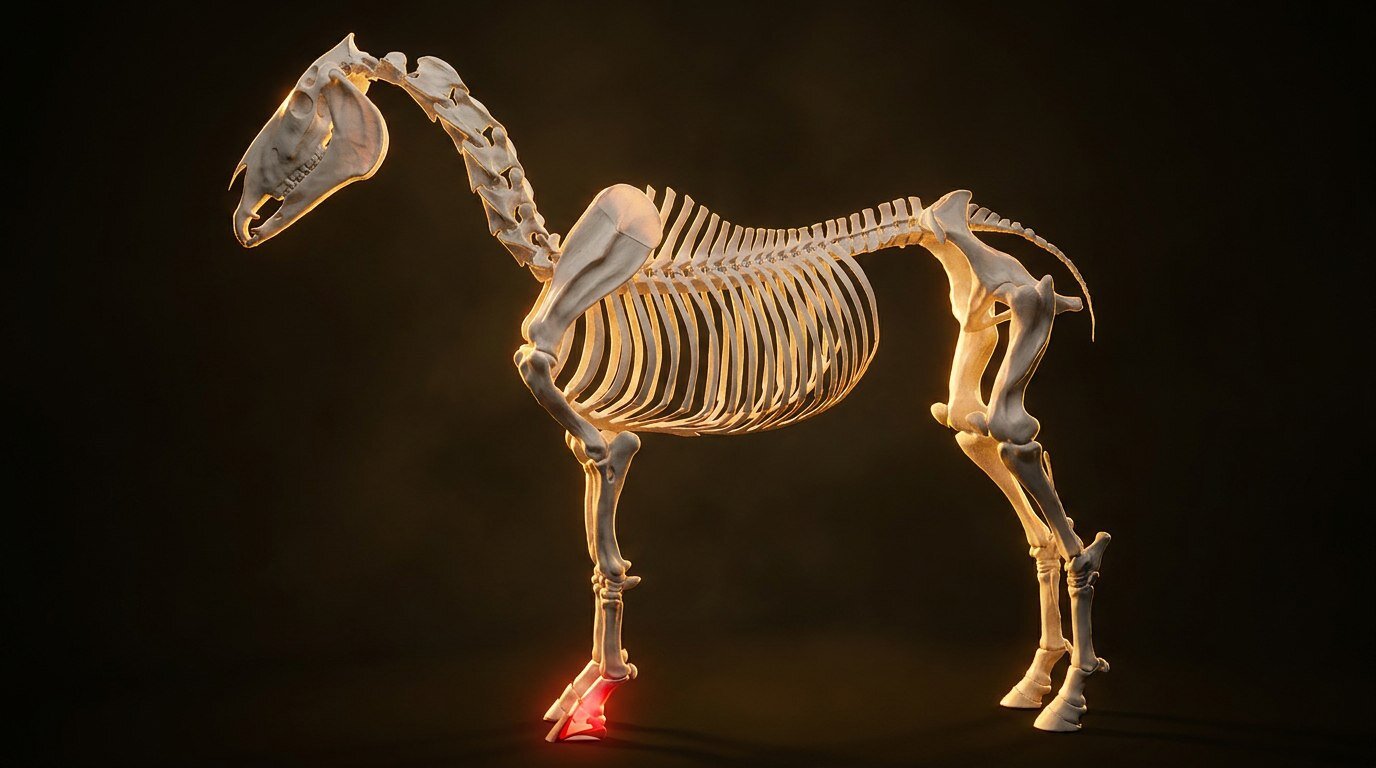
Laminitis is the word that makes horse people's stomachs drop. It's the diagnosis nobody wants to hear, and for good reason - it's painful, potentially career-ending, and in severe cases, life-threatening. More horses are euthanized due to laminitis and its complications than most people realize. And yet, a huge percentage of cases are preventable with proper management. That disconnect between what we know and what actually happens on the ground is frustrating.
Let's talk about what's actually going on inside the hoof, what causes it, and what you can do about it.
What Laminitis Actually Is
The laminae are interlocking finger-like structures that connect the coffin bone (distal phalanx, P3) to the inside of the hoof wall. Think of it like Velcro on a massive scale - hundreds of primary laminae, each with hundreds of secondary laminae, creating an enormous surface area of attachment. This attachment suspends the coffin bone within the hoof capsule and bears the entire weight of the horse.
Laminitis is inflammation and deterioration of these laminae. When the laminar attachment fails, the coffin bone is no longer adequately supported. The deep digital flexor tendon, which attaches to the bottom of the coffin bone, pulls it downward and backward. In mild cases, the bone rotates within the hoof capsule. In severe cases, it sinks - dropping straight down through the sole of the foot. Both scenarios are extraordinarily painful and destructive.
Founder vs. Laminitis - Clearing Up the Confusion
People use these terms interchangeably, but they're not quite the same thing. Laminitis refers to the active inflammation of the laminae - the acute disease process. Founder refers to the structural changes that result from laminitis - rotation or sinking of the coffin bone, changes to the hoof capsule, the chronic aftermath.
A horse can have laminitis without foundering, if the inflammation resolves before significant structural damage occurs. A horse that has foundered has, by definition, had laminitis severe enough to cause displacement of the coffin bone. "Founder" is the chronic outcome; "laminitis" is the disease that got it there.
In practice? Most people say "founder" when they mean "severe or chronic laminitis," and everyone understands what they're talking about. But the distinction matters clinically because the treatment approach differs depending on whether you're managing acute inflammation or chronic structural changes.
Causes of Laminitis
Metabolic (Endocrinopathic) Laminitis
This is the most common cause in modern domestic horses - and it's overwhelmingly a management disease. Horses with Equine Metabolic Syndrome (EMS) or Pituitary Pars Intermedia Dysfunction (PPID, formerly called Cushing's disease) are at dramatically elevated risk.
EMS horses are essentially insulin-resistant. They produce excessive insulin in response to dietary carbohydrates, and hyperinsulinemia directly damages the laminae. These are typically the easy keepers - the chunky ponies, the cresty-necked Morgans, the Quarter Horses that gain weight breathing air. They develop laminitis when they get access to lush pasture, grain, or any feed high in non-structural carbohydrates (sugars and starches).
PPID horses have a dysfunctional pituitary gland that overproduces hormones, leading to a cascade of metabolic abnormalities including insulin dysregulation. PPID is more common in older horses (typically over 15) and the classic signs include a long, curly coat that doesn't shed properly, muscle wasting, increased drinking and urination, and recurrent laminitis.
The spring and fall pasture flushes are when metabolic laminitis peaks. New growth grass is loaded with sugars - fructans in cool-season grasses, simple sugars in warm-season grasses. An EMS horse turned out on lush spring pasture is a laminitis case waiting to happen. It's predictable, it's preventable, and it happens every year.
Inflammatory (Sepsis-Related) Laminitis
Severe systemic inflammation can trigger laminitis as a secondary complication. The classic scenarios include:
- Grain overload. A horse gets into the feed room and eats a massive quantity of grain. The carbohydrate overwhelms the hindgut, pH crashes, normal gut bacteria die off and release endotoxins. The endotoxemia triggers systemic inflammation that damages the laminae. This is an emergency.
- Severe colic or enterocolitis. Any condition causing significant gut inflammation and endotoxin release puts the feet at risk.
- Retained placenta. Mares that don't pass the placenta within 3 hours of foaling are at risk for metritis (uterine infection) and subsequent endotoxemia-driven laminitis. This is why vets take retained placentas so seriously.
- Severe pneumonia or other systemic infections. Any condition that produces significant sepsis or endotoxemia.
Mechanical (Supporting Limb) Laminitis
When a horse is severely lame on one leg - a fracture, a bad infection, post-surgical pain - it shifts its weight onto the opposite leg. That leg bears an abnormal load for prolonged periods. The excessive, sustained mechanical stress on the laminae can cause them to fail. This is called supporting limb laminitis, and it's one of the most devastating complications of severe unilateral lameness.
Supporting limb laminitis is what ended Barbaro's fight after his catastrophic breakdown at the 2006 Preakness. He survived the initial fracture repair but developed laminitis in the opposite foot from bearing excessive weight during recovery. It remains one of the most difficult complications to prevent in equine orthopedic cases.
Recognizing Laminitis
Know these signs. Early recognition and intervention significantly improve outcomes.
- The laminitic stance. Front feet camped out ahead of the body, weight rocked back onto the heels. The horse is trying to unload the painful toe region.
- Reluctance to move. The horse doesn't want to walk, especially on hard surfaces. When it does walk, the gait is short-strided and pottery - like walking on eggshells.
- Bounding digital pulses. Strong, easily palpable pulses in the affected feet. In bilateral laminitis (both fronts), pulses will be increased in both.
- Heat in the hoof wall. The affected feet feel warm to the touch compared to unaffected feet.
- Sensitivity to hoof testers. Pain on pressure, especially over the toe region.
- Shifting weight. Repeatedly picking up and putting down feet, rocking from side to side.
Treatment
Laminitis treatment depends on the cause, severity, and whether you're dealing with acute inflammation or chronic structural changes.
Acute Phase
- Remove the cause. Get the horse off pasture. Stop grain. Treat the primary disease if laminitis is secondary to something else.
- Cryotherapy (icing). Research from the University of Queensland and others has shown that aggressive cooling of the feet significantly reduces laminar damage during the developmental phase of laminitis. Standing the horse's feet in ice water (maintaining water temperature below 5 degrees Celsius) for 48 to 72 hours starting as early as possible is the single most effective acute intervention we have. It's labor-intensive, messy, and logistically challenging - but it works.
- Anti-inflammatory medications. NSAIDs (phenylbutazone, flunixin meglumine) for pain and inflammation. Your vet will determine appropriate dosing.
- Mechanical support. Deep bedding, sole support (styrofoam pads taped to the foot, commercially available hoof pads), or therapeutic shoes to reduce stress on the laminae and support the coffin bone.
- Stall rest. Movement during the acute phase can accelerate laminar tearing. Confinement to a deeply bedded stall is standard.
Chronic Management
Once structural changes have occurred (rotation or sinking), the focus shifts to long-term management:
- Therapeutic trimming and shoeing. Working with a farrier experienced in laminitis cases to realign the hoof capsule with the coffin bone, ease breakover, and support the compromised structures. Radiographs guide this process.
- Dietary management. Low-NSC (non-structural carbohydrate) diet. Soaked hay to remove sugars. No grain, no pasture (or very limited, controlled grazing). Mineral balancing.
- Treat underlying metabolic disease. EMS horses need weight management and possibly metformin. PPID horses need pergolide (Prascend).
- Regular monitoring. Radiographs to track coffin bone position. Blood work to monitor insulin and ACTH levels. Ongoing farrier care on shorter cycles.
Prevention
Most laminitis is preventable. That's not a platitude - it's a statement backed by decades of research and clinical experience.
- Know your horse's metabolic status. If they're an easy keeper, get baseline insulin and glucose tested. Screen older horses for PPID annually.
- Manage pasture access. Use grazing muzzles, track systems, or timed turnout. Avoid lush pasture during high-sugar periods (sunny afternoons after cool nights).
- Secure feed rooms. A padlock on the grain bin is cheap insurance against a catastrophic grain overload.
- Maintain regular hoof care. A well-balanced hoof is more resilient to laminitic forces.
- Monitor body condition. Keep horses at a healthy weight - not fat. A body condition score of 5 to 6 on the Henneke scale is the target for most horses.
Laminitis is serious. It can be devastating. But it doesn't have to be inevitable. Pay attention to the risk factors, manage the things you can control, and know the early signs. Your horse's feet depend on it.
🔍 See the laminae and coffin bone structures affected by laminitis in our 3D Explorer. Check it out here.
Frequently Asked Questions
What is laminitis in horses?
Laminitis is inflammation of the laminae, the interlocking tissue structures that suspend the coffin bone (P3) inside the hoof capsule. When the laminae fail, the coffin bone can rotate or sink downward, a condition called founder. The pain is severe because the sensitive laminae are trapped between the rigid hoof wall and the bone, with no room to swell. Laminitis is one of the leading causes of euthanasia in horses.
What are the most common causes of laminitis?
The three primary causes are metabolic dysfunction (Equine Metabolic Syndrome and Cushing's disease account for roughly 90% of cases), carbohydrate overload (grain binges or sudden access to lush pasture), and supporting-limb laminitis from excessive weight bearing on one leg due to injury in the opposite limb. Other triggers include retained placenta, sepsis, black walnut shavings exposure, and corticosteroid administration.
What are the early signs of laminitis?
The earliest signs include a stronger-than-normal digital pulse felt at the fetlock or pastern, heat in the hoof wall, reluctance to walk (especially on hard surfaces), and the classic "rocked back" stance where the horse shifts weight to the hind legs to unload painful front feet. A horse that is reluctant to turn in tight circles or walks as if on eggshells should be evaluated immediately. Early intervention within the first 24 to 48 hours significantly improves outcomes.
Can a horse recover from laminitis?
Many horses recover from mild to moderate laminitis with appropriate treatment, though recovery often takes months. The prognosis depends on the degree of laminar damage, whether coffin bone rotation or sinking has occurred, and how quickly treatment begins. Horses with less than 5 degrees of rotation generally have a good prognosis. Severe cases with significant rotation or sinking carry a guarded to poor prognosis, and some require long-term management changes for the rest of the horse's life.
How is laminitis prevented?
Prevention focuses on managing the underlying causes. For metabolic horses, maintain a body condition score of 5 to 6, limit pasture access during high-sugar growth periods (spring and fall), feed low-starch hay tested at below 10% non-structural carbohydrates, and work with your vet to manage insulin levels. Secure all grain storage to prevent accidental binges. Monitor at-risk horses closely during illness or injury that requires prolonged stall rest on three legs. Regular farrier care on a 4- to 6-week cycle supports hoof health.
- "Laminitis in Horses" - Texas A&M Veterinary Medical Teaching Hospital vetmed.tamu.edu
- "Laminitis" - AAEP aaep.org
- "Laminitis in Horses" - Merck Veterinary Manual merckvetmanual.com
- "Equine Metabolic Syndrome" - UC Davis Center for Equine Health ceh.vetmed.ucdavis.edu
- "PPID (Cushing's Disease) in Horses" - Cornell University College of Veterinary Medicine vet.cornell.edu
Sources
- "Laminitis in Horses" - Texas A&M Veterinary Medical Teaching Hospital vetmed.tamu.edu
- "Laminitis" - AAEP aaep.org
- "Laminitis in Horses" - Merck Veterinary Manual merckvetmanual.com
- "Equine Metabolic Syndrome" - UC Davis Center for Equine Health ceh.vetmed.ucdavis.edu
- "PPID (Cushing's Disease) in Horses" - Cornell University College of Veterinary Medicine vet.cornell.edu
Want to understand laminitis inside and out?
Our Lameness course covers causes, stages, treatment, and long-term management.
Explore the Lameness CoursePro members only. Try Pro free for 7 days.