Morgan Horse Breed Profile: America's First Versatile Breed
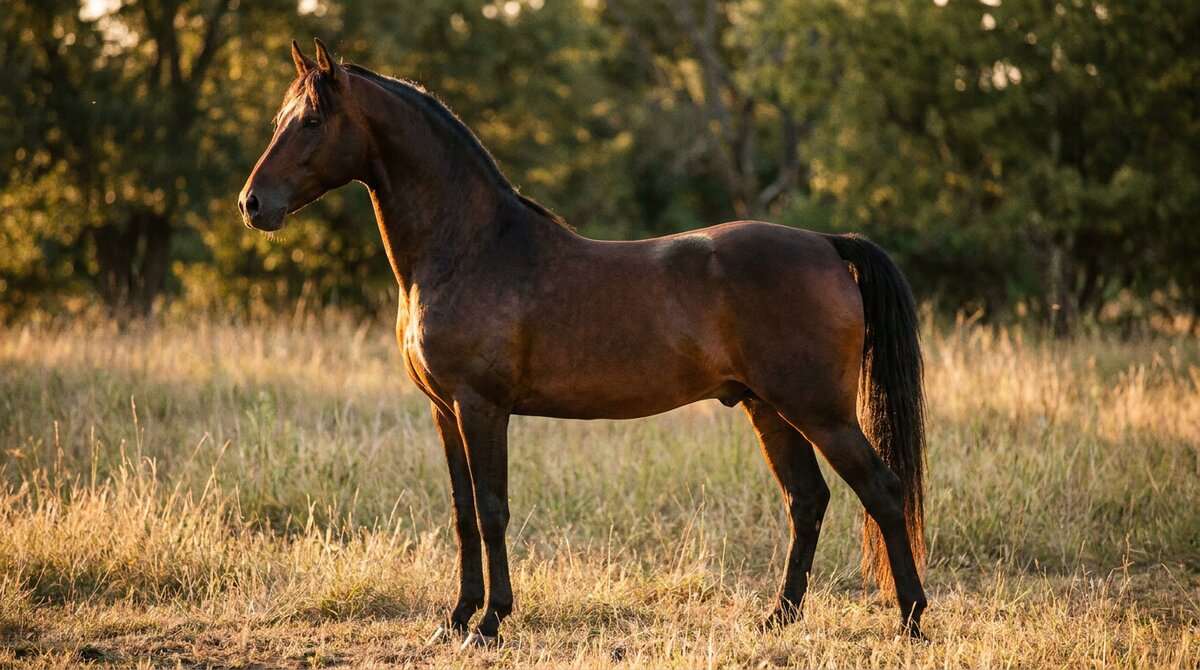
Every Morgan alive today traces back to one stallion. One. A small bay horse named Figure, later renamed Justin Morgan after his owner, stood about 14 hands and weighed maybe 950 pounds. He could out-trot, out-run, and out-pull every horse brought against him in late 1700s Vermont. He also apparently had the genetic testing stubbornness to stamp every foal with his look, his build, and his ridiculous work ethic. Over 200 years later, the Morgan breed he founded is still one of the most versatile in the world.
TraitDetails
Height14.1–15.2 hands (most 14.2–15 hh)Weight900–1,100 lbsColorsBay, black, chestnut, palomino, buckskin, gray, cremelloTemperamentPeople-oriented, intelligent, willing, occasionally opinionatedLifespan25–30+ yearsBest ForDriving, dressage, trail, western, endurance, therapeutic ridingPrice Range$1,000–$5,000 (rescue) · $7,500–$25,000+ (trained)
A History Unlike Any Other Breed
Most breeds develop from deliberate crosses over generations. The Morgan happened because one extraordinary horse kept producing foals that looked and acted exactly like him, regardless of the mare. Figure was born around 1789 in West Springfield, Massachusetts. His exact breeding is still debated. Arabian? Thoroughbred? Welsh Cob? Nobody knows for sure, and DNA testing hasn't settled it definitively.
What we know is this: Figure was given to a man named Justin Morgan as payment for a debt. Morgan brought the horse to Randolph, Vermont, where the little bay became a local legend. He cleared land, worked under saddle and in harness, won match races against larger horses, and defeated all challengers in pulling contests. When he was bred to local mares, the foals came out looking like miniature copies of him. Thick necks, compact bodies, animated gaits.
His three most influential sons, Sherman, Woodbury, and Bulrush, established the foundation lines that still exist today. Sherman's line eventually influenced the Standardbred and the Saddlebred. Woodbury's line was prized for beauty and action. Bulrush's descendants were known for endurance and toughness.
The Morgan in American History
Morgans served in the Civil War. The First Vermont Cavalry rode Morgans into battle, and the breed's stamina under terrible conditions became legendary. They pulled stagecoaches across the frontier. They worked farms in New England. They were the horse of choice when you needed one animal that could plow on Monday, pull the buggy to church on Sunday, and win a trotting race on Saturday afternoon.
The U.S. government maintained a Morgan breeding program at the University of Vermont's Morgan Horse Farm starting in 1907. It's still operating today, making it the oldest federally supported breeding program for any horse breed. That's how important this breed was to the country.
Conformation and Physical Characteristics
Morgans are unmistakable once you know what to look for.
Size
Standing 14.1 to 15.2 hands, with most falling between 14.2 and 15 hands. Weight ranges from 900 to 1,100 pounds. They're compact horses that carry more weight than their size suggests, thanks to their dense bone and muscular build. A 14.2-hand Morgan can comfortably carry a 200-pound rider all day.
Head and Neck
The head is refined with a broad forehead, large expressive eyes, and small, alert ears. The profile is slightly dished or straight, never Roman-nosed. The neck is arched, set high on the shoulder, and carried proudly. That crested, arched neck is one of the breed's calling cards. Even unfit Morgans have more neck shape than most breeds dream of.
Body
Deep chest, well-sprung ribs, short back, strong coupling over the loin, and a round, muscular hindquarter. The shoulder is laid back enough for a good stride but upright enough to produce the animated action the breed is famous for. The overall impression is of a horse that's built like a small tank but moves like a dancer.
Legs and Feet
Clean, dense bone with well-defined tendons. Feet are typically hard, round, and well-shaped. Morgans are known for good feet. Farriers often comment on it. Hoof problems are less common in the breed compared to some lighter types, though no breed is immune.
Colors
Bay, black, and chestnut are the most common. Palomino, buckskin, gray, and cremello also occur. The breed registry accepts all colors. Sabino and frame overo patterns appear in some bloodlines. Pinto-patterned Morgans exist but are relatively rare.
Temperament: The Morgan Personality
This is where Morgans really shine. They are genuinely people-oriented horses. Not just tolerant of humans, but actively interested in them. A Morgan will follow you around the paddock. It'll nicker when it sees you coming. It wants to know what you're doing and whether it can help.
They're intelligent. Really intelligent. Which means they learn fast, both good things and bad things. A bored Morgan is a creative Morgan, and creative horses find ways to open gates, untie knots, and generally cause entertaining chaos. They need mental stimulation as much as physical exercise.
The breed tends to be forward without being hot. Willing without being pushy. Brave without being stupid about it. There's a reason Morgans are one of the most popular breeds for amateur owners and therapeutic riding programs. They have an innate sense of their rider's ability and often adjust accordingly. I've seen the same Morgan be a firecracker in the show ring and a packer on the trail with a beginner, within the same week.
That said, they can be opinionated. A Morgan that disagrees with your training approach will let you know. They don't usually explode or bolt. They just... resist. Quietly, firmly, with an expression that clearly says, "I think you're wrong." Respect that intelligence and work with it rather than against it, and you'll have a partner for life.
What Can a Morgan Do?
The better question is what can't they do. This breed competes successfully in:
Driving: This is the Morgan's original job, and they still dominate in combined driving and pleasure driving classes. That natural high head carriage and animated trot make them spectacular in harness.
Dressage: Morgans compete through the upper levels. Their natural collection, engagement, and willingness to work make them legitimate dressage partners. They may not have the extravagant movement of a Dutch Warmblood, but they make up for it with consistency and try.
Trail and endurance: That Vermont toughness translates directly to the trail. Morgans are sure-footed, sensible, and can cover 25-50 miles in a day without complaint. They're competitive in endurance racing at the 50 and 100-mile distances.
Western events: Reining, cutting, working cow horse, western pleasure. The breed's quick feet and cattle sense make them capable western horses.
Jumping: They won't out-jump a warmblood at 1.40m, but up to 3'6" they're honest, careful jumpers. Many compete in the hunter ring and eventing at lower levels.
Therapeutic riding: Their steady temperament, appropriate size, and people-focus make them ideal therapy horses.
Two Types: Classic vs. Park
The Morgan world has a soft split between two types. Classic or Foundation Morgans resemble the original Justin Morgan type: compact, round, with moderate action and bone. Park-type Morgans have been bred for more animation, longer necks, and higher action for the show ring. They're both Morgans, registered in the same book, but they look and move quite differently.
This division generates strong opinions. Foundation breeders argue the park type has strayed too far from the original. Park breeders point out that animation and refinement have always been part of the breed's appeal. Both sides have valid points. For a prospective buyer, the distinction matters mainly in choosing a horse whose build matches your intended use. Trail and versatility work? Classic type. Saddle seat and park harness competition? Park type. There's plenty of overlap in the middle.
FeatureClassic / Foundation TypePark Type
BuildCompact, round, heavier boneRefined, longer neck, lighter buildMovementModerate action, ground-coveringHigh action, animated, elevatedHead CarriageNatural, moderateHigher set, more dramaticBest DisciplinesTrail, versatility, ranch, enduranceSaddle seat, park harness, fine harnessResemblanceCloser to original Justin Morgan typeMore refined, show-ring oriented
Health and Care
Morgans are easy keepers. Seriously easy. Many do best on grass hay and a vitamin-mineral supplement with no grain at all. Obesity is a bigger concern in this breed than being underweight. Monitor body condition closely and adjust feed accordingly.
Longevity
Morgans routinely live into their late 20s and early 30s. Many remain rideable well into their 20s. The breed's dense bone and good feet contribute to long soundness. A Morgan that's well-cared-for at 20 often still looks and acts like a much younger horse.
Known Health Issues
The breed has a few genetic concerns to be aware of:
Type 1 Polysaccharide Storage Myopathy (PSSM1): A glycogen storage disorder affecting muscles. Manageable with diet (low starch, high fat) and regular exercise. Genetic testing is available through UC Davis. Prevalence in the Morgan population is low.
Equine Degenerative Myeloencephalopathy (EDM) / neuroaxonal dystrophy: A neurological condition linked to vitamin E deficiency in genetically susceptible horses. Early supplementation with natural vitamin E can help prevent clinical signs in at-risk foals.
Overall the breed is considered hardy with relatively few major genetic disease risks compared with some other popular breeds. Responsible breeders still recommend appropriate panel testing based on bloodlines and intended use. (Note: Junctional epidermolysis bullosa is primarily a concern in Belgian draft and American Saddlebred lines, not a typical Morgan genetic risk.)
ConditionTypeKey Facts
PSSM1Glycogen storage disorderLow prevalence; manageable with low-starch/high-fat diet + exercise; DNA test availableEDM / NADNeurologicalLinked to vitamin E deficiency in susceptible horses; early natural vitamin E supplementation recommended for at-risk foals
Buying a Morgan
Prices range wildly. A well-bred, well-trained Morgan from a reputable breeder runs $7,500-25,000+ depending on training level, bloodlines, and show record. Rescues and project horses can be found for $1,000-5,000. The Morgan community is generally welcoming and helpful. The American Morgan Horse Association (AMHA) maintains a breeder directory and hosts educational events.
When shopping, decide on your type preference first. Visit farms. Watch the horses move. Handle them on the ground. A good Morgan should be friendly, curious, and willing. Spooky, standoffish behavior is unusual for the breed and often indicates poor handling or pain.
Frequently Asked Questions
Are Morgans good for beginners?
Yes, generally. Their size is manageable, their temperament is forgiving, and they bond strongly with their people. A well-trained adult Morgan is one of the better choices for a first horse. Avoid young or green Morgans if you're a beginner, though. Their intelligence means a smart young Morgan will quickly figure out what it can get away with.
How much does it cost to keep a Morgan per month?
Similar to any horse: $300-800+ per month depending on your area and boarding situation. Morgans may cost slightly less in feed since they're easy keepers, but farrier, vet, and boarding costs are the same as any breed. Budget $5,000-10,000 annually for basic care including routine vet work, farrier every 6-8 weeks, and feed.
Can Morgans do dressage at the upper levels?
Yes. Morgans have competed through Grand Prix, though it's uncommon. They're most competitive from Training through Third Level. Their natural collection and engagement are genuine assets. They may lack the extreme extensions some warmblood judges reward, but a well-trained Morgan can absolutely produce quality work through Fourth Level and beyond.
Do Morgans get along with other horses?
Generally very well. They tend to be socially confident without being aggressive. Stallions can be more assertive, as with any breed, but Morgan geldings and mares typically integrate into herds smoothly. Their curiosity and social nature make them good herd members.
What's the difference between AMHA and the Foundation Morgan registry?
AMHA (American Morgan Horse Association) is the official breed registry that registers all Morgans. The Foundation Morgan Horse Association is a separate group that promotes Morgans tracing to older bloodlines without crosses to Saddlebred-influenced lines. You can register with both. AMHA registration is what matters for showing and official recognition.
📝 Explore more in our Courses. Check it out here.
Sources
- American Morgan Horse Association. "About the Morgan." morganhorse.com
- University of Vermont Morgan Horse Farm. "History of the Morgan." uvm.edu
- Merck Veterinary Manual. "Polysaccharide Storage Myopathy." merckvetmanual.com
- UC Davis Veterinary Genetics Laboratory. "Equine Genetic Testing." vgl.ucdavis.edu
Last reviewed: April 2026