Suffolk Punch Breed Profile: The Endangered Gentle Giant
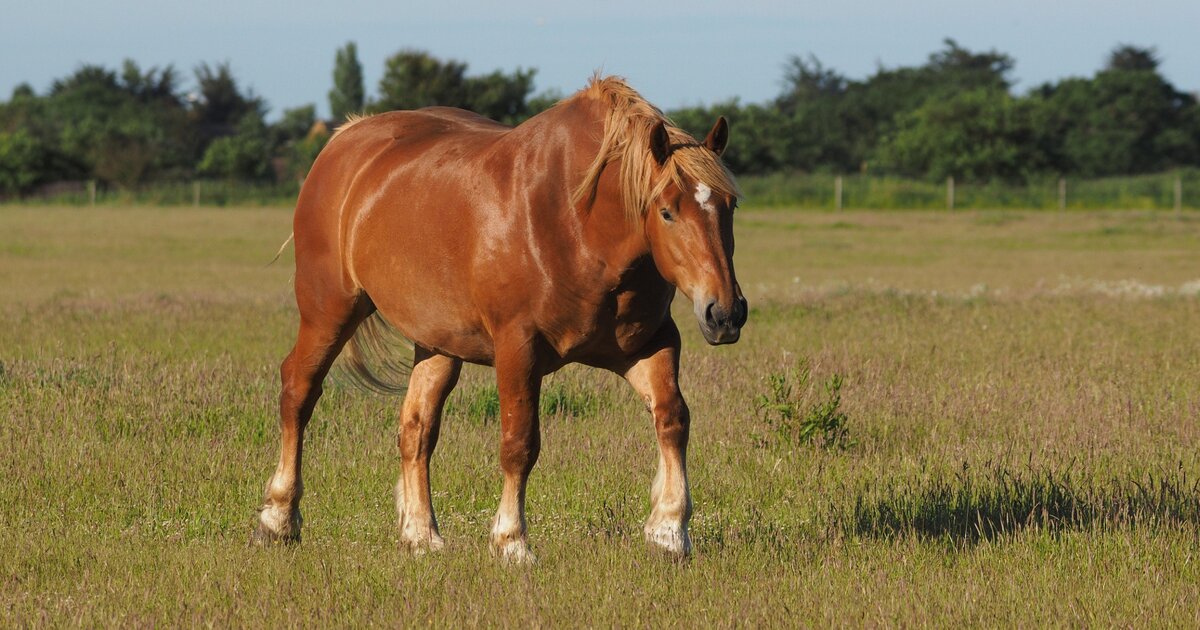
The Suffolk Punch is dying. Not in some abstract, "numbers are declining" way. This breed is critically endangered. Fewer than 500 breeding mares exist worldwide, depending on which conservation organization you ask and how strictly they count. The Rare Breeds Survival Trust in the UK classifies them as Critical, their highest risk category. The Livestock Conservancy in the US agrees. We are genuinely close to losing a breed that has existed since the 16th century, and most people have never even heard of it. Walk into any tack store and mention Suffolks and you'll get blank stares. That obscurity is part of the problem.
The Oldest Breed in England
The Suffolk Punch holds a remarkable distinction: every living member of the breed traces its paternal line back to a single stallion, Crisp's Horse of Ufford, foaled in 1768. That's not a founding sire in the way Thoroughbred people talk about the Darley Arabian, where dozens of other stallion lines existed alongside him. That's a literal, unbroken male line spanning over 250 years. No other breed in England has that kind of documented continuity. The Suffolk Horse Society studbook, first published in 1880, is among the oldest for any breed anywhere, and the records it contains predate the studbook itself by more than a century.
The breed originated in the county of Suffolk in East Anglia, the agricultural heartland of eastern England. Suffolk's heavy clay soils demanded a particular kind of horse. Not just strong, because plenty of horses are strong. They needed an animal that could lean into a collar at dawn and still be leaning at dusk without flagging, on relatively modest rations, without the feathered legs that would clog with Suffolk's infamous sticky clay and develop chronic skin problems in the wet English winters.
Local farmers bred selectively for these traits over centuries, generation after generation of quiet decisions in muddy farmyards. They created a draft horse distinct from the Shire, the Clydesdale, and the Percheron. The Suffolk Punch was a farmer's horse, bred by working people for working purposes, and that practical origin shows in every aspect of the breed. No one was breeding these horses to win ribbons. They were breeding them to pull plows.
The name "Punch" likely derives from an old English word meaning short and stout, which describes the breed's conformation perfectly. These aren't the tallest draft horses. But stand next to one and you realize immediately that height tells you almost nothing about the sheer mass of muscle packed onto that frame.
What They Look Like
Every Suffolk Punch is chestnut. Always. No exceptions in over 250 years of recorded breeding. The breed recognizes seven traditional shades: bright, red, golden, yellow, light, dark, and dull. But it's all chestnut. No grays. No bays. No blacks hiding in the gene pool. No white markings beyond a small star or snip are typical, giving a herd of Suffolks a remarkably uniform, almost eerie visual consistency. Line ten of them up and they look like variations on the same burnished copper theme.
They stand between 16.1 and 17.2 hands, with a round, barrel-shaped body that earned comparisons to a beer keg on legs, a description that Suffolk people use affectionately rather than as insult. The back is short and immensely strong. The shoulder is well-angled for collar work, sloping enough to let the horse throw weight forward into the traces without wasting energy fighting its own conformation. The hindquarters are massive, powerful, and heavily muscled through the gaskin and stifle. And crucially, the legs are clean. No feathering whatsoever. This wasn't an aesthetic choice by some breed fancier in a parlor. It was pure function born from centuries of selection in wet clay country. Clean legs don't hold mud, don't harbor the bacteria that cause pastern dermatitis, and dry faster after a day working in soaked fields (Texas A&M College of Veterinary Medicine).
The feet are proportionally excellent, with dense, well-shaped hooves that hold up to heavy work on unforgiving terrain. The head is large but not coarse, with an intelligent expression and wide-set eyes that have a gentle, almost soulful quality distinctive to the breed. If you've ever met a Suffolk in person, you probably noticed those eyes before you noticed anything else.
Body condition on a Suffolk can be deceptive to the uninitiated. They're meant to be round. A Suffolk in proper working condition looks plump, even fat, to people accustomed to lighter breeds. Don't try to diet a Suffolk down to a Thoroughbred silhouette. That's not how they're built, it's not how they function, and you'll make yourself and the horse miserable chasing a body type that doesn't exist in this breed's genetics.
Temperament
Suffolk Punches are widely regarded as one of the most docile, willing draft breeds on the planet. They have a work ethic that borders on compulsive. A Suffolk in harness will pull until you tell it to stop, and then it might try to keep pulling anyway because that's just what they do. Historical accounts from Victorian-era plowing matches describe teams of Suffolks pulling loads that stalled Shires and Clydesdales, winning not through size advantage but through sheer bloody-minded determination. A Suffolk drops its head, leans in, and refuses to quit. It's something you have to see in person to fully appreciate.
They mature early compared to other drafts, which historically made them economically valuable to farmers counting every penny. A Suffolk could start light work at two years old and be fully productive by three, while larger draft breeds often weren't physically or mentally ready until four. That willingness to work young speaks to both their physical precocity and their mental steadiness. You don't start a flighty, nervous horse in harness at two. You start one that's calm enough to handle the pressure.
Around people, they're typically gentle, affectionate, and calm to the point of seeming lazy until you ask them to work. Many Suffolk owners describe them as "puppy dog" horses. Following you around the pasture. Leaning into grooming with their eyes half-closed. Standing quietly for the farrier, the vet, the dentist, whatever you need. This temperament, combined with their moderate size for a draft, makes them genuinely excellent for beginners interested in driving or working with draft breeds for the first time.
Why They're Disappearing
The story is depressingly familiar and not unique to the Suffolk, though the Suffolk got hit harder than most. Mechanized farming obliterated the market for working draft horses after World War II. Tractors did what horses did, only without needing hay or rest or a farrier every six weeks. The Suffolk Punch, more than other British heavy breeds, was primarily a farm horse. Its entire identity revolved around agriculture. Shires and Clydesdales had established secondary niches in brewery promotion, urban haulage, and show driving that kept populations viable even as farm work disappeared. The Suffolk had the farm, and when tractors took over the farm, the Suffolk had nothing.
Numbers plummeted. By the 1960s and 1970s, the breed was in genuinely dire trouble. Small clusters of dedicated breeders in East Anglia and a handful of passionate importers in the United States kept things limping along, but the gene pool shrank dramatically. When your breeding population drops below a certain threshold you start running into inbreeding depression: reduced fertility, lower disease resistance, smaller litter sizes in species that have them, and diminished genetic diversity that makes the entire breed increasingly fragile against any single health challenge (Cornell University, Livestock Genetic Diversity and Conservation).
Today, various organizations on both sides of the Atlantic are working to save the Suffolk. The Suffolk Horse Society in England maintains the studbook and coordinates breeding efforts. The American Suffolk Horse Association manages the American registry. Conservation breeding programs are active. Some farms are returning to horse-powered agriculture partly to create genuine economic demand for the breed, partly because they believe in sustainable farming, and partly because watching a pair of Suffolks working a field is one of the most deeply satisfying sights in agriculture.
What They're Good For Today
Driving. Full stop, this is where the Suffolk shines brightest and always has. Their forward, willing trot combined with that immense pulling power and unflappable temperament makes them superb in harness at any level. Pleasure driving on country roads. Competitive combined driving where precision and boldness matter equally. Actual farm work for people who choose draft power over diesel. The Suffolk in harness is something special. There's a particular rhythm to a working Suffolk, a rolling cadence that's entirely their own, and once you've driven one you understand why people dedicate their lives to preserving this breed.
Some Suffolks are ridden, and they can be perfectly pleasant mounts for larger adults who appreciate a wide, steady horse under them. Their movement is smooth, more lateral than bouncy, and their temperament makes them confidence-building rides. They're not going to jump a five-foot oxer or win a dressage championship. But for trail riding through rough country, light arena work, and the simple pleasure of sitting on a horse that doesn't want to spook at mailboxes, they're entirely capable and often surprisingly athletic for their bulk.
Forestry work is another area finding renewed relevance. Horse logging in sensitive woodlands causes less soil compaction and environmental damage than heavy machinery, preserving root systems and understory plants that skidders would crush. It's a niche market, but it's growing, and Suffolks' clean legs and sure feet make them well-suited to working in muddy, wooded terrain where feathered breeds would develop skin problems within a season.
Therapeutic riding programs sometimes use Suffolks and Suffolk crosses. Their broad, steady backs provide a stable platform for riders with physical or cognitive challenges, and their calm natures make them safe around unpredictable movements and loud noises that might startle a lighter breed. The warmth of a draft horse, both the literal body heat radiating off that massive barrel and the emotional warmth of a breed that genuinely seems to enjoy human company, is therapeutic in ways that go beyond what any lesson horse handbook can quantify.
Health and Care
Suffolks are generally healthy and hardy. Their centuries of working-breed heritage selected ruthlessly against fragility, because a farmer couldn't afford a horse that broke down. They're easy keepers, efficient on forage, and understanding forage requirements is usually all you need rather than the intensive nutritional management or supplement stacking that some performance breeds demand.
The limited gene pool is the primary health concern at the breed level right now. Inbreeding depression manifests as reduced fertility, immune system weakness, and lower overall vitality, and some Suffolk breeders report difficulty getting mares in foal compared to more genetically diverse breeds. Responsible breeders are working to maximize what genetic diversity remains by carefully planning crosses to minimize inbreeding coefficients, sometimes importing semen from the UK to the US or vice versa to access bloodlines not represented in their local population.
Like all draft breeds, Suffolks can be susceptible to Equine Polysaccharide Storage Myopathy (PSSM), a glycogen storage disorder in the muscles managed through diet and consistent exercise. Affected horses accumulate abnormal polysaccharide in muscle tissue, leading to episodes of tying-up, muscle stiffness, and reluctance to move. The Merck Veterinary Manual recommends a low-starch, high-fat diet combined with regular daily exercise as the primary management strategy. Azoturia, or tying-up in the broader sense, is another risk, particularly if a horse in full work is given several days off while still eating a high-energy ration and then suddenly returned to hard exercise. The old horseman's rule about cutting grain on rest days exists for a reason.
Joint health matters in any horse carrying this much weight over its own skeleton. Monitor for signs of arthritis as they age, keep body weight appropriate rather than letting them get genuinely obese, and ensure regular farrier care on a consistent trimming schedule. Their clean legs are a real advantage here. You won't spend your winters fighting chronic scratches, greasy heel, or mud fever the way you would with a Shire or a Clydesdale standing in the same wet pasture.
Why This Breed Matters
Genetic diversity in livestock isn't sentimental fluff. It's a practical resource with concrete value. Every breed that winks out of existence takes with it a unique combination of alleles, adaptations that took centuries of selective pressure to assemble and can never be recreated from scratch. The Suffolk Punch's ability to work all day on mediocre feed, its clean legs, its early maturity, its specific type of low-to-the-ground pulling power, its metabolic efficiency: these are genetic resources that have value beyond nostalgia. Climate change, shifting agricultural economics, the growing interest in sustainable farming, any of these could create demand for traits that currently exist in only a few hundred animals scattered across two continents.
If you're looking for a draft breed, seriously consider a Suffolk. If you can't own one, consider supporting the breed societies or the conservation programs fighting to keep them going. Donate. Volunteer. Spread the word. Visit a farm that has them and let a Suffolk lean its enormous head against your chest while you scratch behind its ears. This is a breed worth saving, and right now, saving it is a genuine race against time and indifference.
📝 Discover more breed profiles in our Courses. Check it out here.
Frequently Asked Questions
How many Suffolk Punch horses are left?
The Suffolk Punch is critically endangered. Fewer than 300 breeding mares exist in the UK, and global numbers are estimated at under 2,000. The Rare Breeds Survival Trust and the American Livestock Conservancy both list the Suffolk Punch as critical priority.
What color is a Suffolk Punch?
Always chestnut (spelled 'chesnut' in the breed's traditional spelling). No other color is accepted. Shades range from light golden to dark liver, but every registered Suffolk Punch is some shade of chestnut. White markings are minimal, often just a small star.
How big is a Suffolk Punch?
Suffolk Punches stand 16 to 17 hands and weigh 1,800 to 2,200 pounds. Despite their massive weight, they stand on relatively short, clean legs with minimal feathering, which distinguishes them from Clydesdales and Shires.
What were Suffolk Punches bred for?
Farm work in the heavy clay soils of Suffolk, England. They were bred specifically to pull plows and agricultural equipment with sustained power at a walk. Their willingness to lean into the collar and keep pulling is legendary, and they are known to require less feed relative to their size than other draft breeds.
Can you ride a Suffolk Punch?
Yes, though they are primarily a driving and draft breed. Their calm temperament and smooth gaits make them pleasant riding horses for those who enjoy a wider, more powerful mount. They are not suited for speed or jumping but excel at trail riding and pleasure driving.
Sources
- The Livestock Conservancy - Suffolk Punch Conservation Priority livestockconservancy.org
- Rare Breeds Survival Trust - Critical Breed Watchlist rbst.org.uk
- Texas A&M College of Veterinary Medicine - Draft Horse Health tamu.edu
- Merck Veterinary Manual - Polysaccharide Storage Myopathy merckvetmanual.com
- Cornell University - Livestock Genetic Diversity and Conservation cornell.edu
- UC Davis Center for Equine Health - Draft Breed Management ucdavis.edu