Why Horses Cannot Vomit: The Anatomy Behind a Dangerous Limitation
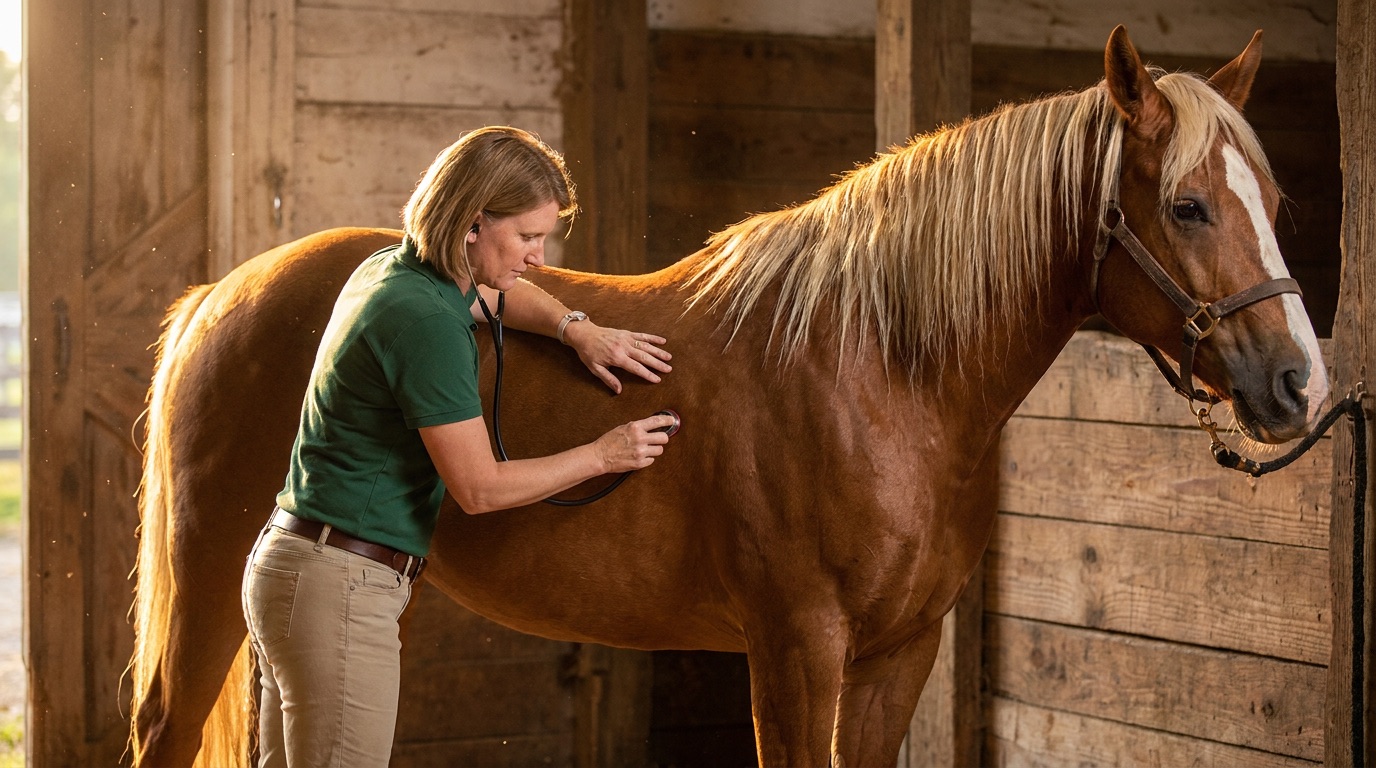
If you have spent any time around horses, you have probably heard that they cannot vomit. It sounds like one of those fun animal facts people toss around at parties, except it is completely true and it has life-or-death consequences for how we feed and manage these animals every single day.
Most mammals can vomit. Dogs do it casually. Cats do it on your favorite rug at 3 a.m. Humans do it after questionable gas station sushi. But horses? Horses are physically incapable of reversing the flow of their digestive tract. What goes down stays down, for better or for worse.
The Cardiac Sphincter: A One-Way Valve
The reason horses cannot vomit comes down to anatomy, specifically a structure called the cardiac sphincter (also known as the lower esophageal sphincter). This is the muscular ring where the esophagus meets the stomach.
In most species, this sphincter relaxes in both directions. It opens to let food into the stomach, and it can also open in reverse to allow stomach contents back up the esophagus during vomiting. In horses, the cardiac sphincter is extraordinarily strong and functions almost exclusively as a one-way valve.
Several anatomical features work together to make this valve so effective:
- The angle of entry. The equine esophagus enters the stomach at an acute, oblique angle rather than straight on. As the stomach fills and the walls expand, this angle actually becomes sharper, pressing the esophageal opening closed like a kinked garden hose. The more pressure inside the stomach, the tighter the seal becomes.
- Thick muscular folds. The tissue around the cardiac sphincter in horses forms a rosette of thick mucosal folds that act as a secondary seal. Even if the sphincter muscle itself were to relax, these folds physically block retrograde flow.
- Weak vomiting reflex. Beyond the physical barrier, horses also lack a robust neurological vomiting reflex. The brainstem pathways that coordinate the complex sequence of muscle contractions needed for vomiting (diaphragm, abdominal muscles, esophageal reverse peristalsis) are poorly developed in equines compared to species that vomit readily.
- Long soft palate. The horse's soft palate is unusually long and essentially seals off the oral cavity from the pharynx during normal breathing. Horses are obligate nasal breathers. Even if material somehow made it back up the esophagus, the soft palate makes it extremely difficult for anything to exit through the mouth.
- Diaphragmatic reinforcement. The crura of the diaphragm wrap around the equine esophagus at the hiatus more snugly than in many other species. During moments of increased abdominal pressure, this muscular clamp tightens rather than loosens, adding yet another mechanical barrier against reflux. Texas A&M researchers have noted that the combined effect of all these structures creates a sphincter mechanism that is essentially rupture-prone before it is reflux-prone.
What Happens When Pressure Builds
In a species that can vomit, a buildup of gas or fluid in the stomach triggers a straightforward response: the body ejects the contents and the pressure is relieved. Problem solved, at least temporarily.
Horses do not get that option. When gas accumulates in the equine stomach, or when the stomach becomes overfilled with feed or fluid, the pressure simply continues to build. The stomach wall stretches. And because the cardiac sphincter only gets tighter as pressure increases, there is no relief valve.
The equine stomach is also relatively small for the size of the animal, holding only about 8 to 15 liters (roughly 2 to 4 gallons). Compare that to a cow's rumen at 150 to 200 liters. Horses were designed to eat small amounts continuously, not large meals at set times. The small stomach volume combined with the inability to vomit means that overfilling the stomach is a real and dangerous possibility.
In extreme cases of gastric distension, the stomach can actually rupture. A ruptured stomach in a horse is uniformly fatal. There is no surgical repair. By the time it happens, the contamination of the abdominal cavity is catastrophic. If you ever see fluid coming from a horse's nostrils during a colic episode, that is stomach contents that have backed up so far that they are overflowing through the esophagus and out the nose. It is not true vomiting. It is a gravity-driven overflow that means the stomach is dangerously distended, and it is a veterinary emergency.
The wall of the equine stomach is thinnest at the fundus, along the greater curvature. That is where ruptures almost always occur. Post-mortem examinations consistently show a characteristic tear pattern in that region, and by the time the wall gives way, the gastric contents are under enough pressure to spray forcefully into the peritoneal cavity. Clinicians at Cornell have described cases where the peritonitis was so immediate and overwhelming that the horse collapsed within minutes of rupture. There is no coming back from that.
Why This Matters for Colic
Colic is the leading cause of death in horses, and the inability to vomit is a contributing factor in several forms of it. When a blockage occurs anywhere in the gastrointestinal tract, fluid and gas back up behind it. In an animal that can vomit, some of that backup would be expelled. In a horse, it just keeps accumulating.
This is exactly why one of the first things an equine veterinarian does during a colic exam is pass a nasogastric (stomach) tube. The tube is inserted through the nostril, down the esophagus, and into the stomach. If a significant volume of fluid refluxes back through the tube (called "gastric reflux"), it tells the vet that the stomach is distended and that there is likely a blockage or motility problem further down the tract. Draining that fluid provides immediate relief from gastric pressure and may prevent rupture.
The amount of reflux matters diagnostically. A few liters might indicate a mild backup. Ten or more liters of reflux is a serious finding that often points toward a surgical lesion, such as a strangulating obstruction in the small intestine that has caused fluid to pool upstream. The AAEP's colic guidelines use net reflux volume as one of several key parameters in surgical decision-making. A horse producing persistent reflux across multiple tubing sessions almost certainly has a mechanical obstruction that will not resolve without the surgeon's knife.
Feeding With This Anatomy in Mind
Once you understand that your horse cannot reject anything from its stomach, feeding management takes on a different weight. Every meal you provide, every supplement you mix in, every treat you hand over is going all the way through. There is no undo button.
Here is what that means in practice:
- Feed small, frequent meals. The equine stomach is designed for a near-constant trickle of forage, not two large grain meals a day. If you must feed concentrate, split it into the smallest practical portions. A horse should never have an empty stomach for extended periods either, because stomach acid production is continuous and an empty stomach leads to gastric ulcers.
- Always provide forage first. Hay or pasture before grain. The fiber creates a mat in the stomach that slows the transit of concentrate feed and buffers acid. Dumping grain into an empty stomach means rapid passage into the small intestine and potential starch overflow into the hindgut.
- Watch for toxic plants. A dog that eats something toxic might vomit it back up before absorbing a lethal dose. A horse cannot. If a horse eats red maple leaves, yew, or oleander, the toxin is going to be absorbed. Prevention is the only option, which means knowing what is growing in and around your pastures. The Merck Veterinary Manual catalogs over fifty plants toxic to equines in North America alone. Walk your fence lines. Know what is out there.
- Be cautious with medications. Oral medications and supplements are a one-way trip. Overdosing an oral NSAID like phenylbutazone is especially dangerous because the horse cannot expel the excess. Follow dosing instructions precisely and never double up because you think you missed a dose.
- Monitor water intake. Adequate hydration keeps the stomach contents moving downstream at a normal pace. Dehydrated horses are at higher risk for impaction colic because the digesta becomes dry and compacted.
- Avoid abrupt feed changes. Because the horse cannot purge a meal that disagrees with its gut flora, sudden dietary shifts are particularly dangerous. The hindgut microbial population needs days to weeks to adjust to new feedstuffs. A rapid switch from hay to lush spring pasture, or from one grain to another, can trigger fermentative disruption, gas production, laminitis, or colic. UC Davis recommends transitioning feeds over a minimum of 7 to 10 days.
An Evolutionary Trade-Off
Why would evolution produce an animal that cannot vomit? The honest answer is that we are not entirely sure, but the leading theory relates to the horse's survival strategy as a prey animal. Horses evolved to run. A galloping horse generates enormous intra-abdominal pressure. A loose cardiac sphincter that allowed stomach contents to reflux during a full-speed flight from a predator would be a serious problem. Aspiration of stomach contents into the lungs during exertion could be fatal. The tight one-way valve likely evolved as protection against reflux during the intense physical activity that kept horses alive on the open plains.
It was a good trade-off in the wild, where horses grazed continuously on varied grasses and rarely encountered the feeding scenarios that cause problems in domestication. It becomes a vulnerability when we confine horses, feed them twice a day, give them large grain meals, and limit their movement. The anatomy has not changed. Our management has.
Consider the feral horse for perspective. Mustangs spend 16 to 18 hours per day grazing, covering 15 to 20 miles in the process. Their stomachs are never truly empty and never overfull. The one-way valve works perfectly in that context. Stick that same physiological design in a 12x12 stall with two flakes of hay and a scoop of sweet feed twice a day, and you have created conditions the anatomy was never built to handle. Every management decision we make should be filtered through that understanding.
The Bottom Line
The inability to vomit is not just a quirky fact about horses. It is a fundamental feature of their anatomy that influences every aspect of their care. It is why colic is so dangerous, why stomach rupture is a real threat, why feeding management matters so much, and why you should never take a casual approach to what goes into your horse's mouth. There is no take-back. Feed accordingly.
🔍 See the esophageal sphincter and stomach anatomy in our 3D Explorer. Check it out here.
Jaynee's Note: This is one of those facts that sounds made up until you understand the anatomy. It's also exactly why what goes into your horse's stomach matters so much — there's no take-backs.
Frequently Asked Questions
Why can't horses throw up?
Horses cannot vomit because of an exceptionally strong band of muscle at the junction of the esophagus and stomach called the cardiac sphincter. This one-way valve allows food in but will not open in reverse, even under extreme gastric pressure. The angle at which the esophagus enters the stomach also creates a mechanical flap that tightens as the stomach distends.
Can a horse's stomach rupture?
Yes. Because horses cannot relieve gastric pressure by vomiting, a severely distended stomach can rupture. This is almost always fatal. Gastric rupture occurs in roughly 2-5% of severe colic cases. It most commonly happens with grain overload (gorging on grain) or anterior enteritis (fluid accumulation in the stomach and small intestine).
What happens if a horse eats something toxic?
Because vomiting is not an option, toxins that reach the stomach are absorbed. This is why ingested poisons are particularly dangerous in horses compared to species that can vomit. Treatment relies on activated charcoal, mineral oil via nasogastric tube to speed gut transit, and IV fluids to support organ function while the toxin is processed.
Is choke the same as choking in humans?
No. Equine choke is an esophageal obstruction (food stuck in the esophagus), not a tracheal blockage. The horse can still breathe. You will see feed material and saliva draining from the nostrils and mouth because it cannot pass the obstruction. It is a veterinary emergency but not immediately life-threatening in the way a human airway blockage is.
Do any other animals share this inability to vomit?
Rats and rabbits also have limited or no ability to vomit. In horses, the trait is thought to have evolved because their digestive system is designed for continuous forward flow of a high-fiber diet. The tradeoff is vulnerability to gastric distension and toxin accumulation, which is part of why colic is the leading cause of non-traumatic death in horses.
Sources
- Texas A&M College of Veterinary Medicine. "Colic in Horses." vetmed.tamu.edu
- Merritt, A.M. "Normal Equine Gastroduodenal Secretion and Motility." Equine Veterinary Journal, 1999. beva.onlinelibrary.wiley.com
- Andrews, F.M., et al. "Recommendations for the Diagnosis and Treatment of Equine Gastric Ulcer Syndrome (EGUS)." Equine Veterinary Education, 2009. beva.onlinelibrary.wiley.com
- Dukti, S., and White, N.A. "Surgical Complications of Colic Surgery." Veterinary Clinics of North America: Equine Practice, 2008. sciencedirect.com
- Texas A&M AgriLife Extension. "The Equine Digestive System." animalscience.tamu.edu
- Cornell University Equine Hospital - Gastric Rupture Case Studies vet.cornell.edu
- UC Davis Center for Equine Health - Feeding Management Guidelines ceh.vetmed.ucdavis.edu
Fascinated by equine anatomy quirks?
Our Anatomy course reveals the structural details that make horses unique.
Explore the Anatomy CoursePro members only. Try Pro free for 7 days.