Worm Neck Syndrome: Neck Pain Relief & Posture Correction for Horses
"Worm neck" is not a formal diagnosis. Many horse owners use the phrase to describe a neck that looks tense, oddly curved, guarded, weak, or difficult to bend. The useful question is not what to call it, but what may be happening through the cervical spine, soft tissue, and everyday movement patterns. This guide covers practical ways to support posture correction, neck pain relief, and muscle tension relief while knowing when veterinary or qualified bodywork support is needed.
What does "worm neck" usually mean in a horse?
In everyday stable language, "worm neck" describes a horse that carries the neck in a snaky, twisted, low, braced, or uneven way. It can be linked with neck muscle strain, poor topline development, discomfort in tack or training, dental or hoof compensation, or deeper cervical spine issues. Because the phrase is informal, treat it as an observation: your horse's neck posture, range of motion, or willingness to soften has changed.
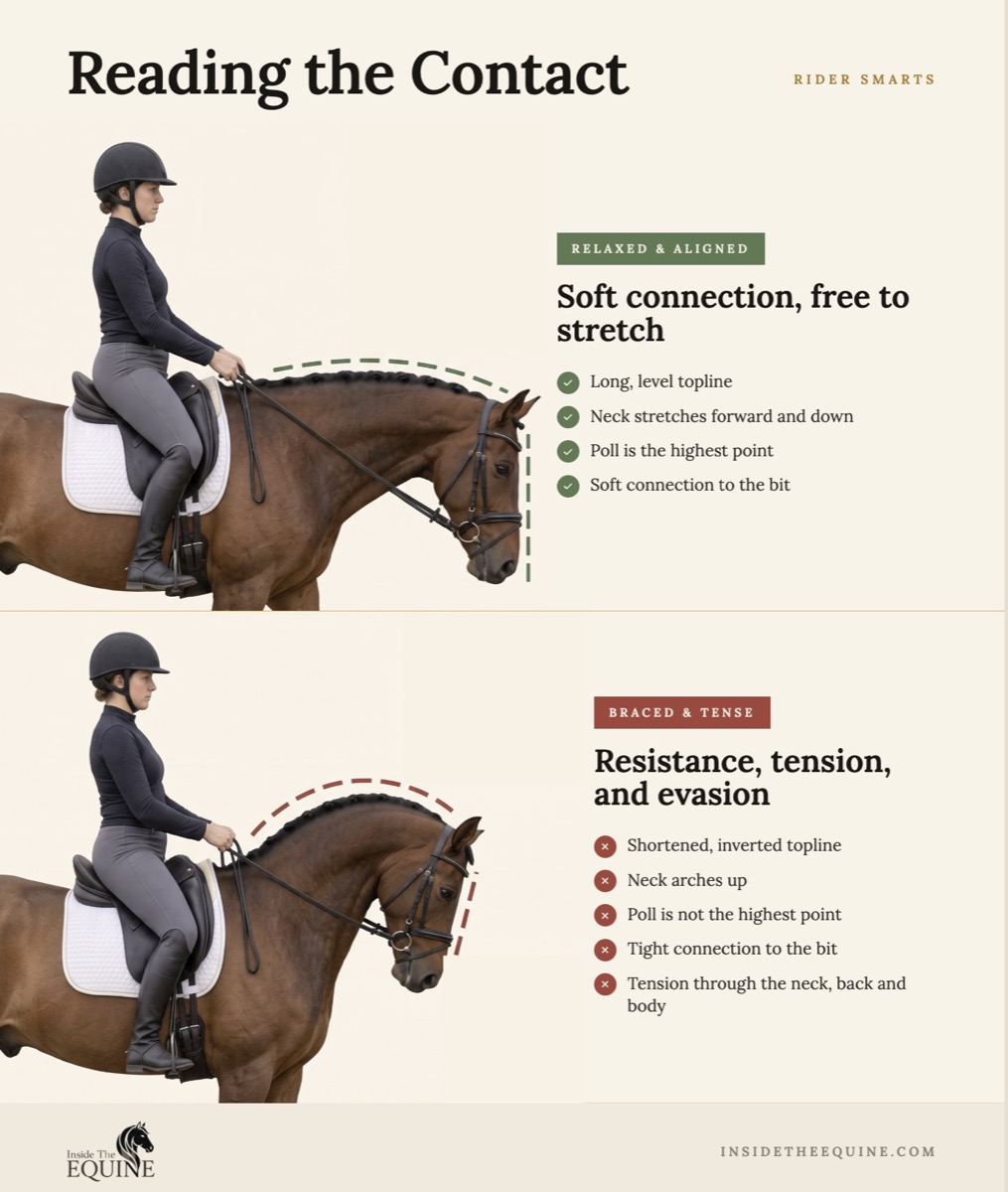
A horse with neck discomfort may resist bending, tilt at the poll, hollow the back, brace against the rein, avoid being touched, or struggle with transitions. Some horses show subtle signs first: shortened stride, difficulty lifting through the base of the neck, uneven contact, or reluctance to graze comfortably. If the change is sudden, painful, or paired with neurological signs such as stumbling, weakness, or abnormal coordination, skip home exercises and call a veterinarian.
The neck is a whole-body structure
The equine neck is not just a flexible column between the head and shoulders. It helps balance the body, organize the stride, steer the shoulders, and connect the jaw, poll, withers, back, and forelimbs. That is why a "neck problem" may not start in the neck at all.
Muscles that can be involved include the brachiocephalicus, sternocephalicus, splenius, semispinalis capitis, longissimus cervicis, omotransversarius, trapezius, rhomboideus, scalenus, longus colli, and smaller stabilizers such as the multifidus cervicis. When these muscles become overworked or underused, the horse may protect the area by bracing, avoiding bend, or using the underside of the neck instead of lifting through the base.
Anatomy education helps here. You can explore the cervical region in 3D on InsideTheEquine, including interactive horse anatomy layers. The platform also offers anatomy courses so you can connect what you see on your horse to the structures underneath.
Common reasons a horse's neck starts to look wrong
A guarded or "wormy" neck shape often develops gradually. One small compensation becomes a habit, then the habit changes how the horse stands, turns, works, and rests. Common contributors include:
- Training posture: Working behind the vertical, moving hollow, or traveling on the forehand can overload the neck and shoulders.
- Weak topline support: If the horse cannot lift through the thoracic sling and back, the neck often compensates.
- Poor saddle, bridle, or bit fit: Discomfort can make the horse brace through the poll, jaw, and underside of the neck.
- Dental discomfort: A horse that cannot use the jaw comfortably may resist contact or bend.
- Hoof imbalance or limb pain: Front-end discomfort can change how the neck and shoulders carry weight.
- Sudden strain: Slipping, pulling back, rough turnout play, or awkward trailer movement can create acute neck muscle strain.
The practical takeaway is simple: posture correction works best when it addresses the whole horse. Exercises can help, but they should not be used to push through pain. Understanding conformation faults can also help you distinguish structural limitations from acquired tension.
Physical therapy exercises that can support neck comfort
Physical therapy exercises for horses should be slow, controlled, and adapted to the individual. The goal is not to force a bigger stretch. It is to restore confidence, coordination, and balanced use of the cervical spine. Start on safe footing, use small ranges of motion, and stop if the horse pins its ears, steps away, tosses the head, trembles, or shows pain.
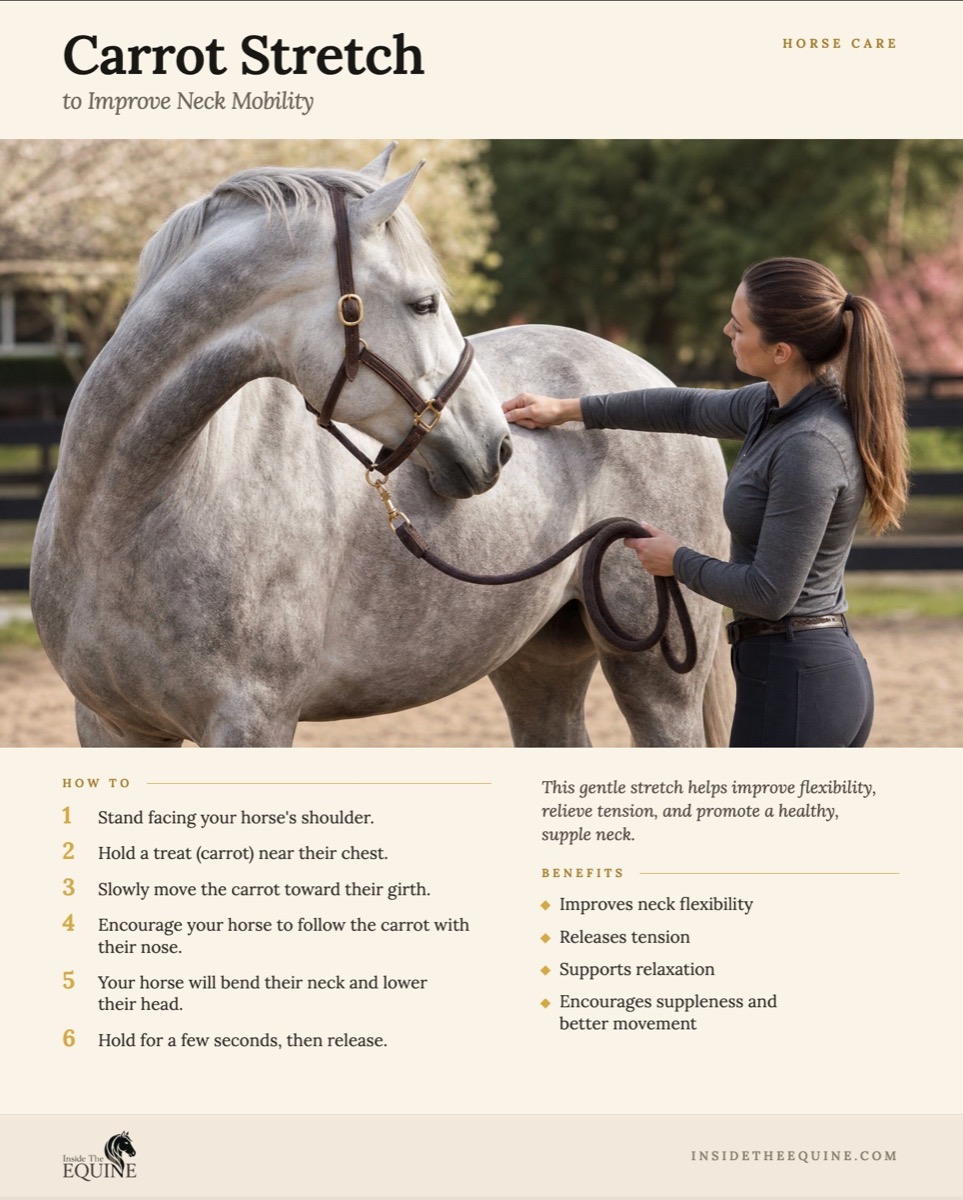
Gentle carrot stretches
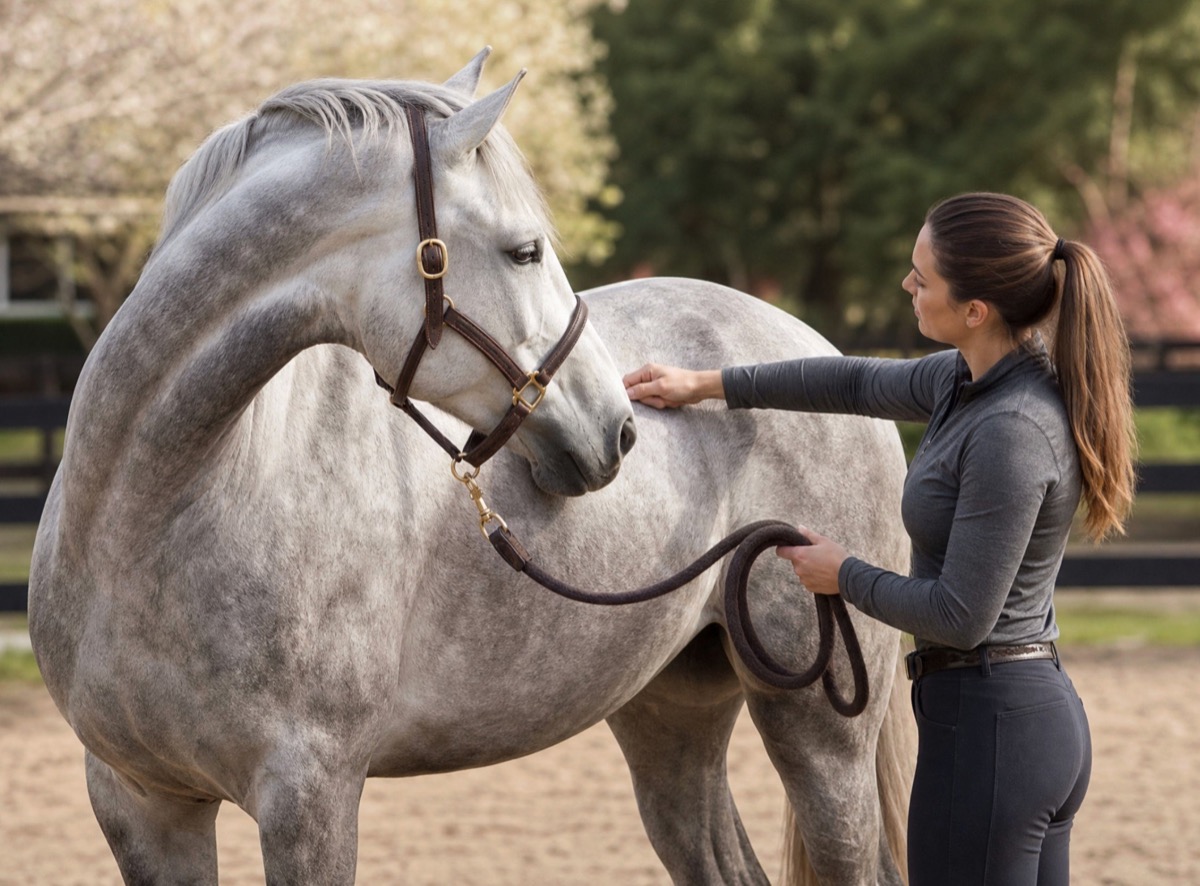
Carrot stretches encourage controlled mobility through the neck and trunk. Ask the horse to follow a treat toward the girth, shoulder, chest, and between the knees. Keep the feet still, the movement smooth, and the bend even rather than letting the horse snatch the treat.
Begin with two or three repetitions per side. If one side is clearly harder, do not force it. Reduce the range and note what you observe. Used consistently, these stretches can improve body awareness and support muscle tension relief.
Poll and upper-neck softness
Many horses hold tension around the poll, jaw, and upper cervical area. A simple exercise is to stand quietly and ask for tiny softening movements: a slight lowering of the head, a small release at the jaw, or a gentle turn without pulling. This is not a tug-of-war. The horse should feel invited, not trapped.
If your horse resists poll flexion, check dental comfort, bit fit, noseband pressure, and handling technique. Persistent poll tension can be a sign that the body is protecting a painful area.
Backing up with straightness
A few calm, straight steps backward can help the horse shift weight, activate stabilizing muscles, and become more aware of the base of the neck. Ask from the ground with light cues. The horse should step diagonally in pairs, stay relaxed, and avoid hollowing or throwing the head up.
Use short sets, such as three to five steps, then walk forward. Quality matters more than distance. Crooked backing, rushing, or dragging the feet suggests the exercise is too hard or discomfort may be present.
Raised walk poles
Walk poles encourage rhythm, shoulder freedom, and better coordination between the neck, back, and limbs. Begin with ground poles before raising anything. The horse should stay relaxed, stretch forward and down naturally, and step cleanly without tripping.
For horses with chronic neck pain or known cervical spine issues, pole work should be introduced only with professional guidance. Poles are helpful when they improve movement quality. They are not helpful if they make the horse anxious, rushed, or sore.
How can you tell whether it is tension, strain, or a bigger problem?
You cannot diagnose the cause of neck pain by appearance alone, but you can sort your observations into useful categories. Mild muscle tension often improves with rest, gentle movement, better warm-ups, and reduced workload. A true strain, joint irritation, nerve involvement, or systemic issue may worsen, recur, or show signs beyond simple stiffness.
Use this quick check before choosing exercises:
- Look at posture at rest. Is the head carried evenly, or is there a persistent tilt, twist, or guarded position?
- Watch movement in hand. Does the horse track straight, turn both directions, and lower the head comfortably?
- Palpate gently. Is there heat, swelling, flinching, spasm, or asymmetry along the neck?
- Review recent changes. New tack, dental work, hoof changes, turnout incidents, training intensity, and transport can all matter.
- Check for red flags. Stumbling, weakness, severe pain, fever, wounds, abnormal sweating, sudden head tilt, or loss of coordination needs veterinary care.
If the horse improves with light movement and management changes, the issue may be functional tension. If signs persist, keep returning, or affect performance, involve a veterinarian, equine physiotherapist, or qualified bodyworker.
Daily management that supports posture correction
The best neck pain relief plan is not just a list of stretches. It is a daily routine that makes better posture easier and bracing less necessary. Small changes in feeding, turnout, tack, and training can reduce strain on the neck muscles.
Try these practical habits:
- Feed from natural positions when appropriate. Allowing safe ground-level forage can encourage normal lowering and stretching, unless your horse has a medical reason to avoid it.
- Warm up longer. Begin with relaxed walking, large turns, and gradual transitions before asking for collection or tight circles.
- Avoid repetitive tight bending. Endless small circles can fatigue the neck and shoulders, especially in young, weak, or rehabbing horses.
- Check tack fit regularly. A saddle or bridle that worked last season may not suit the horse after changes in weight, muscle, or workload.
- Build the topline progressively. Hill walking, correct transitions, long-and-low stretching, and straightness work can help when introduced sensibly.
- Prioritize turnout and varied movement. Horses that move freely throughout the day often maintain better mobility than horses standing still for long periods.
Good posture is not a fixed frame. It is the horse's ability to move between positions without fear, stiffness, or compensation. Understanding how leg anatomy connects to overall posture can also inform your management approach.
A simple weekly neck-care routine
For a horse with mild stiffness and no red flags, a basic routine can keep the work organized. Adjust the plan based on age, fitness, diagnosis, and professional advice.
- Daily: Observe posture, appetite, behavior, and willingness to lower the head.
- 3–5 days per week: Add gentle carrot stretches after the horse is warm.
- 2–4 days per week: Include straight in-hand walking, large turns, and a few calm backing steps.
- 1–3 days per week: Use easy pole work or hill walking if the horse is comfortable and coordinated.
- Weekly: Reassess tack, training load, soreness, and symmetry from both sides.
- As needed: Book veterinary, dental, farrier, saddle-fitting, or physiotherapy support if progress stalls.
Keep notes. Patterns are easier to see when you track what changed, what helped, and what made the horse tighter.
When professional help matters
Home care is useful, but it has limits. Call a veterinarian promptly if the neck posture changed suddenly, the horse is very painful, there are wounds or swelling, or movement looks neurologically abnormal. Also seek help when chronic neck pain affects ridden work, handling, eating, balance, or quality of life.
A professional assessment may include gait evaluation, palpation, dental and tack review, imaging when indicated, and a tailored rehabilitation plan. In many cases, the best outcome comes from combining medical care, qualified bodywork, progressive conditioning, and consistent handling.
The takeaway
"Worm neck" is best understood as a visible clue, not a diagnosis. The neck may be showing muscle tension, compensation, training imbalance, discomfort elsewhere, or cervical spine issues that need professional attention. With careful observation, gentle physical therapy exercises, sensible posture correction, and a whole-horse approach, you can support better comfort and movement while avoiding the mistake of stretching through pain.
Use anatomy tools such as InsideTheEquine to understand what lies beneath your hands, then pair that knowledge with patient, practical care. A softer, stronger neck is built gradually, one relaxed step, one correct stretch, and one good decision at a time.
Frequently Asked Questions
Is "worm neck" a real diagnosis?
No. It is informal owner language for a neck that looks tense, twisted, low, braced, or difficult to bend. It is an observation, not a veterinary diagnosis. The underlying cause still needs proper assessment.
Can carrot stretches fix a worm neck?
They can help restore controlled mobility and body awareness in mild cases of tension, but they do not diagnose or fix underlying problems. Stop if the horse shows pain or resistance, and involve a veterinarian if signs persist or worsen.
When should I stop home exercises and call a vet?
Immediately if the change is sudden, the horse is very painful, there is swelling or heat, or you see neurological signs such as stumbling, weakness, head tilt, or abnormal coordination. Also seek professional help if mild stiffness does not improve with rest and management.
Can dental or hoof problems cause neck tension?
Yes. Discomfort in the mouth or front feet can change how a horse carries the neck and shoulders. Checking dental comfort and hoof balance is a common part of investigating neck posture changes.
How long does it take to improve neck posture?
Mild functional tension can improve over weeks with consistent management, better warm-ups, and appropriate exercises. Deeper or chronic issues often need professional input and a longer rehabilitation plan. Progress is gradual and individual.
Sources
- Denoix, J.M. Biomechanics and Physical Training of the Horse. CRC Press. (Detailed coverage of cervical and whole-body posture.)
- Clayton, H.M. The Dynamic Horse. Sport Horse Publications. (Equine locomotion and muscle function.)
- American Association of Equine Practitioners (AAEP) resources on equine musculoskeletal assessment and rehabilitation principles.
- Haussler, K.K. and others on equine cervical and back dysfunction, chiropractic, and rehabilitation literature.
- Standard veterinary guidance on recognizing neurological red flags in horses (wobbler syndrome, cervical stenosis, trauma).