Friesian Horse Breed Profile: History, Traits, and Care
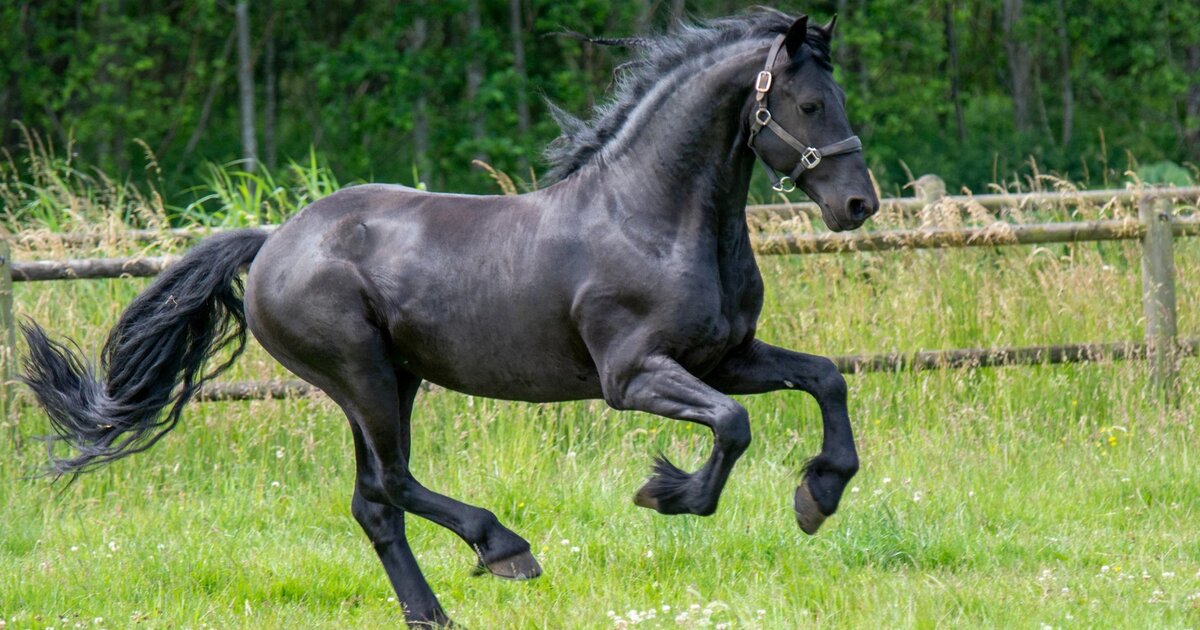
You've seen them and you remember. Black as midnight, feathered feet, mane flowing like something out of a fantasy novel. The Friesian horse stops traffic at shows, parades, and even gas stations when you're hauling one in an open stock trailer. They are, without question, one of the most visually striking breeds on the planet. But there's a real horse underneath all that drama, and the reality is more complicated - and more interesting - than the fairy tale.
Dutch Roots Run Deep
The Friesian comes from Friesland, a province in the northern Netherlands, and the breed's history stretches back to at least the Middle Ages. Medieval Friesians were war horses - not the massive destriers of popular imagination, but sturdy, agile horses that carried armored knights while remaining maneuverable enough for battle. They had the power to carry weight and the temperament to handle chaos.
As warfare evolved away from mounted cavalry, the Friesian transitioned into agricultural and carriage work. For centuries, they were the workhorses of the Netherlands - pulling plows, hauling goods, and trotting in front of the fancy carriages of Dutch merchants. The high-stepping, powerful trot that modern Friesians are famous for wasn't bred into them for beauty. It was bred for function: a trot that covers ground efficiently while pulling a load.
The breed nearly went extinct. Twice. By the early 1900s, crossbreeding with heavier draft horses and lighter riding types had diluted the pure Friesian population to critically low numbers. In 1913, only three purebred Friesian stallions remained in the studbook. Three. The breed survived because a handful of dedicated Dutch farmers refused to let it die, carefully breeding those remaining stallions and gradually rebuilding the population.
Texas A&M's equine genetics program uses the Friesian as a textbook example of a genetic bottleneck in domestic livestock. Three stallions. Every living Friesian traces back to those three animals, and the consequences of that bottleneck ripple through the breed's health profile to this day. It's the price of survival, paid in genetic diversity.
A second population crash threatened in the 1960s, but by then the Friesian had caught the attention of the international market. Exports to Germany, the United States, and other countries brought fresh demand and financial incentive to maintain the breed. Today, there are an estimated 60,000 to 70,000 Friesians worldwide, though the gene pool remains relatively narrow compared to more populous breeds.
What They Look Like
I know... seems obvious! The breed registry, Het Friesch Paarden-Stamboek (KFPS), registers only black horses, with a small white star being the only permitted marking. Any other color or marking disqualifies a horse from full registration. Occasionally, a chestnut Friesian is born - the red gene is recessive and still floating around in the population - but these horses cannot be registered as breeding stock.
They stand typically between 15.2 and 17 hands, with most falling around 15.3 to 16.1. The build is compact and powerful - arched neck, well-muscled hindquarters, a relatively short back, and a broad chest. The head is refined compared to draft breeds, with expressive eyes and small, alert ears.
And then there's the hair. Friesians grow mane, tail, and feathering with an enthusiasm that borders on absurd. The mane can reach below the shoulder, the tail often drags on the ground, and the fetlock feathering creates that signature flowing look at the trot. It's glorious. It's also a lot of maintenance, but we'll get to that.
The hallmark movement is that elevated, cadenced trot - knees lifting high, hocks driving from behind, the whole horse looking like it's floating while covering real ground. It's this trot that makes Friesians so sought-after in driving and dressage. When a Friesian extends at trot, the combination of power and grace is genuinely breathtaking.
Temperament
If Arabians are sports cars, Friesians are luxury SUVs. They tend toward a calm, people-oriented temperament that makes them genuinely pleasant to be around. Most Friesians enjoy human company, actively seek attention, and have a gentle, willing disposition under saddle.
They're not dull, though. Friesians are intelligent and can be sensitive - particularly to harsh handling. They respond best to consistent, patient training and tend to shut down or become anxious under heavy-handed methods. Positive reinforcement and clear communication get the best results with this breed.
That calm temperament is a big part of why Friesians have become popular in the film and entertainment industry. They look dramatic but behave reliably - a combination that camera operators love. You've seen Friesians in dozens of movies and TV shows, often cast as war horses, royal mounts, or fantasy steeds.
What They're Used For
Driving is the Friesian's historical forte, and they're still spectacular at it. From pleasure driving to competitive combined driving, the breed's natural carriage, power, and flashy trot make them standouts. Matched teams of Friesians in harness are a common sight at major driving events.
Dressage has become the primary riding discipline for Friesians, and they can do quite well at the lower to mid levels. Their natural collection, willingness to sit, and animated gaits lend themselves well to dressage movements. However, at the upper levels, the breed's relatively upright shoulder and higher knee action can work against them - the extended gaits that upper-level dressage demands favor breeds with more ground-covering, elastic movement.
Trail riding and pleasure riding are perfectly suitable for Friesians if you can handle the mane management. They're surefooted, calm in new environments, and genuinely enjoy going places with their riders. Some Friesians do light jumping, though the breed isn't built for serious show jumping - their heavier build and movement style make it harder on their joints over fences.
Health Concerns - The Important Part
This is where the fairy tale meets reality. The Friesian breed's near-extinction events left a lasting genetic legacy: a narrow gene pool that predisposes the breed to several significant health issues. If you're considering buying a Friesian, you need to know about these.
Cornell University's veterinary genetics laboratory has been at the forefront of Friesian health research, and their findings paint a sobering picture that every prospective buyer should sit with before writing a check.
Aortic rupture: Friesians have a higher-than-average incidence of aortic rupture, where the major artery from the heart tears. This is usually sudden and fatal. Research suggests a connective tissue weakness that may be inherited, and it can occur in horses as young as their teens. There's no reliable screening test yet.
Megaesophagus: A condition where the esophagus loses its ability to move food into the stomach normally. Affected horses have difficulty swallowing, lose weight, and are prone to choke and aspiration pneumonia. It's more common in Friesians than any other breed.
Dwarfism: A recessive genetic condition that produces foals with disproportionately short limbs, a broad chest, and other skeletal abnormalities. A DNA test is available, and responsible breeders test all breeding stock.
Chronic dermatitis (pastern dermatitis): Those beautiful feathers? They create a warm, moist environment around the pasterns that's a perfect breeding ground for bacterial and fungal infections. "Scratches" or "mud fever" is extremely common in Friesians, and some individuals seem predisposed to chronic, recurring skin issues regardless of management. Daily feather maintenance isn't optional - it's medical care. Keeping the pastern area clean and dry is essential.
Hydrocephalus: Some Friesian foals are born with fluid accumulation in the skull. UC Davis Veterinary Genetics Laboratory has identified the inheritance pattern and offers carrier testing for breeding stock. The condition is typically incompatible with life, and affected foals are often stillborn or euthanized shortly after birth. Responsible breeders test. Irresponsible ones roll the dice with someone else's heartbreak.
Insect hypersensitivity: Friesians seem disproportionately affected by sweet itch and other insect-related allergic reactions. Managing this in warm, humid climates can be an ongoing battle involving fly sheets, fans, and sometimes medication.
Retained placenta: AAEP proceedings have noted that Friesian mares experience retained placentas at rates significantly above the general horse population. Whether this connects to the same connective tissue abnormalities suspected in aortic rupture remains an active area of investigation, but the clinical reality is straightforward: Friesian breeders need a vet on call for every foaling.
The average Friesian lifespan is shorter than most breeds - some studies suggest a median age at death of around 16 years, compared to 25-30 for many other breeds. This isn't universal, and well-bred individuals from health-tested lines certainly live longer, but it's a statistical reality that prospective owners should understand.
Owning One - Practical Notes
Grooming a Friesian is a commitment. That mane needs regular detangling, conditioning, and protection from breakage. The feathers need daily inspection for skin issues, especially in wet weather. Many owners clip the feathers for practical management, which is completely reasonable even if purists gasp.
They tend to be easy keepers - efficient on forage, prone to weight gain on rich pasture. Monitor body condition carefully and adjust feed accordingly. A fat Friesian puts additional stress on joints and hooves that are already working hard under a heavier frame.
Buy from a breeder who health-tests aggressively. Ask about aortic rupture history in the line. Ask about the dwarfism DNA test results. Ask about longevity in the family tree. A reputable Friesian breeder will welcome these questions. Anyone who dismisses them is waving a red flag.
Insurance is worth discussing. Some equine insurers charge higher premiums for Friesians or exclude certain conditions from mortality and major medical policies. Shop around. Read the fine print with a magnifying glass and a cup of strong coffee. The Merck Veterinary Manual's cardiovascular section discusses aortic conditions in horses generally, but Friesians warrant their own risk conversation with your insurance agent.
The Friesian is a magnificent breed, a genuine piece of living history with a temperament that draws people in and a presence that commands any room. Just go in with your eyes open, your vet on speed dial, a solid understanding of when to call the vet, and a good supply of mane conditioner.
🦴 Compare the Friesian build to other breeds in our 3D Explorer. Check it out here.
Jaynee's Note: I've never ridden a Friesian but I've watched them move at Equine Affaire and the hair alone is worth the price of admission. Absolutely stunning animals.
Frequently Asked Questions
Are Friesians good for beginner riders?
Friesians are generally calm and willing, which appeals to beginners, but they're also large, powerful horses that require a rider capable of managing their size and energy. An older, well-trained Friesian can work well for a confident beginner, but a young or green Friesian is not an appropriate first horse. Their movement is also big and scopey, which some beginners find more challenging to sit than a quieter breed.
Why do Friesians only come in black?
The breed registry (KFPS) only accepts black horses for full registration. This has been the standard for centuries and is deeply tied to breed identity. Occasionally a chestnut Friesian is born due to recessive genetics, but these horses cannot be registered as studbook Friesians. The strict color requirement preserves the breed's iconic appearance but also limits the gene pool.
What health problems are common in Friesians?
Friesians have a higher incidence of aortic rupture, megaesophagus, dwarfism, and hydrocephalus compared to most breeds. They're also prone to scratches and other skin conditions on their feathered legs. The breed's relatively small gene pool contributes to these genetic vulnerabilities. Responsible breeders test for known conditions, but buyers should be aware of breed-specific health risks.
What disciplines are Friesians best suited for?
Dressage is their strongest discipline, particularly at the lower and mid levels where their natural collection and elevated movement shine. They also excel in driving, both competitive and pleasure. Friesians appear frequently in film, exhibitions, and ceremonial work due to their striking presence. They're less common in jumping, eventing, and endurance due to their heavier build and feathering, though crossbred Friesian sport horses are increasingly competitive in those areas.
How long do Friesians live?
Average lifespan is 15 to 17 years, which is shorter than many light horse breeds that commonly reach their mid-to-late twenties. The breed's genetic health issues contribute to this reduced longevity. Some Friesians live well into their twenties with excellent care, but prospective owners should be aware that the breed's average lifespan is notably shorter than breeds like Arabians or Quarter Horses.
- Cornell University College of Veterinary Medicine - Friesian Horse Genetic Research cornell.edu
- UC Davis Veterinary Genetics Laboratory - Friesian Dwarfism Test ucdavis.edu
- Merck Veterinary Manual - Aortic Rupture in Horses merckvetmanual.com
- AAEP - Dermatological Conditions in Horses aaep.org
- Texas A&M College of Veterinary Medicine - Equine Cardiovascular Disease tamu.edu
Sources
- Cornell University College of Veterinary Medicine - Friesian Horse Genetic Research cornell.edu
- UC Davis Veterinary Genetics Laboratory - Friesian Dwarfism Test ucdavis.edu
- Merck Veterinary Manual - Aortic Rupture in Horses merckvetmanual.com
- AAEP - Dermatological Conditions in Horses aaep.org
- Texas A&M College of Veterinary Medicine - Equine Cardiovascular Disease tamu.edu