Horse Ground Manners: Teaching Your Horse to Lead, Tie, and Stand
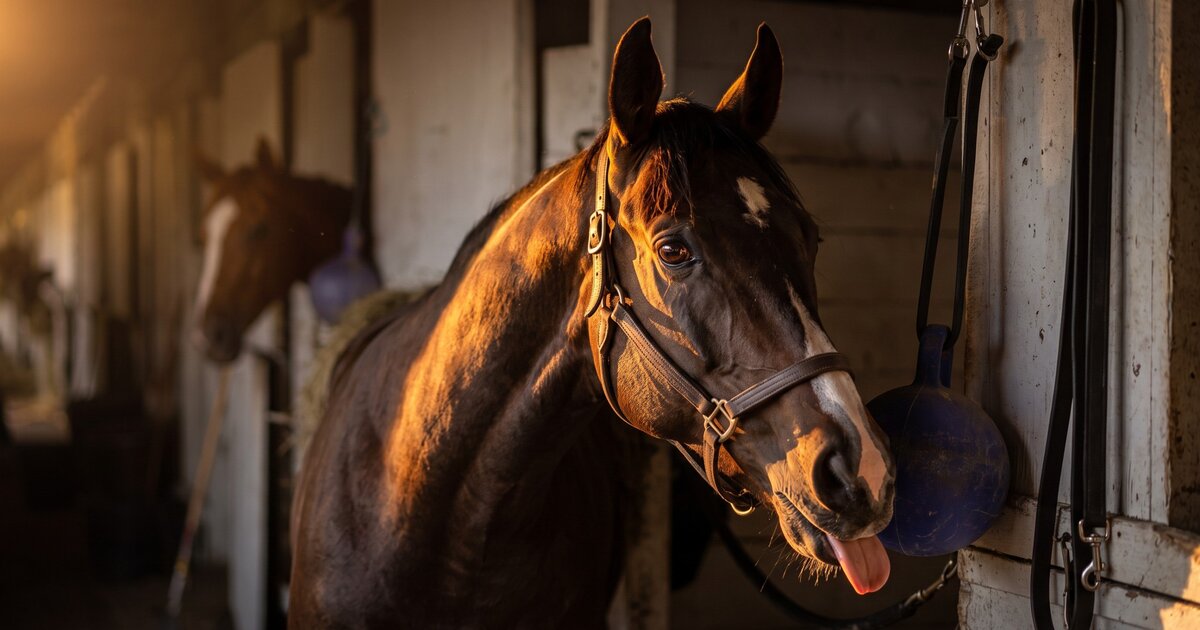
The most dangerous moments with a horse rarely happen in the saddle. They happen on the ground, in the space between the stall and the trailer, when a 1,000-pound animal decides it would rather be somewhere else and you happen to be attached to it by a rope. A horse that leads politely, ties without a fight, and stands still while you pick a hoof is not just easier to be around. It is safer, for you, for the farrier, for the vet, and for the horse itself. And here is the part most people miss: every one of those behaviors is built on the same single skill. Once your horse understands it, leading, tying, and standing all click into place. You may also find our article on Understanding Horse Body Language helpful. You may also find our article on Reading Horse Ear Positions helpful.
Why are ground manners the foundation of safety?
Ground manners matter because a horse is a large prey animal whose first instinct under threat is to flee, and you are usually standing right next to it. That flight instinct does not switch off just because there is a halter involved. A horse that has not learned to control the impulse can drag you, spin into you, or bolt while you are holding the lead. University extension safety programs consistently rank ground handling among the highest-risk parts of horse ownership, precisely because of the size and reactivity mismatch between horse and human. You may also find our article on Cribbing in Horses helpful.
What separates a safe horse from a dangerous one is not temperament alone. It is training that overrides the flight response with a learned alternative: yield to pressure and stay calm. When a horse genuinely understands that giving to pressure makes the pressure go away, it stops treating restraint as a trap. That understanding is what makes a horse safe to lead through a crowded aisle, safe to tie while you tack up, and safe to stand for a needle.
How do horses actually learn? Pressure, release, and timing
Horses learn ground manners primarily through negative reinforcement, which sounds harsh but simply means removing something the horse finds mildly unpleasant (steady pressure) the moment it responds correctly. This is not punishment. In learning-theory terms, "negative" means subtracting the pressure, and that subtraction is the reward. The horse learns, "when I do this, the annoying feeling stops," and it repeats the behavior that made the pressure disappear.
The research is consistent here. Reviews of equine learning theory by scientists such as Andrew McLean and Janne Winther Christensen emphasize that tactile pressure must be removed at the onset of the correct response, and that delayed release is both ineffective and a welfare problem. The International Society for Equitation Science lists correct use of operant conditioning as a core training principle for exactly this reason: a late release teaches the horse the wrong thing, or nothing at all. For more details, see our guide on Correct Riding Position.
Two ideas do most of the work here:
- Timing. The release should land within a second of the horse's first correct effort. If you hold pressure after the horse gives, you punish the very response you wanted.
- Shaping. You reward small steps toward the goal rather than waiting for the finished behavior. ISES describes this as breaking a task into the smallest achievable pieces and reinforcing each one. A half-step forward earns a release before you ever ask for a confident walk.
Get timing and shaping right and horses learn ground manners remarkably fast, because you are working with how their brains are actually wired rather than against it.
How do you teach a horse to lead politely?
Leading well means the horse walks with you, respects your personal space, and moves its feet off light pressure without crowding, dragging, or lagging. Start with position. A common extension-recommended handling position is to hold the lead rope roughly 8 to 10 inches from the halter with your near hand and carry the slack folded in your other hand, walking at the horse's left shoulder. Never coil the rope around your hand or fingers. If the horse bolts, a wrapped rope can break bones or take fingers off.
Now teach the actual skill, which is moving off pressure:
- Ask to go forward. Apply light, steady forward tension on the lead. The instant the horse leans or steps toward you, release completely. Repeat until a light feel produces a step.
- Teach whoa. Stop your own feet, breathe out, and add gentle backward pressure. When the horse stops, release. Your body language becomes the cue over time.
- Establish a personal bubble. If the horse crowds you, use pressure (a wiggled rope, a raised hand toward the shoulder) to ask it to step away, and release the moment it moves over. A horse that respects space does not walk on top of you at feeding time or spook into you.
The goal is what equitation scientists call self-carriage: the horse maintains the pace and direction you set without constant nagging on the lead. If you are hauling on the rope every stride, you have not finished teaching, you have built a horse that leans.
How do you teach a horse to tie safely?
Teaching a horse to tie is really teaching it to give to pressure on its poll rather than fight it, because the danger of tying is not the rope, it is the horse's instinct to pull against restraint. When a horse feels pressure behind its head and pulls back, it triggers what handlers call the opposition reflex: the harder it feels held, the harder it fights. In a full panic-puller, the flight response takes over completely, and the horse can flip over backward, fracture vertebrae, or injure the poll and the delicate structures around the first two neck bones. Pull-back incidents are a genuine cause of serious cervical and poll injuries, which is why this behavior is worth taking seriously rather than "training through" with force.
The safe way to build a tying horse is to teach the give first, on the ground, before you ever tie hard and fast:
- Teach yield to poll pressure. Loop the lead around a solid, smooth post (do not tie it) and ask the horse to step forward to release the pressure. The moment it steps toward the post and the rope goes slack, it has rewarded itself. Repeat until the horse's default answer to poll pressure is "step forward," not "pull back."
- Never teach a horse to tie by tying it hard and letting it fight. A horse that pulls back, breaks something, and gets loose has just been powerfully rewarded for pulling back. It learned that pulling works.
- Use safe hardware while training. Blocker-style tie rings or a slip that releases under heavy load let the rope give a little, which keeps a worried horse from hitting the wall of a fixed point and panicking.
Once the horse reliably gives to pressure, you tie for real, and you tie correctly.
Cross-ties, single ties, and quick-release: setting up to succeed
How and where you tie matters as much as whether the horse knows how to tie. The core rules from equine safety programs are consistent: tie to something solid that cannot move, tie at or above wither height, keep the lead short enough that the horse cannot get a leg over it (roughly the length of your arm, not a long loop), and use a quick-release knot or a breakaway attachment. Never tie to a wire fence, a gate, a stall door, a moveable panel, or anything that could come loose and chase the horse when it moves.
| Feature | Single tie | Cross-ties |
|---|---|---|
| Head control | Horse can turn its head and body somewhat | Head held centered, easier grooming access |
| Best for | Trailers, rails, patient tying practice | Barn aisles, tacking up, farrier work |
| Panic risk | Horse may swing sideways into the post | Pressure from two sides can escalate a puller |
| Safety requirement | Quick-release knot, solid anchor, short lead | Breakaway ends (baling twine or clips) on both sides |
Cross-ties are excellent for a confident, trained horse because they hold the head centered and keep the handler safer during grooming and tacking. They are a poor choice for a green or panicky horse, because pressure from both sides at once can feed the opposition reflex and turn a small worry into a wreck. Whatever system you use, build in a way for the horse to break free rather than break its neck. A loop of baling twine between the tie and the wall, or a purpose-made breakaway clip, is cheap insurance. A quick-release knot lets you free a struggling horse in one pull, but only if you can safely reach it. Never put your hands near a thrashing horse's head to untie a fixed knot.
How do you teach a horse to stand still for mounting, the farrier, and the vet?
Standing still is taught the same way as everything else: pressure to ask for stillness, immediate release and calm to reward it, and duration built gradually. Standing is not a single trick. It is the horse learning that "park here and relax" is the answer that makes life easy. The mistake is expecting a horse to stand ten minutes on day one. Shape it.
For mounting
Ask the horse to stop and stand at the block. If it moves a foot, calmly reposition it and ask again, releasing all pressure the instant it is square and still. Reward one second of stillness, then three, then ten, before you ever put a foot in the stirrup. A horse that walks off at the block has usually been trained to, by riders who let it move and mounted anyway.
For the farrier and vet
These are non-negotiable manners because another professional's safety depends on them. Practice picking up and holding each foot for a few seconds, releasing before the horse pulls it away so it learns that patience, not snatching, ends the ask. Habituate the horse ahead of time to the things it will meet: clippers, spray bottles, someone leaning on it, hands around the head. Do this on your own schedule, calmly and repeatedly, so the appointment is not the horse's first exposure.
What common mistakes erase good ground manners?
Most ground-manner problems trace back to inconsistent timing and accidental training, not a "bad" horse. The most damaging habits are surprisingly common:
- Nagging pressure. Constant, low-grade tension on the lead teaches the horse to ignore pressure entirely. Pressure should be a clear on-off signal, not background noise.
- Late releases. If you keep pulling after the horse gives, you punish the correct answer. The horse concludes that giving does not work, so why bother.
- Rewarding the wrong thing. Letting a crowding horse push you backward, or a pawing horse get led off, teaches the horse that pushy behavior gets results.
- Skipping habituation. Expecting a horse to calmly meet clippers, wormers, or a vet with no prior exposure sets everyone up for a fight.
- Using pain as a shortcut. Harsh poll pressure on a panicked horse intensifies the flight response rather than calming it. Fear-based methods create the exact reactivity you are trying to eliminate.
The fix in nearly every case is the same. Slow down, make your pressure clear, and release the instant the horse tries. Consistency is what turns a lucky moment into a reliable habit.
Frequently Asked Questions
Is negative reinforcement cruel or the same as punishment?
No. Negative reinforcement means removing mild pressure the moment the horse responds correctly, and that release is the reward. Punishment adds something unpleasant after a behavior. Correctly applied pressure-and-release uses light signals and quick releases, which learning-theory researchers consider both effective and welfare-friendly. The cruelty comes from heavy pressure or late releases, not from the method itself.
Why does my horse pull back when tied?
Horses pull back because restraint triggers either a learned habit (the horse has broken free before and it worked) or a genuine flight panic when it feels trapped. Both are made worse by fighting the rope. The solution is to teach the horse to step forward and yield to poll pressure long before you tie it hard, and to use breakaway hardware so a panic never rewards the pull.
Are cross-ties safer than a single tie?
It depends on the horse. Cross-ties keep a trained horse's head centered and give the handler safer access for grooming and tacking. For a green or panicky horse, pressure from both sides can escalate a pull-back, so a single tie or continued groundwork is safer first. Whichever you use, always include breakaway ends so the horse can free itself rather than injure its neck.
How high and how short should I tie my horse?
Tie at or above the level of the withers to a solid, immovable anchor, and keep the lead short enough that the horse cannot lower its head and get a leg over the rope, roughly an arm's length. Always use a quick-release knot or breakaway attachment, and never tie to a fence wire, gate, or anything that could come loose and chase the horse.
How long does it take to teach good ground manners?
Because these skills work with a horse's natural learning, the basics of leading and yielding to pressure can improve within a few focused sessions when your timing is correct. Reliable tying and standing take longer, often weeks of short, consistent practice, because you are building duration and calm. Consistency matters far more than session length. Ten focused minutes daily beats an occasional marathon. For more details, see our guide on Collection in Dressage.
My older horse already has bad ground manners. Can I fix it?
Yes. Horses can learn and relearn at any age. Older horses with entrenched habits may take longer because they have practiced the wrong response for years, but the same pressure-and-release principles apply. For dangerous behaviors like serious pulling back or rearing on the lead, work with an experienced trainer, since safety for you and the horse comes first.
Sources
- McLean, A.N. & Christensen, J.W. (2017). The application of learning theory in horse training. Applied Animal Behaviour Science, 190, 18-27.
- International Society for Equitation Science. ISES Training Principles (Principles on operant conditioning, classical conditioning, shaping, and self-carriage). equitationscience.com.
- McGreevy, P.D. (2012). Equine Behavior: A Guide for Veterinarians and Equine Scientists (2nd Ed). Saunders/Elsevier.
- University of Missouri Extension. Safe Ground Handling of Horses (Guide G2878). extension.missouri.edu.
- Extension Horses (eXtension). Ground Handling Horses Safely. horses.extension.org.
- American Youth Horse Council / University of Kentucky Cooperative Extension. Basic Horse Safety Manual (4AF-05MA).