How to Mount and Dismount a Horse Safely (Without Wrecking Your Horse's Back)
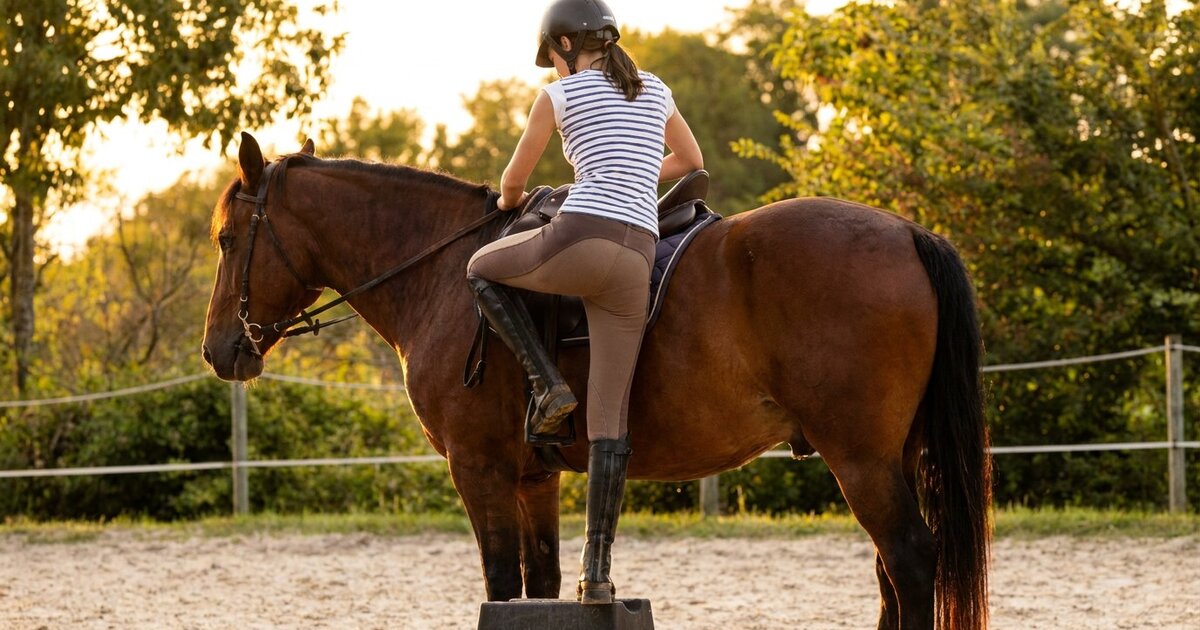
The first ten seconds of a ride tell you a lot. A horse that plants its feet, waits, and lets you settle has been taught the job matters. A horse that swings its hindquarters away, walks off before your second stirrup, or throws its head is telling you something too. Mounting and dismounting look like the boring bookends of riding, but they are where a surprising number of people get hurt, and where a lot of quiet, long-term damage happens to horses' backs. Getting this part right protects both of you. You may also find our article on Understanding Horse Body Language helpful. You may also find our article on Reading Horse Ear Positions helpful. For more details, see our guide on Correct Riding Position.
Why is mounting one of the riskiest moments in riding?
Mounting is high-risk because for a few seconds you are half on and half off, with one foot committed to a stirrup and no real control if the horse moves. A horse that shifts, spooks, or walks off in that window can drag you, dump you off the far side, or leave you hopping on one leg. You may also find our article on Collection in Dressage helpful.
Dismounting carries its own version of that risk. The most dangerous mistake is coming off with a foot still caught in a stirrup, which can leave a rider hanging alongside a moving horse. The Certified Horsemanship Association describes a lawsuit over a badly broken ankle that came down to one rider forgetting to take their feet out of the stirrups before getting off. Clearing both stirrups is the step that keeps a fall from becoming a drag.
Choose your ground, too. Extension safety guidance is blunt about location: never mount in a barn aisle or a stall, and stay away from fences, trees, and low overhangs. You want open, level footing where a startled horse has room to move that is not into a wall.
What should you check before you put a foot in the stirrup?
Check the girth or cinch first, and check it more than once. A girth that felt snug when you tacked up often loosens as the horse relaxes, breathes out, and moves around. Rutgers Equine Science Center recommends checking it at least twice before you mount, then a third time after you are up. A loose girth lets the saddle rotate as you weight the stirrup, which at best slides it sideways and at worst rolls it right under the horse's belly with you attached.
Run through the rest of the tack while you are down there:
- Girth/cinch: snug enough that the saddle will not rotate, checked twice before and once after mounting.
- Stirrup length: roughly set before you get on, so you are not fumbling once you are up.
- Bridle and bit: straps in their keepers, reins not twisted where a hoof could catch.
- Saddle placement: behind the shoulder blade, pad pulled up into the gullet so it is not pressing on the withers.
- Your own gear: a fitted safety helmet and boots with a defined heel that cannot slip through the stirrup.
On the helmet: this is the cheapest insurance in the sport. University extension programs consistently recommend one that meets a current safety standard (in the United States, look for ASTM/SEI certification), fitted level on the head.
Why does a mounting block beat mounting from the ground?
A mounting block is easier on your horse's back and your saddle, and the difference is measurable. Researchers at Michigan State University's College of Veterinary Medicine put pressure mats under the saddle and had riders mount both from the ground and from a 14-inch mounting block. The peak force on the horse's back was significantly higher when mounting from the ground than from the block.
Think about the mechanics. When you haul yourself up from the ground, you drag your full weight down through the left stirrup, levering the saddle tree into one side of the withers and twisting the whole saddle toward you. That repeated, asymmetric torque, ride after ride, is what saddle fitters and vets suspect contributes to uneven muscling and a sore back. A block lets you step up and across, so more of your weight goes into the saddle instead of yanking it sideways.
The same study flagged something riders rarely think about: how you land matters as much as how you climb. Riders who settled softly created far less force than riders who flopped down. Use a block, and land gently.
How do you mount from a block step by step?
Mount from the horse's left (near) side, the traditional side horses are most used to, with the block positioned by the shoulder. Here is the sequence:
- Position the horse. Stand it alongside the block so the saddle is right next to you, feet square, not standing at an angle with its hindquarters swung away.
- Gather your reins. Take both reins in your left hand just in front of the withers, short enough to stop the horse if it steps off but not so tight you pull it backward, and grab a handful of mane.
- Set your left foot. Place your left foot in the stirrup only far enough that it sits at the ball of your foot, not jammed home to the heel, toe turned toward the girth so it does not dig into the horse's side.
- Rise smoothly. Put your right hand on the far side of the saddle (the pommel, not the cantle) and stand straight up. From a block this is almost a step across.
- Swing over softly. Swing your right leg clear over the croup without kicking the hindquarters, and lower yourself into the saddle instead of dropping. Find your right stirrup, then recheck that girth.
If the horse steps around while you get organized, extension guidance gives a simple fix: pull a little more on the left rein than the right so the horse circles around you rather than walking off, then reset.
How do you teach a horse to stand still for mounting?
You teach standing still by making it the easy, rewarded choice and never letting the horse learn that moving off gets it out of work. Horses learn from the release of pressure, so if a horse walks away and you give up, you just taught it that walking away works. A practical progression, drawn from FEI instructional guidance:
- Park and reward. Line the horse up beside the block and reward it (a scratch, a quiet word, a treat) for simply standing there.
- Step up and down. Get on and off the block, lean over the saddle, put weight in the stirrup, all without mounting.
- Mount gently. When the horse is relaxed, swing up softly.
- Insist on the wait. Ask the horse to stand after you are on until you actively ask it to move off, rather than letting it decide.
If the horse drifts off the block, calmly put it to work (a few rein-backs, turns on the haunches, small circles), then bring it back and reward standing quietly. The horse learns that standing is the restful option and fidgeting means more effort. You may only get through the first couple of steps in one session, and that is fine.
How do you dismount safely, and when do you use an emergency dismount?
There are two dismounts every rider should own: the controlled step-down for normal use, and the emergency dismount for the rare moment you must bail off a horse that is genuinely out of control.
For the everyday controlled dismount, the process is essentially mounting in reverse. Bring the horse to a full stop, take both feet completely out of both stirrups, gather your reins and a bit of mane in your left hand, put your right hand on the pommel, swing your right leg clear over the croup, and slide down the horse's side to land softly on both feet. Feet out of both stirrups first is non-negotiable.
The emergency dismount is for a true crisis: a bolting horse, a bee swarm, a moment when staying on is more dangerous than the ground. In the US Pony Club and Certified Horsemanship Association versions, you drop the reins to a light hold or onto the neck, put your hands on the horse's neck (not the saddle), kick both feet hard out of the stirrups, lean forward, push away, and land on both feet with knees bent. Pushing away matters so you clear the horse and are not knocked down under it.
| Feature | Controlled (step-down) dismount | Emergency dismount |
|---|---|---|
| When to use | Every normal end of ride, horse halted | Only a genuine loss of control or real danger |
| Horse's speed | Standing still | Often moving, sometimes fast |
| Reins | Held in left hand, horse under control | Light hold or released, priority is getting clear |
| Landing | Slide down, soft two-foot landing | Push away, land on both feet, knees bent |
| Shared rule | Both feet fully out of stirrups first | Both feet fully out of stirrups first |
One honest note: the emergency dismount has fallen somewhat out of favor with some instructors, who worry that drilling it causes more injuries in practice than it prevents, and that in many spooks staying balanced is safer than bailing. It is still worth practicing at a walk under supervision. Treat it as a last resort, not a first reaction. For more details, see our guide on Cribbing in Horses.
How do you stay safe mounting a fidgety or fresh horse?
With a fidgety horse, the safest move is often to fix the fidgeting on the ground before you get on, rather than fighting to mount a moving target. A horse that will not stand is anxious, sore, or has learned it can leave. Some guardrails for the fresh or fussy ones:
- Have a helper at the horse's head to hold it steady while you retrain separately.
- Use an enclosed, quiet space away from the herd and gates, but not so tight a spin traps you against a wall.
- Rule out pain first. A horse that suddenly refuses to stand or dips away from the saddle may have a sore back or an ill-fitting saddle. That is a conversation for your veterinarian.
- Do not get on a horse you cannot mount calmly. If it takes three people and a wrestling match, the situation is already unsafe. Get help from a trainer.
The long game is always the same: a horse that stands like a rock was made that way on purpose, one calm repetition at a time.
Frequently Asked Questions
Is it really bad for my horse's back to mount from the ground?
Research from Michigan State University found peak force on the horse's back was significantly higher mounting from the ground than from a 14-inch block, because your weight levers the saddle sideways into the withers. An occasional ground mount on the trail will not ruin a horse, but doing it every ride adds up.
Which side do I mount and dismount from?
The traditional and most common side is the horse's left (near) side, and most horses are trained and comfortable with it. That said, teaching a horse to accept mounting from both sides is good for its symmetry and handy in the real world.
Why do I need to check the girth again after I am on?
Horses relax and breathe out once they are moving, so a girth that was snug in the stall loosens by the time you mount. Rutgers recommends checking it at least twice before mounting and once more after. A loose girth is the classic cause of a saddle rolling sideways under a rider.
What is the single most important dismount rule?
Take both feet completely out of both stirrups before any part of you leaves the saddle. A foot caught in a stirrup during a fall is how a simple tumble turns into being dragged. It applies to the calm dismount and the emergency dismount equally.
My horse will not stand still to be mounted. What now?
First rule out pain and saddle fit with your veterinarian, because a horse that suddenly cannot stand may be sore. If it is a training gap, work in short, calm sessions: reward standing at the block, make wandering off mean a little more work, and never mount a moving horse.
Sources
- Rutgers New Jersey Agricultural Experiment Station / Equine Science Center. FS349: Mounting, Dismounting, and Riding Horses Safely. Rutgers Cooperative Extension.
- Michigan State University College of Veterinary Medicine. Research on saddle pressure and peak force when mounting from the ground versus a 14-inch mounting block (as reported in equestrian press coverage of the study).
- United States Pony Club. Emergency Dismount at the Walk (D-2 Standard instructional resource). ponyclub.org.
- Certified Horsemanship Association. On the Rail: The Emergency Dismount. cha.horse.
- Fédération Équestre Internationale (FEI). How to Make Your Horse Stand Still While Mounting. fei.org.
- Extension Horses / university cooperative extension. Helmet Fitting Guidelines for Horse Owners. horses.extension.org.