American Quarter Horse Breed Profile: The World's Most Popular Breed
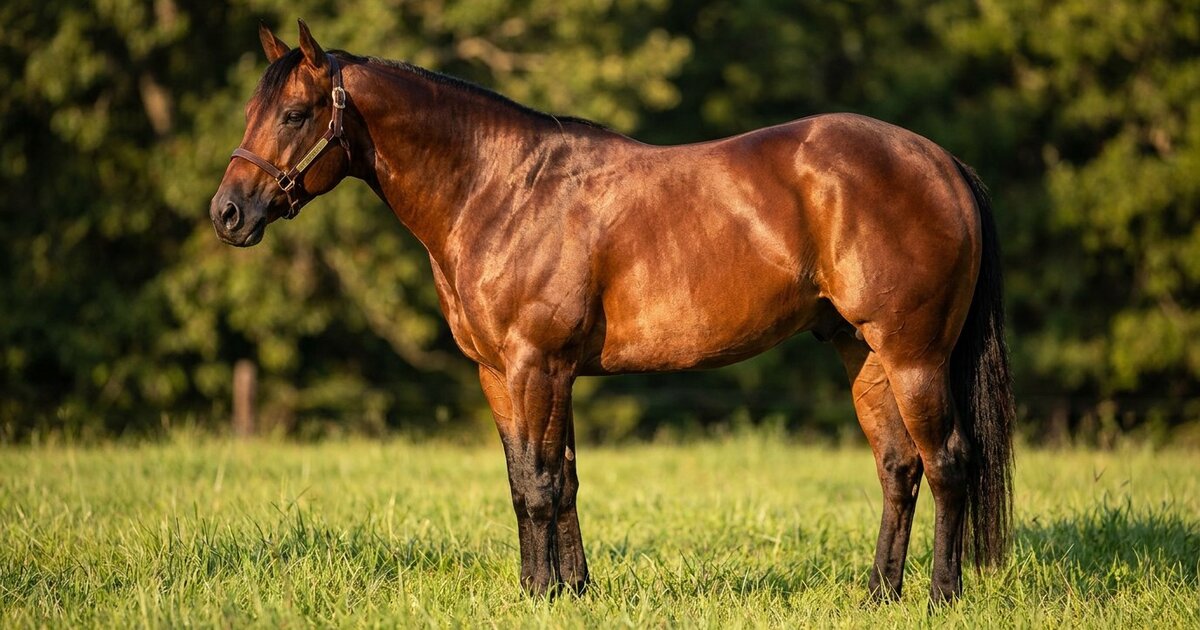
More American Quarter Horses are registered than any other breed on Earth. Not in America. On Earth. The AQHA has over six million horses in its registry, and that number keeps climbing. There's a reason for that kind of dominance, and it has everything to do with what this breed actually is: the Swiss army knife of the horse world, a do-everything animal that's equally at home on a cattle ranch, in a reining pen, on a trail, or in a kid's 4-H class.
I've worked around plenty of breeds. Arabians with fire coming out their nostrils. Warmbloods that move like suspension bridges. Thoroughbreds that want to gallop through brick walls. But no breed I've encountered matches the Quarter Horse for sheer "let's just get the job done" attitude. They don't need fanfare. They need a task.
How It Started
The Quarter Horse's origin story is genuinely American. In the 1600s, colonists along the Eastern Seaboard started crossing English Thoroughbreds (and their predecessors) with horses of Spanish descent: compact, muscular animals the Native Americans and Spanish settlers had bred for cattle work and quick acceleration.
The resulting horses were unbeatable in short races. Colonial Americans laid out quarter-mile straightaways down main streets and along cleared paths, wagering heavily on which horse could cover that distance fastest. The breed earned its name from those quarter-mile sprints, and to this day, the Quarter Horse holds the record as the fastest breed in the world at distances under a quarter mile. We're talking speeds approaching 55 mph in a dead sprint. That's not a typo. Texas A&M researchers have clocked individual Quarter Horses exceeding 50 mph in timing trials, and the all-time record sits at approximately 55 mph over 440 yards.
As America expanded westward, so did the Quarter Horse. Cowboys discovered what the colonists already knew: this horse was fast, sure, agile, and had an almost supernatural ability to read cattle. The Quarter Horse became the foundation of the American ranching industry, and it's still the dominant breed on working ranches today. The transition from racehorse to ranch horse wasn't planned. It just happened because the genetics that produced short-distance speed also produced the explosive lateral agility that cattle work demands.
The American Quarter Horse Association was founded in 1940 in Fort Worth, Texas. The first horse registered was a stallion named Wimpy, number P-1 in the studbook. Wimpy's descendants still influence modern bloodlines, though the breed has diversified enormously since those early registry days.
Built for the Job
Quarter Horses are built like athletes who specialize in explosive power. The hindquarters are the defining feature: massively muscled, broad, and deep, providing the engine for those lightning sprints and hard stops that cattle work demands. The term "bulldog" type refers to the most heavily muscled individuals, low-set, wide, compact horses with hindquarters you could set a table on.
They typically stand between 14.3 and 16 hands, with most falling around 15 to 15.2. The chest is broad, the back short and strong, the shoulder well-angled for quick lateral movement. The head is refined compared to the body: short, with a broad forehead, large kind eyes, and small ears. That head profile is distinctive enough that experienced horse people can spot a Quarter Horse across a field.
Every color under the sun shows up in the breed. Sorrel (a copper-red chestnut) is the most common color by registration numbers, but you'll find bays, blacks, buckskins, palominos, duns, grullas, roans, and grays. Paints and pintos have their own registries (APHA), but the color genetics overlap significantly since both breeds share bloodlines.
The breed has split into recognizable subtypes over the decades. Stock type horses are the classic compact, muscled build ideal for ranch work, cutting, and reining. Racing type horses run leaner and longer, closer in build to Thoroughbreds. Halter type horses carry extreme muscling that wins in-hand classes but has also concentrated some genetic problems (more on that below). Hunter type Quarter Horses trend taller and smoother-moving, bred to succeed in English disciplines. Same registry, wildly different animals depending on which branch of the family tree you climb.
Temperament: The Reason They're Everywhere
If the Quarter Horse has a secret weapon, it's the brain. These horses tend to be sensible, trainable, forgiving, and genuinely willing. The term "broke" gets thrown around a lot in the Western world, and a well-broke Quarter Horse represents the gold standard: a horse that responds to subtle cues, stays calm under pressure, and doesn't manufacture drama.
Knowing their normal vital signs helps you catch problems early in a breed that tends to hide discomfort. That doesn't mean they're all sleepy babysitters. Foundation-bred ranch horses can be as hot and quick as any Arabian when there's a cow to work. Racing Quarter Horses are pure adrenaline. But the breed's default setting tends toward calm and cooperative, which is exactly why they dominate youth programs, therapeutic riding, beginner lessons, and trail riding.
Their cow sense is something you have to experience to appreciate. A horse with genuine cow sense will track a calf's movements, anticipate direction changes, and work cattle with minimal direction from the rider. It's partially trained and partially instinct: certain bloodlines produce it generation after generation, and it's one of those things that can't be fully manufactured through training alone. You can teach any horse to tolerate cattle. You cannot teach the predatory intensity with which a bred-for-it cutting horse locks onto a calf and mirrors its every feint. That's genetic. That's the breed talking.
Versatility in Competition
The AQHA recognizes more than 40 different competition events. Forty. That range tells you everything about this breed's versatility:
- Reining - The sliding stops, spins, and rollbacks that showcase the breed's agility
- Cutting - Working a single cow from the herd using that instinctive cow sense
- Barrel racing - Speed and agility around a cloverleaf pattern
- Roping - Team roping, tie-down roping, breakaway roping
- Western pleasure - Smooth, slow gaits demonstrating rideability
- Trail class - Navigating obstacles with precision and calm
- Hunter under saddle - English-style flat work with emphasis on movement and manners
- Racing - Quarter-mile and longer distances on flat tracks
- Working cow horse - Reining pattern plus cattle work in one class
Some Quarter Horses also compete in dressage, eventing, and show jumping, though these disciplines traditionally belong to warmblood and Thoroughbred types. The "appendix" Quarter Horse, a Thoroughbred-Quarter Horse cross registered with AQHA, bridges this gap, offering more length and scope while retaining some of the QH temperament.
HYPP: The Genetic Issue You Must Know About
Hyperkalemic Periodic Paralysis. If you're buying a Quarter Horse, this term needs to be in your vocabulary. HYPP is a genetic muscle disease caused by a mutation in the sodium channel gene, and every single case traces back to one stallion: Impressive, a legendary halter horse born in 1969 who sired over 2,000 foals.
Impressive's offspring dominated the halter ring. His genetics produced the heavy muscle that judges rewarded. But that same genetic line carried a sodium channel defect that causes episodes of muscle tremor, weakness, and in severe cases, collapse and death. During an episode, potassium levels in the blood spike, disrupting normal muscle function. Horses can appear to "lock up," sweat profusely, and in the worst cases, experience respiratory paralysis. UC Davis Veterinary Genetics Laboratory was instrumental in identifying the specific mutation and developing the DNA test that is now standard in the industry.
HYPP is autosomal dominant, meaning a horse only needs one copy of the gene to be affected. Horses with two copies (homozygous positive, H/H) are more severely affected and may have frequent episodes. Horses with one copy (heterozygous, N/H) can still have episodes, though often milder and less frequent.
Since 2007, AQHA has required HYPP testing for all foals descended from Impressive. Homozygous positive (H/H) horses can no longer be registered. But N/H horses can still be registered and bred, which means the gene continues to circulate. The AAEP has recommended that breeders avoid producing N/H foals entirely, but enforcement is voluntary and the economics of the halter industry have slowed adoption of that recommendation.
If you're buying a Quarter Horse, get the HYPP test. It's a simple hair pull DNA test. If a seller tells you testing isn't necessary, walk away. Managing an HYPP-positive horse requires dietary modification (low potassium feed), avoiding fasting, and sometimes medication like acetazolamide. It's doable, but it's a lifelong commitment, and the episodes can be frightening.
Other Health Considerations
GBED (Glycogen Branching Enzyme Deficiency): A fatal condition in foals where the body cannot properly store glycogen. Affected foals are typically stillborn or die within weeks. Both parents must be carriers. DNA testing is available and should be performed before breeding.
HERDA (Hereditary Equine Regional Dermal Asthenia): A collagen defect causing fragile skin that tears easily and heals poorly. Linked to certain cutting horse bloodlines, particularly descendants of the stallion Poco Bueno. DNA test available. Cornell's veterinary genetics program has published extensively on the inheritance pattern.
PSSM (Polysaccharide Storage Myopathy): A muscle disorder where glycogen and abnormal polysaccharide accumulate in muscle tissue, causing tying up, stiffness, and reluctance to move. Managed through diet (low starch, high fat, as discussed in our guide on starch overload and hindgut acidosis) and regular exercise. DNA testing available for Type 1. The Merck Veterinary Manual estimates PSSM prevalence at roughly 10% in Quarter Horses, making it one of the more common genetic conditions in the breed.
Navicular syndrome: Common in Quarter Horses due to their heavy build and small feet relative to body mass. Regular hoof care and appropriate shoeing can help manage this condition, but it remains a leading cause of chronic forelimb lameness in the breed.
Finding Your Quarter Horse
The sheer number of Quarter Horses means prices range from a few hundred dollars for an unregistered trail horse to hundreds of thousands for elite reining or cutting prospects. Know what you want the horse for, and buy accordingly. A ranch-bred horse with real cattle experience will cost a fraction of a show-bred prospect but might be twice as useful if your goal is trail riding and general pleasure.
Whatever you're paying, demand genetic testing. HYPP, GBED, HERDA, and PSSM Type 1 can all be screened with a simple DNA panel. UC Davis offers a comprehensive Quarter Horse panel that covers all four for a reasonable fee. Any breeder or seller worth dealing with will have these results available or will allow you to test before purchase.
The Quarter Horse earned its place at the top of the registration charts by being genuinely good at its job. All of its jobs. From the dusty quarter-mile tracks of colonial Virginia to the modern reining arena, this breed keeps delivering. Six million registered and counting. Hard to argue with numbers like that.
🦴 Explore the muscular build that makes Quarter Horses so versatile in our 3D Explorer. Check it out here.
Jaynee's Note: Growing up in Texas, Quarter Horses were everywhere — trail rides, rodeos, the neighbor's pasture. They're the Labrador of the horse world and I mean that as the highest compliment.
Frequently Asked Questions
What is the average lifespan of a Quarter Horse?
Quarter Horses typically live 25 to 35 years. With solid nutrition, regular vet care, and appropriate exercise, many stay rideable well into their mid-twenties. Foundation-bred horses from working lines tend to be especially hardy.
Are Quarter Horses good for beginners?
Yes. Their calm, cooperative temperament makes them one of the best breeds for novice riders. They dominate beginner lesson programs and 4-H for a reason. That said, racing-bred or young cutting horses can be plenty hot, so match the individual horse to the rider.
How fast can a Quarter Horse run?
Quarter Horses have been clocked at approximately 55 mph in quarter-mile sprints, making them the fastest breed in the world at short distances. Average racing Quarter Horses run closer to 45-50 mph over 440 yards.
What genetic diseases should I test for before buying a Quarter Horse?
Test for HYPP, GBED, HERDA, and PSSM Type 1 at minimum. UC Davis offers a comprehensive Quarter Horse panel covering all four. Any reputable seller should have results available or allow testing before purchase.
What is the difference between stock type and racing type Quarter Horses?
Stock type horses are compact and heavily muscled, built for ranch work, cutting, and reining. Racing type Quarter Horses are leaner and longer, closer to a Thoroughbred build, bred specifically for speed on the track. Same registry, very different animals.
- Texas A&M College of Veterinary Medicine - HYPP and Equine Genetic Disease tamu.edu
- UC Davis Veterinary Genetics Laboratory - Quarter Horse Genetic Panel ucdavis.edu
- AAEP - Hyperkalemic Periodic Paralysis (HYPP) aaep.org
- Merck Veterinary Manual - Muscle Disorders in Horses merckvetmanual.com
- Cornell University - Equine Genetics Research cornell.edu
Sources
- Texas A&M College of Veterinary Medicine - HYPP and Equine Genetic Disease tamu.edu
- UC Davis Veterinary Genetics Laboratory - Quarter Horse Genetic Panel ucdavis.edu
- AAEP - Hyperkalemic Periodic Paralysis (HYPP) aaep.org
- Merck Veterinary Manual - Muscle Disorders in Horses merckvetmanual.com
- Cornell University - Equine Genetics Research cornell.edu