Arabian Horse Breed Profile: History, Traits, and Care
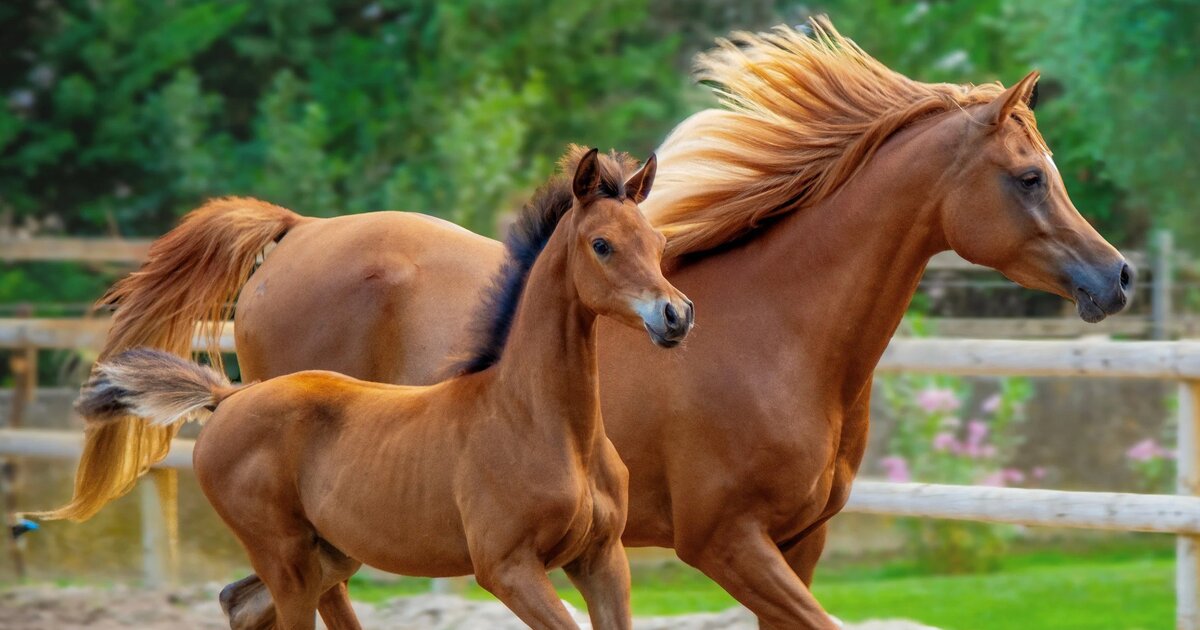
Every other breed registry in the world traces lines back to Arabian blood. This is the foundation horse. The one that built nearly every light riding breed on the planet, from Thoroughbreds to Morgans to Quarter Horses. And yet the modern Arabian gets wildly misunderstood. Dismissed as hot, flighty, "too much horse" by people who have never actually spent real time with one. That reputation says more about the rider than the breed.
Ancient Origins
The Arabian horse is genuinely ancient. Archaeological evidence puts selective breeding by Bedouin tribes on the Arabian Peninsula at around 2500 BCE, possibly earlier. No studbooks existed. What the Bedouins maintained was an oral pedigree tradition they valued above almost anything else in their culture.
Desert survival built this breed. Extreme heat, minimal water, sparse feed, vast distances. No amount of selective breeding on green pasture produces what millennia of actual desert living did. The Bedouins kept their best mares inside the family tent. Not a metaphor. The bond ran that deep, and mares were prized above stallions because they stayed quieter on raids and carried the bloodline forward.
Five foundation strains, the Al Khamsa, anchor Bedouin tradition: Kehilan (deep-chested, masculine), Seglawi (refined, fast), Abeyan (smaller, consistently elegant), Hamdani (large-boned, athletic), and Hadban (sturdy, plain-headed). These were not arbitrary labels. Families staked their reputation on strain purity, and the social consequences of falsifying a pedigree were brutal. Cornell's equine history archives document tribal warfare sparked by disputes over mare lineage.
European breeders recognized what the Bedouins had known for millennia when they encountered Arabian horses through trade and diplomacy in the 1600s and 1700s. Three foundation stallions, the Byerly Turk, the Darley Arabian, and the Godolphin Arabian, became the patrilineal ancestors of the entire Thoroughbred breed. Quarter Horses, Morgans, Standardbreds, Warmbloods: they all carry Arabian blood somewhere in the pedigree. Calling the Arabian a "breed" almost sells it short. It is more like a genetic wellspring.
Physical Characteristics
You can spot an Arabian from across a field. The dished face, large wide-set eyes, small curved ears. But that concave profile is not just aesthetics. The oversized nostrils and wide nasal passages improve airflow during intense exertion. The jibbah (that prominent forehead bulge) houses larger-than-average sinuses that aid thermoregulation and contribute to the breed's exceptional capacity for nasal breathing under load.
Most stand 14.1 to 15.1 hands. Smaller than many riding breeds. Do not let that fool you. Arabians carry adult riders comfortably because their cannon bones pack more density per inch than larger breeds. Think marathon runner, not linebacker. Compact athletes built for distance.
Then there is the skeleton. Many Arabians have one fewer lumbar vertebra (5 instead of 6), one or two fewer tail vertebrae (16 instead of 18), and sometimes 17 ribs rather than 18. This produces their distinctive short back and high tail carriage. It is not a defect. It is a consistent skeletal variation documented across centuries that creates a more rigid coupling between hindquarters and forehand, transferring power more efficiently than longer-backed horses manage.
Their feet are remarkable. Millennia of barefoot travel over sand and rock produced extremely dense, hard hoof walls. Many Arabian owners keep their horses barefoot successfully in conditions that would shred a Thoroughbred's feet. UC Davis research on hoof wall composition shows measurable differences in keratin density across breeds, with Arabians consistently ranking near the top.
Purebred Arabian colors are limited: bay, gray, chestnut, black, and roan. Gray dominates. Most gray Arabians are born dark and progressively depigment over their lifetime, sometimes passing through gorgeous dapple or fleabitten stages before reaching near-white in old age. No palominos, pintos, or buckskins exist in purebreds. Those require genes the breed does not carry.
Temperament and Versatility
The "hot and crazy" label is lazy and mostly wrong. Reactive? Sure. Many Arabians are. Thousands of years of selection for predator awareness in open desert will do that. But reactivity and intelligence are not the same as crazy. A well-trained Arabian is one of the most responsive, willing partners you will ever ride. They learn fast, remember everything, and absolutely will test a handler who lacks consistency.
What catches people off guard is sensitivity. An Arabian registers every weight shift, every rein change, every emotional flicker from its rider. For an experienced horseperson, that sensitivity feels electric. For a nervous beginner broadcasting anxiety through every muscle? It creates a feedback loop that looks like a "crazy horse" but is really a horse doing precisely what it was bred to do. Understanding prey animal instincts helps enormously with Arabians.
These horses bond fiercely. Once an Arabian trusts you, that connection runs deep. They will nicker when they hear your truck. Stand quietly for procedures that would need sedation in a less bonded horse. But mishandle that trust, and you will spend months rebuilding it. They forgive eventually. They never forget.
Endurance racing belongs to Arabians. Full stop. The Tevis Cup, the oldest modern endurance ride, has been won by Arabians more times than all other breeds combined. They thermoregulate efficiently, metabolize fat during sustained effort, and recover faster than competitors twice their size. At vet checks during 100-mile rides, Arabians routinely present with lower heart rates and better gut sounds than the field.
But endurance is not the whole story. Arabians compete in dressage, show jumping, reining, cutting, trail, working cow horse, and driving. Polish breeding programs produce genuine sport horses. Egyptian lines emphasize type and beauty. Crabbet Arabians from England's historic program are known for substance and range. Each tradition within the Arabian world emphasizes different strengths, but core athleticism persists across all of them.
Health Considerations
Arabians are generally hardy and long-lived. Reaching the late 20s or even 30s in good condition is common. But several breed-specific conditions demand attention.
Cerebellar Abiotrophy (CA): Purkinje cells in the cerebellum degenerate after birth. Foals appear normal initially, then develop head tremors, ataxia, and balance problems within the first few months. No treatment exists. A genetic test through UC Davis identifies carriers. Responsible breeders test before pairing.
Severe Combined Immunodeficiency (SCID): Foals born without a functioning immune system. Always fatal, usually before five months. Both parents must carry the recessive gene for a foal to be affected. Widespread testing has reduced carrier rates, but the gene persists in the population.
Lavender Foal Syndrome (LFS): Foals born with a dilute, lavender-tinted coat and severe neurological dysfunction. Cannot stand or nurse. Always fatal. DNA test available.
Occipitoatlantoaxial Malformation (OAAM): Abnormal fusion of the first two cervical vertebrae causing neurological symptoms ranging from mild incoordination to complete paralysis. Less common than CA or SCID but documented enough to mention.
Melanoma: Gray Arabians (a large chunk of the breed) are predisposed, especially with age. Not all melanomas are malignant, and many horses carry small ones for years without trouble. But rapid growth or change warrants immediate veterinary attention. Common spots: under the tail, around the sheath or udder, lips, and parotid region. Annual mapping of existing melanomas tracks changes over time.
Guttural pouch tympany: More common in Arabians than other breeds. Air accumulates in the guttural pouches, creating visible swelling near the throatlatch. Usually appears in foals and is surgically treatable.
On the metabolic side, Arabians are surprisingly easy keepers. Desert heritage selected for metabolic efficiency, so many individuals thrive on far less feed than owners expect. Overfeeding an Arabian in light work pushes body condition into territory that invites insulin dysregulation. The AAEP recommends regular body condition scoring for all breeds, but Arabians need extra vigilance because owners accustomed to feeding warmblood portions can accidentally create metabolic problems in a horse built to survive on scrub.
The Show Ring Controversy
Ignoring this would be dishonest. Over recent decades, the halter ring has pushed increasingly for extreme dish, tiny muzzles, enormous eyes, and hyper-refined builds. Critics argue, with solid evidence, that some of this selection has gone past the point of function. Narrowed airways. Fragile legs. Conformational extremes that compromise the horse's ability to actually be a horse.
The Arabian Horse Association and breeders globally have been grappling with this. Many performance-oriented breeders have pushed back hard, emphasizing that the breed's value has always been its ability: endurance, intelligence, toughness. Not prettiness in a lineup. A horse that cannot breathe properly or stay sound is not carrying the legacy of the Bedouin war mare, no matter how many halter ribbons it accumulates standing still.
If you are shopping for an Arabian, find breeders who prioritize function alongside form. A sound, well-built Arabian with good bone and correct movement will be your partner for decades. That is the actual legacy worth preserving.
🦴 See how the Arabian's unique skeletal structure differs in our 3D Explorer. Check it out here.
Frequently Asked Questions
How long do Arabian horses live?
Arabians commonly live into their late 20s and early 30s with proper care. Their desert-adapted metabolism and generally hardy constitution contribute to above-average longevity compared to many other breeds. Some Arabians remain rideable well into their mid-20s.
Are Arabian horses good for beginners?
It depends on the individual horse, not the breed. A well-trained, older Arabian with a calm disposition can be an excellent beginner horse. However, Arabians are highly sensitive to rider signals and emotional state, so a nervous rider may find the horse amplifies their anxiety. Beginners do best with individual Arabians specifically known for their tolerance and patience.
Why do Arabians have fewer vertebrae than other horses?
Many Arabians carry 5 lumbar vertebrae instead of 6, 16 to 17 tail vertebrae instead of 18, and sometimes 17 pairs of ribs instead of 18. This is a consistent breed variation, not a defect. It produces their characteristic short back and high tail carriage while creating a more rigid, power-efficient connection between hindquarters and forehand.
What genetic diseases should Arabian breeders test for?
At minimum: Cerebellar Abiotrophy (CA), Severe Combined Immunodeficiency (SCID), Lavender Foal Syndrome (LFS), and Occipitoatlantoaxial Malformation (OAAM). All four have DNA tests available through UC Davis and other accredited labs. Testing both parents before breeding is standard practice among responsible Arabian breeders.
Why do Arabians dominate endurance racing?
Arabians excel at endurance because of adaptations developed over thousands of years in desert conditions: efficient thermoregulation, superior fat metabolism during sustained effort, faster cardiovascular recovery, dense bone relative to body size, and exceptional hoof durability. At 100-mile ride vet checks, Arabians consistently present lower heart rates and better metabolic parameters than larger competitors.
- Texas A&M College of Veterinary Medicine - Equine Genetic Diseases tamu.edu
- Cornell University - Equine Genetics and Inherited Conditions cornell.edu
- UC Davis Veterinary Genetics Laboratory - Arabian Horse Genetic Testing ucdavis.edu
- Merck Veterinary Manual - Cerebellar Diseases in Horses merckvetmanual.com
- AAEP - Genetic Disease Testing in Horses aaep.org
Sources
- Texas A&M College of Veterinary Medicine - Equine Genetic Diseases tamu.edu
- Cornell University - Equine Genetics and Inherited Conditions cornell.edu
- UC Davis Veterinary Genetics Laboratory - Arabian Horse Genetic Testing ucdavis.edu
- Merck Veterinary Manual - Cerebellar Diseases in Horses merckvetmanual.com
- AAEP - Genetic Disease Testing in Horses aaep.org