Thoroughbred Breed Profile: History, Traits, and Athletic Build
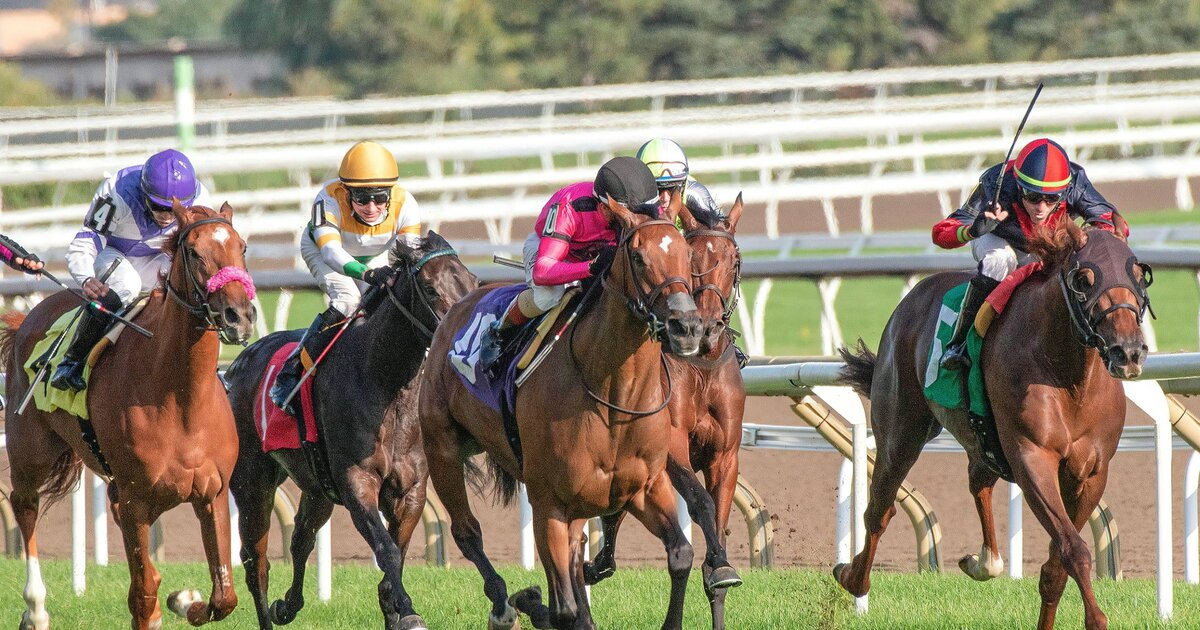
Three stallions. That's it. Every registered Thoroughbred alive today traces back in direct male line to just three horses that set foot on English soil between roughly 1680 and 1730. The Byerly Turk, the Darley Arabian, and the Godolphin Arabian. Three imports. Three hundred years of selective breeding. And the result is an animal capable of covering a mile in under a minute and thirty-six seconds while carrying a rider.
The Thoroughbred is often called a breed built for speed, and that's accurate but incomplete. It's a breed built for speed at a specific distance range, refined by centuries of gambling money and aristocratic ambition, and it carries both the gifts and the costs of that narrow selection pressure in every fiber of its body.
The Three Foundation Sires
The Byerly Turk arrived first. Captain Robert Byerly reportedly captured him during the siege of Buda in 1686, though the details are murky and possibly romanticized. What we know: he was a stallion of Eastern breeding (likely Turkish or Arabian), he stood at stud in England, and his descendant Herod became one of the most influential sires in breed history.
Thomas Darley purchased the Darley Arabian in Aleppo, Syria, around 1704 and shipped him to Yorkshire. This horse's great-great-grandson Eclipse, foaled in 1764, is considered the single most dominant ancestor in the modern Thoroughbred gene pool. Genetic studies have shown that roughly 95 percent of modern male Thoroughbreds trace their direct paternal line to Eclipse.
The Godolphin Arabian (sometimes called the Godolphin Barb, since his exact breeding is debated) arrived in England around 1729. Legend paints him as a cart horse rescued from the streets of Paris, though this is almost certainly embellished. His grandson Matchem founded the third major sire line.
These three stallions weren't crossed with each other. They were each bred to English running mares, many of whom already carried Eastern blood from earlier imports. The resulting offspring were bred selectively for speed at the racetrack over generations, and by the late 1700s, a distinct type had emerged. If you're curious about the Arabian influence specifically, we covered the Arabian breed profile separately.
The General Stud Book
James Weatherby published the first volume of the General Stud Book in 1791, creating the foundation of Thoroughbred registration. To be registered, a horse had to trace to approved ancestors. The studbook closed relatively quickly by breed registry standards, meaning no new outside blood could enter the breed.
This created genetic consistency. It also created a bottleneck. Modern Thoroughbreds have effective population sizes far smaller than their census numbers suggest. One 2005 study estimated an effective population size of around 100, despite hundreds of thousands of registered animals worldwide. That genetic narrowness has implications for heritable conditions, which we'll get to.
Conformation: Built to Run
The ideal Thoroughbred stands between 15.2 and 17 hands, with most racehorses falling in the 15.3 to 16.2 range. They carry their height in leg rather than body depth, with a long, sloping shoulder, well-angled hindquarters, and a relatively refined bone structure compared to warmblood or draft breeds.
The chest is deep to accommodate large lungs and heart. Secretariat's heart weighed an estimated 22 pounds at necropsy, roughly twice the average for his breed and more than three times a typical horse's. While that was an outlier, Thoroughbreds as a population do tend toward larger hearts and greater cardiac output than most other breeds.
The legs are long and clean, with prominent tendons. The cannon bone is relatively light. The feet can be problematic: Thoroughbreds are notorious for thin soles, flat feet, and shelly hoof walls. This isn't accidental. Selection for speed favors a lighter distal limb, and heavier bone below the knee costs energy at gallop. But lighter bone also breaks more easily, and thinner hooves need more careful management.
The musculature is lean and defined. You can see every muscle group on a fit Thoroughbred, which is one reason they're used so often in equine anatomy study. The lack of subcutaneous fat means surface anatomy maps beautifully onto what's underneath.
Fast-Twitch Dominance
Skeletal muscle in horses contains a mix of fiber types. Type I (slow-twitch) fibers are built for endurance: they fatigue slowly, rely on aerobic metabolism, and power sustained effort. Type II (fast-twitch) fibers generate force quickly, fatigue rapidly, and fuel explosive speed.
Thoroughbreds carry a significantly higher proportion of Type IIX (the fastest subtype of fast-twitch) fibers in their locomotor muscles compared to most other breeds. Research on the middle gluteal muscle, a major propulsive muscle, shows that Thoroughbreds can have 80 percent or more Type II fibers. Arabians, by contrast, skew heavily toward Type I. Quarter Horses, bred for short sprints, have even more Type IIX than Thoroughbreds but lack the stamina for middle distances.
This fiber composition isn't just genetics. Training shifts it. A Thoroughbred in endurance-type conditioning will convert some Type IIX fibers to Type IIA (a more oxidative fast-twitch type), gaining fatigue resistance at the expense of raw speed. Racetrack conditioning aims to preserve as much Type IIX as possible. Our guide to equine muscle anatomy explores fiber types and their role in performance in more depth.
Beyond the Track: What Thoroughbreds Actually Do
Racing gets the headlines. But most Thoroughbreds that race have short careers. Average racing career length in North America is roughly 2 to 3 years. Many start racing at age 2 and retire by 4 or 5. Some never race at all. That means tens of thousands of horses need something else to do.
Off-track Thoroughbreds (OTTBs) have become a phenomenon in the sport horse world. They show jump. They event. They fox hunt. They do dressage, trail riding, polo, and therapeutic riding. Their athleticism, courage, and trainability make them adaptable to almost any discipline. Some of the most successful event horses in history have been Thoroughbreds or Thoroughbred crosses.
But the transition off the track requires patience and knowledge. Racehorses are conditioned to run, to respond to leg pressure with forward movement, and to lean into contact. They've often never seen a trail, a jump, or a relaxed walk on a loose rein. Retraining takes months. Letting down (the process of deconditioning from race fitness to a baseline before rebuilding for a new job) takes time too. Rushing it leads to mental and physical problems.
Organizations like the Thoroughbred Aftercare Alliance accredit retraining and rehoming programs. The OTTB community has grown enormously, and events like the Retired Racehorse Project's Thoroughbred Makeover showcase what these horses can become with proper handling.
Common Injuries and Health Concerns
The same selection pressures that made the Thoroughbred fast also made it fragile in specific ways.
Musculoskeletal injuries: Stress fractures, bowed tendons (superficial digital flexor tendonitis), suspensory ligament desmitis, and sesamoid fractures are common in racehorses. The combination of high speed, light bone, and immature skeletal development in young horses creates a perfect storm for breakdown. Catastrophic injury rates on racetracks, while declining, remain a serious welfare concern.
Exercise-induced pulmonary hemorrhage (EIPH): A large percentage of racehorses bleed into their lungs during intense exercise. Some estimates suggest 75 to 100 percent of racehorses show evidence of EIPH on endoscopy after a hard gallop, though only a fraction bleed visibly from the nostrils. The exact cause involves extremely high pulmonary capillary pressure during maximal exertion rupturing the delicate alveolar membranes.
Gastric ulcers: Prevalence in racehorses exceeds 80 percent in most studies. The combination of high-grain diets, intermittent feeding, stress, intense exercise, and NSAID use creates an environment where the stomach's squamous mucosa is constantly under attack from acid it wasn't designed to handle.
Osteochondritis dissecans (OCD): A developmental orthopedic disease where defects in cartilage formation create loose fragments in joints. Thoroughbreds are overrepresented in OCD statistics. The stifle, hock, and fetlock are the most commonly affected joints.
Hoof problems: Thin soles, flat feet, low heel conformations, and quarter cracks are breed tendencies. Many OTTBs arriving at second careers need significant farrier attention to correct or manage hoof issues that were masked by racing plates.
The Thoroughbred Temperament
Generalizing temperament across a whole breed is risky, but patterns exist. Thoroughbreds tend to be sensitive, reactive, forward-thinking, and genuinely hot in the traditional sense. They notice things. They respond quickly, sometimes before the rider finishes asking. They can be sharp, spooky, and opinionated.
They're also, at their best, incredibly generous. A good Thoroughbred will try hard. Harder than you asked, sometimes. The breed has a reputation for heart that extends beyond Secretariat's enlarged organ. It's a willingness to give everything. That quality is what makes them extraordinary athletes and occasionally difficult horses for novice riders who aren't prepared for the volume of the conversation.
Explore the full skeletal and muscular build of the Thoroughbred on our interactive anatomy model.
Frequently Asked Questions
Are all Thoroughbreds descended from the same three stallions?
All registered Thoroughbreds trace their direct male (sire-to-sire) line to the Byerly Turk, Darley Arabian, or Godolphin Arabian. However, the breed's genetic makeup also includes significant contributions from the many English and imported mares that formed the foundation female families. The three stallions are the patrilineal anchors, but the breed is not derived from only three horses in total.
What makes a good OTTB prospect?
Look for soundness first. Have a pre-purchase exam done with emphasis on the limbs and feet. Good candidates are mentally willing, not overly anxious or shut down, with a conformation that suits the intended second career. Age matters less than condition and temperament. Some of the best OTTBs are horses that weren't fast enough to be good racehorses, which often means they experienced less physical stress on the track.
How fast can a Thoroughbred run?
The fastest recorded speed for a Thoroughbred is approximately 43.97 mph, achieved by Winning Brew in a 2008 race. Sustained racing speeds for middle distances (1 to 1.5 miles) average around 37 to 40 mph. These speeds make the Thoroughbred the fastest breed over distances beyond a quarter mile.
Why do Thoroughbreds get injured so often?
Selective breeding for speed produced lighter bone, thinner tendons, and a body that prioritizes explosive performance over structural durability. Young Thoroughbreds often begin training and racing before their skeletal development is complete. The combination of immature bones under extreme athletic stress, along with surfaces, shoeing, and management factors, contributes to injury rates higher than most other breeds.
Can Thoroughbreds do dressage?
Absolutely. While the breed doesn't dominate upper-level dressage the way warmbloods do, many Thoroughbreds compete successfully through the FEI levels. Their natural impulsion, sensitivity, and athleticism translate well to dressage work. Some struggle with the collection aspects due to their naturally forward build, but with patient training, they can excel.
- Cunningham, E.P., et al. "Microsatellite Diversity, Pedigree Relatedness, and the Contributions of Founder Lineages to Thoroughbred Horses." Animal Genetics, 2001.
- Hill, E.W., et al. "A Genome-Wide SNP-Association Study Confirms a Sequence Variant (g.66493737C>T) in the Equine Myostatin Gene as the Most Powerful Predictor of Optimum Racing Distance." BMC Genomics, 2010.
- Hinchcliff, K.W., et al. "Exercise-Induced Pulmonary Hemorrhage in Horses." Journal of the American Veterinary Medical Association, 2005.
- Thoroughbred Aftercare Alliance. "Accreditation Standards and Resources." thoroughbredaftercare.org
- The Jockey Club. "General Stud Book History and Registration Requirements."
- Rivero, J.L., et al. "Muscle Fibre Type Composition in Young Thoroughbred Horses." Equine Veterinary Journal, 1993.
Sources
- Cunningham, E.P., et al. "Microsatellite Diversity, Pedigree Relatedness, and the Contributions of Founder Lineages to Thoroughbred Horses." Animal Genetics, 2001.
- Hill, E.W., et al. "A Genome-Wide SNP-Association Study Confirms a Sequence Variant (g.66493737C>T) in the Equine Myostatin Gene as the Most Powerful Predictor of Optimum Racing Distance." BMC Genomics, 2010.
- Hinchcliff, K.W., et al. "Exercise-Induced Pulmonary Hemorrhage in Horses." Journal of the American Veterinary Medical Association, 2005.
- Thoroughbred Aftercare Alliance. "Accreditation Standards and Resources." thoroughbredaftercare.org
- The Jockey Club. "General Stud Book History and Registration Requirements."
- Rivero, J.L., et al. "Muscle Fibre Type Composition in Young Thoroughbred Horses." Equine Veterinary Journal, 1993.