Anhidrosis in Horses: Guide to Dry Coat Syndrome
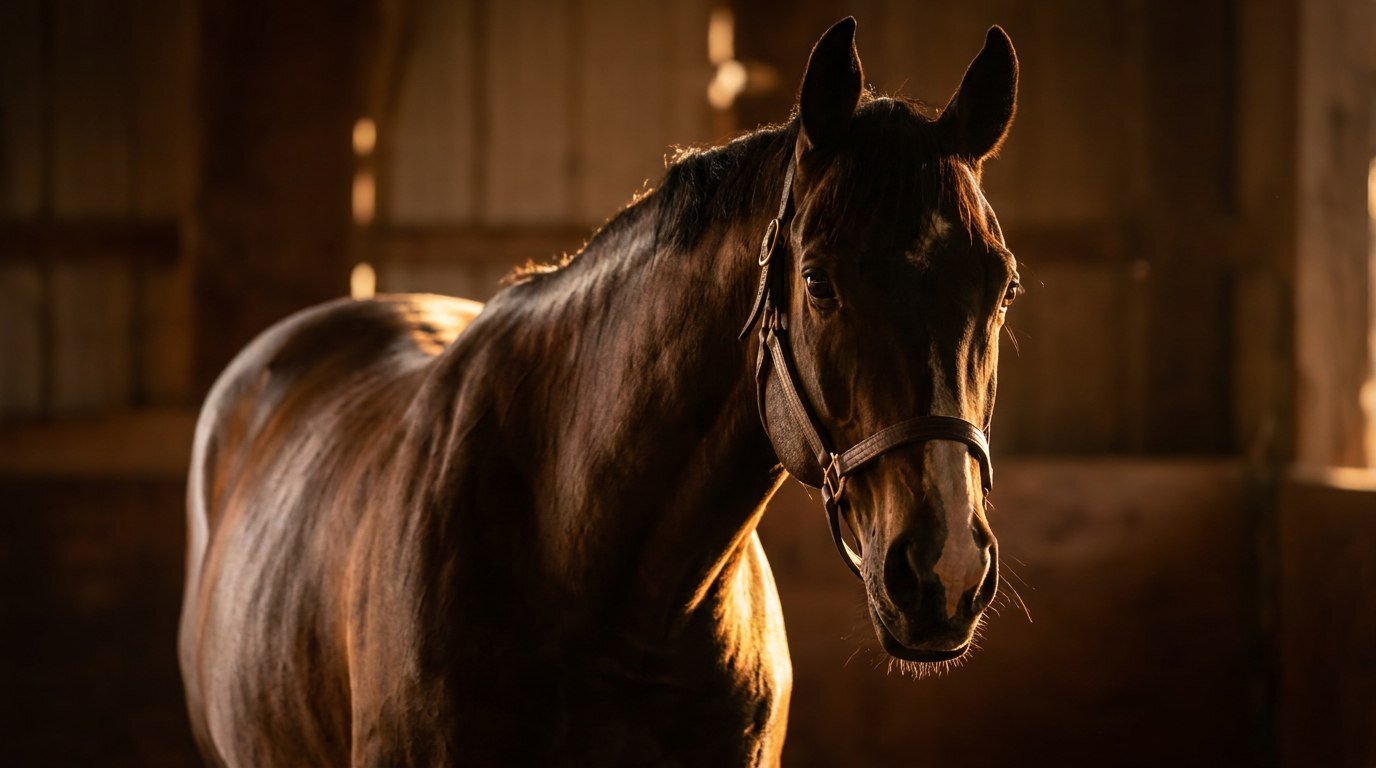
Your horse just finished a moderate work session in July heat. Every other horse in the barn is dripping. Yours is bone dry, breathing like it just ran the Kentucky Derby, and radiating heat you can feel through your gloves. That is anhidrosis in horses, and if you live anywhere hot and humid, it is one of the most important conditions you need to understand.
Quick Answer: Anhidrosis is the partial or complete inability to sweat. It affects an estimated 2 to 11 percent of horses in hot, humid climates (with some barns reporting rates as high as 20 percent) and can be life-threatening because sweating is a horse's primary cooling mechanism. There is no guaranteed cure, but early recognition plus management strategies like electrolyte supplementation, environmental cooling, adjusted work schedules, and sometimes relocation to a cooler climate can keep affected horses comfortable and safe.
What Exactly Is Anhidrosis?
Anhidrosis (pronounced an-hi-DRO-sis) is a condition in which a horse partially or completely loses the ability to produce sweat. The term comes from the Greek: "an" meaning without and "hidrosis" meaning sweating. You may also hear it called "dry coat syndrome," "non-sweating disease," or colloquially, "non-sweaters."
Sweating accounts for roughly 65 to 70 percent of a horse's thermoregulation. The horse's skin and integumentary system contains millions of sweat glands that, when functioning properly, produce massive volumes of sweat during exercise and heat exposure. When that system fails, internal body temperature climbs, performance drops, and in severe cases, the horse is at real risk of heat stroke. The University of Florida College of Veterinary Medicine has documented rectal temperatures exceeding 106 degrees Fahrenheit in anhidrotic horses after moderate exercise, well into the danger zone for organ damage.
Who Gets It?
Anhidrosis can affect any horse, but certain patterns emerge consistently in the research:
- Climate: Most common in hot, humid regions. The Gulf Coast states, Florida, Texas, and the Southeast see the highest rates. International hotspots include the Middle East, Southeast Asia, and tropical Australia. Research from the University of Florida estimates prevalence at 2 to 6 percent of the general horse population in these areas, with lifetime incidence closer to 6–11 percent in some Florida studies and individual barns reporting rates as high as 20 percent.
- Breed: Thoroughbreds and warmbloods appear overrepresented in case reports, though this may partly reflect their concentration in performance settings where the condition is noticed sooner. No breed is immune.
- Origin: Horses relocated from cooler climates to hot, humid ones are at higher risk. The classic scenario is a horse shipped from the Northeast or Midwest to Florida or Texas and developing anhidrosis within weeks to months of arrival.
- Performance level: Horses in regular work are diagnosed more frequently, likely because the condition becomes obvious under exertion. Pasture horses can be anhidrotic too. They just show subtler signs.
Warning Signs
Anhidrosis can develop gradually or seemingly overnight. Some horses lose sweating ability progressively over weeks. Others seem fine one day and completely dry the next. Knowing your horse's normal vital signs makes catching these changes much easier.
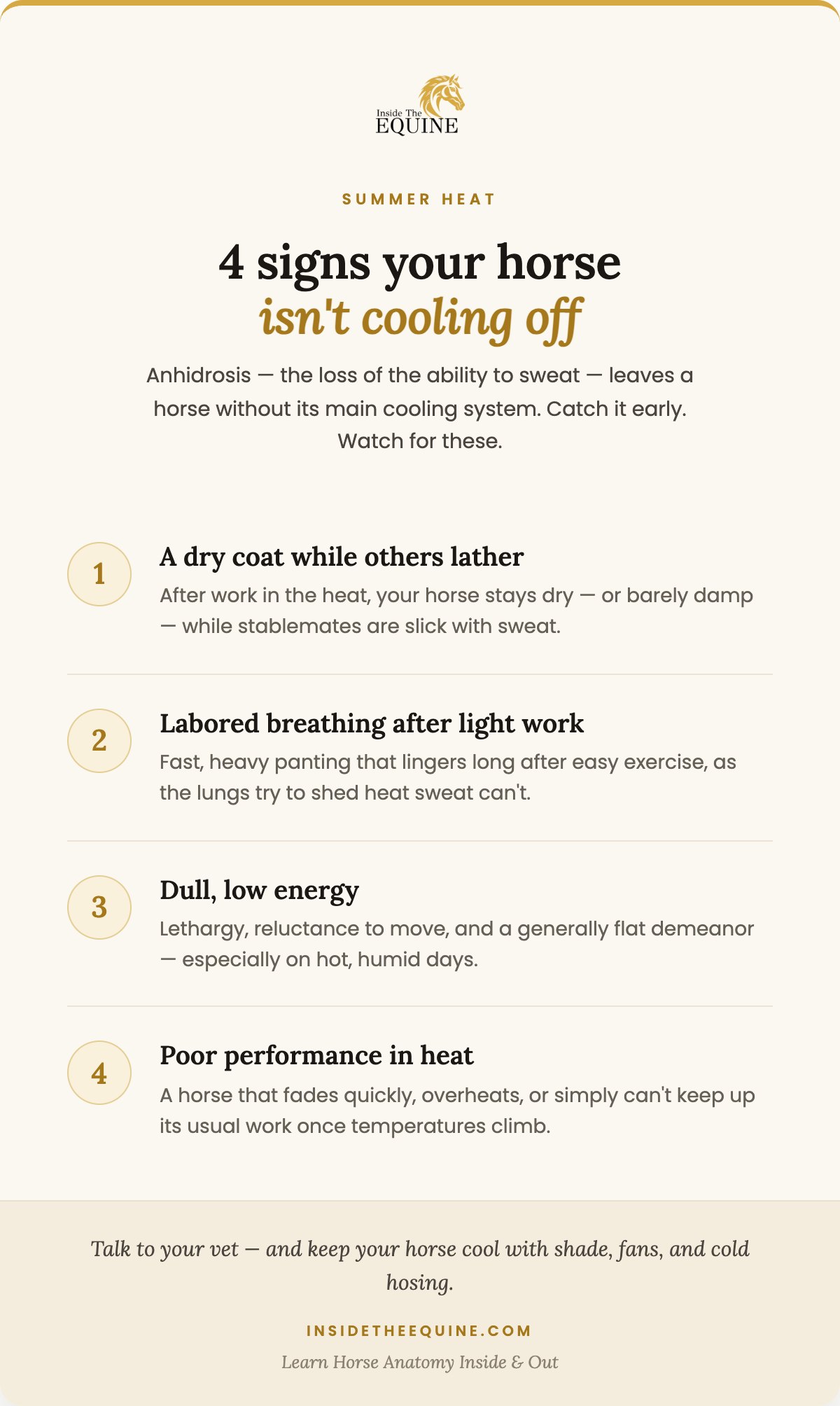
The Hallmark Sign: Dry Coat Under Work
The most obvious indicator. Your horse finishes work and is dry or only damp in patches (often under the mane or between the hind legs) while every other horse in the ring is lathered. Partial anhidrosis, where some areas still produce minimal sweat, is actually more common than complete loss.
Excessive Respiratory Effort
Because the horse cannot cool itself through sweating, it shifts to respiratory cooling. You will see rapid, heavy breathing, flared nostrils, and panting that seems wildly disproportionate to the work performed. The diaphragm and lungs work overtime trying to compensate. A horse blowing hard after a light hack on a hot day is a red flag. Normal post-exercise respiratory rate should return to baseline within 10 to 15 minutes. Anhidrotic horses may take 30 minutes or longer.
Elevated Body Temperature
Rectal temperature after moderate work in heat can climb to 103 to 106 degrees Fahrenheit or higher. Normal post-exercise temperature should not exceed 103 degrees for more than a few minutes. If your horse is regularly running hot after routine work, start tracking those numbers.
Coat and Skin Changes
Chronic anhidrosis often leads to a thin, dull coat. Some horses develop patchy hair loss, particularly on the face and flanks. The skin may feel dry and flaky. These changes develop over weeks to months and are easy to dismiss as a nutritional issue or seasonal coat problem.
Decreased Performance and Lethargy
The horse tires faster, resists work in heat, and generally performs below its ability when temperatures climb. This is the body protecting itself. A horse that was willing and forward in March but sluggish and reluctant in July may not be lazy. It may be unable to thermoregulate.
What Causes It?
The honest answer: we do not fully understand the mechanism. The leading theory involves chronic overstimulation of sweat glands by circulating catecholamines (specifically epinephrine and norepinephrine). In prolonged heat and humidity, the body continuously signals the sweat glands to produce. Eventually, the glands essentially burn out, becoming desensitized to the chemical signals telling them to work.
Think of it like a smoke alarm you cannot turn off. At first, you respond to every beep. After hours of constant noise, you stop hearing it. The sweat glands stop responding to the constant "produce sweat" signal.
Other contributing factors that research has identified:
- Beta-2 receptor downregulation: Sweat glands in horses are activated by beta-2 adrenergic receptors. Chronic stimulation leads to receptor downregulation, meaning fewer functional receptors on the gland surface. Published work from the University of Queensland confirmed decreased beta-2 receptor density in skin biopsies of anhidrotic horses.
- Sweat gland atrophy: In chronic cases, histological examination of skin biopsies shows actual structural changes in the sweat glands, including glandular atrophy and periductal fibrosis. The glands physically deteriorate over time.
- Electrolyte imbalances: Chloride, potassium, and sodium all play roles in sweat production. Deficiencies or imbalances may contribute, though supplementation alone rarely resolves established anhidrosis.
- Thyroid function: Some anhidrotic horses show low thyroid hormone levels, though whether this is a cause or a consequence remains debated. Thyroid supplementation has helped some horses in clinical reports but is not consistently effective.
Diagnosis
Most experienced equine vets in hot climates can suspect anhidrosis from the history and clinical presentation alone. For confirmation, there is one definitive test:
Intradermal Terbutaline Test
Small amounts of terbutaline (a beta-2 agonist) are injected at multiple dilutions into the skin of the neck. In a normal horse, each injection site produces a small bead of sweat within 5 to 30 minutes. In an anhidrotic horse, the response is absent or dramatically reduced. This is considered the gold standard and is straightforward to perform in the field.
Your vet may also want to check thyroid levels (T3 and T4) and run a basic metabolic panel to rule out other contributing factors.
Management Strategies
There is no single treatment that reliably cures anhidrosis. Management focuses on keeping the horse cool, supporting whatever sweating ability remains, and preventing heat-related emergencies.
Environmental Management
- Fans and ventilation: Stall fans running continuously in hot weather. Cross-ventilation in barns. Some owners install misting systems. Air movement is critical because it aids evaporative cooling from the skin surface even without sweat.
- Shade and turnout timing: Turnout during cooler hours only (early morning, late evening, overnight). Adequate shade in all paddocks and pastures.
- Cold hosing: Hosing the horse with cool water before and after any work, and sometimes multiple times throughout the day. Focus on the large blood vessels along the neck and inner legs where cooling is most efficient. Do not scrape the water off in extreme heat. The evaporating water IS the cooling mechanism.
Work Schedule Adjustments
- Ride early morning or after sunset only
- Reduce intensity and duration during peak summer
- Monitor rectal temperature during and after work (invest in a good digital thermometer)
- Have a hard stop: if temperature exceeds 103 degrees Fahrenheit, stop working and begin active cooling immediately
Nutritional Support
- Electrolyte supplementation: Daily electrolytes in feed during hot months. Look for products containing sodium chloride, potassium chloride, and magnesium. Avoid sugar-heavy electrolyte pastes marketed more for palatability than function.
- One AC (acupuncture-derived supplement): This is one of the most widely discussed anhidrosis supplements. It contains a blend of Chinese herbs. Anecdotal reports are strongly positive from many owners and trainers. Controlled research is limited, but veterinary clinicians at the University of Florida have noted clinical improvement in some horses. It is not a guaranteed fix, but it is safe to try and has enough field evidence to be worth considering.
- Dark beer: Yes, really. One to two dark beers daily (Guinness is the classic recommendation) has a long history as a folk remedy. The theory involves B vitamins and brewer's yeast supporting sweat gland function. Is there rigorous research? No. Do a surprising number of vets in Florida and Texas say it works for some horses? Yes. It is inexpensive and harmless, so most vets will not object to trying it.
- Vitamin E and selenium: Supporting overall cellular health. Not a direct treatment but good baseline supplementation for any horse under heat stress.
The Nuclear Option: Relocation
For severely anhidrotic horses that do not respond to any management strategy, moving to a cooler, drier climate is often the only reliable solution. Horses relocated from the Gulf Coast to, say, Colorado or the upper Midwest frequently regain full sweating ability within weeks to months. This is obviously not practical for everyone, but it is worth knowing that the condition is almost always reversible with a climate change.
When It Becomes Dangerous
Anhidrosis is manageable for many horses with proper attention. But it can become a genuine emergency if the horse overheats. Know when to call the vet and watch for:
- Rectal temperature above 104 degrees Fahrenheit that is not coming down with cooling efforts
- Stumbling, incoordination, or disorientation (signs of heat stroke affecting the brain)
- Rapid heart rate (above 60 bpm) that does not recover with rest and cooling
- Collapse or inability to stand
- Cessation of gut sounds (heat stress can trigger secondary colic)
If you see any of these, begin aggressive cooling (cold water, fans, ice if available on the neck and major vessels) and call your vet immediately. Heat stroke in horses can cause permanent organ damage or death. This is not a "wait and see" situation.
Living With an Anhidrotic Horse
Many horses with anhidrosis live full, productive lives with appropriate management. It requires more effort from the owner, more awareness of conditions, and more willingness to adjust plans based on the weather. Some owners find that their horse develops a seasonal pattern, losing sweating ability in peak summer and regaining it as temperatures drop in fall. Others deal with it year-round.
The single most important thing you can do is pay attention. Know your horse's normal sweating pattern. Know what its respiratory rate looks like after routine work. Own a rectal thermometer and use it. The horses that get into trouble with anhidrosis are almost always the ones whose early warning signs were missed or dismissed.
📝 Learn to identify every external part of the horse with our interactive 3D model. Try the 3D Explorer here.
Frequently Asked Questions
Can anhidrosis in horses be cured?
There is no guaranteed cure, but many horses regain sweating ability with management changes, supplementation, or relocation to a cooler climate. Some horses spontaneously recover between seasons. The condition is considered manageable rather than permanently irreversible in most cases.
Is anhidrosis hereditary in horses?
There is no confirmed genetic component, though some breeds (particularly Thoroughbreds) appear more susceptible. The condition is primarily driven by environmental factors, specifically chronic exposure to heat and humidity, rather than inherited traits.
Can I still ride my anhidrotic horse?
Yes, with modifications. Ride during the coolest parts of the day, reduce intensity, monitor rectal temperature during and after work, and have a cooling plan ready. Many anhidrotic horses continue competing successfully with adjusted schedules. Stop work immediately if temperature exceeds 103 degrees Fahrenheit.
Does the beer trick actually work for anhidrosis?
Anecdotally, some owners and veterinarians report improvement with 1 to 2 dark beers (like Guinness) daily, possibly due to B vitamins and brewer's yeast content. There are no controlled studies confirming effectiveness, but it is safe and inexpensive enough that most vets consider it worth trying as part of a broader management plan.
How do I test if my horse has anhidrosis?
Your vet can perform an intradermal terbutaline test, which involves injecting small amounts of a sweat-stimulating drug into the skin and observing the response. Normal horses produce visible sweat at each injection site within minutes. Anhidrotic horses show little to no response. This is the gold standard diagnostic test.
Sources
- University of Florida College of Veterinary Medicine - Anhidrosis in Horses largeanimal.vetmed.ufl.edu
- Texas A&M College of Veterinary Medicine - Heat Stress and Anhidrosis vetmed.tamu.edu
- Equine Veterinary Journal - Sweat Gland Function and Anhidrosis beva.onlinelibrary.wiley.com
- Merck Veterinary Manual - Anhidrosis in Horses merckvetmanual.com
- University of Queensland - Beta-2 Receptor Studies in Equine Sweat Glands uq.edu.au
Want to understand rare but serious conditions?
Our Health course covers anhidrosis, metabolic disorders, and environmental health risks.
Explore the Health CoursePro members only. Try Pro free for 7 days.