Cellulitis in Horses: Why a Swollen Leg Is an Emergency
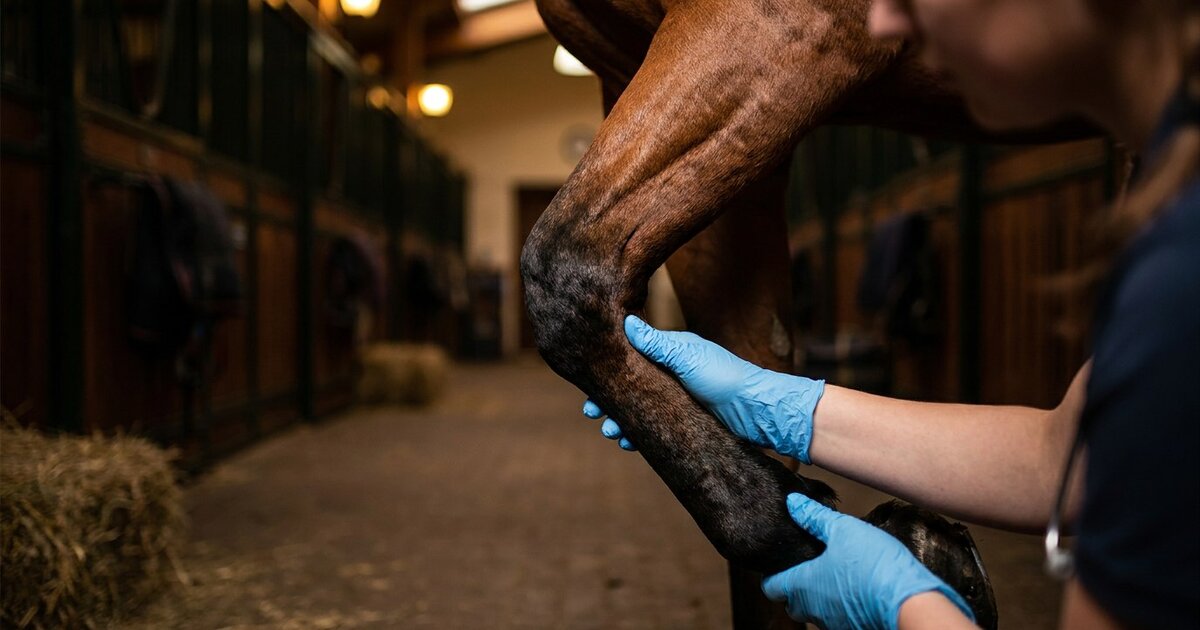
You walked past your horse last night and everything was normal. This morning one hind leg is easily twice its usual size, hot to the touch, and so painful that your horse flinches when you reach for it and refuses to put real weight on the foot. This is the classic, gut-dropping presentation of cellulitis, and it is one of the few limb problems that is a true call-the-vet-now situation rather than a wait-and-see one. You may also find our article on Horse Anatomy helpful. You may also find our article on Equine Influenza helpful.
What is cellulitis in horses?
Cellulitis is a bacterial infection of the subcutaneous tissue, the layer of connective tissue and fat that sits just beneath the skin. It is not the same thing as ordinary fluid swelling. When bacteria establish themselves in that layer, the body mounts an aggressive inflammatory response, flooding the area with immune cells and fluid. The result is a leg that swells rapidly, feels hot and firm, and hurts a great deal. You may also find our article on EPM in Horses helpful. You may also find our article on Strangles in Horses helpful.
The condition almost always affects one limb, and hind limbs are the most common target. There is a good anatomical reason for that. The lower legs sit farthest from the heart, rely heavily on movement and lymphatic vessels to push fluid back up the body, and take the most nicks, mud, and abrasion. Once infection and swelling set in, those same lymphatic vessels can get damaged, which is part of why cellulitis is both severe and prone to coming back.
How does cellulitis start?
Cellulitis starts when bacteria breach the skin barrier and reach the tissue underneath. The entry point is often so small you never find it. A tiny cut, an insect bite, a scrape from turnout, a case of scratches (pastern dermatitis), or even a recent injection site can all be enough of an open door.
Veterinarians split cases into two groups. Secondary cellulitis follows an obvious cause such as a wound, surgery, a puncture, or a joint injection. Primary cellulitis is the frustrating one where no source is ever identified. In a frequently cited study of 44 horses published in the Journal of the American Veterinary Medical Association, 24 cases were classified as primary with no detectable inciting wound, while 20 were secondary to a known injury or procedure. In other words, roughly half the time the leg blows up with no visible reason at all.
The bacteria most often responsible are common environmental and skin organisms. In that same study, coagulase-positive Staphylococcus species were the pathogens recovered most frequently, and Streptococcus species and Escherichia coli are also regularly involved. These are not exotic bugs. They live in the soil, on skin, and around every barn, which is exactly why an unremarkable little scratch can turn serious.
What does cellulitis look like?
The hallmark of cellulitis is how fast and how dramatically it appears. A leg that looked fine in the evening can be grossly swollen by morning. The signs owners typically see include:
- Sudden, marked swelling of one limb, often the hind, that can feel firm or tight rather than soft and squishy.
- Heat radiating off the affected area when you compare it to the opposite leg.
- Severe pain. Many horses object strongly to being touched and may snatch the leg away.
- Lameness that ranges from significant to non-weight-bearing. Some horses will barely load the foot at all.
- Fever. A horse's normal temperature runs roughly 99 to 101.5 degrees Fahrenheit, and cellulitis frequently pushes it above that.
- Skin changes. As pressure builds, the skin can stretch tight, crack, and weep clear or straw-colored serum, and in worse cases the surface can start to slough.
- Dullness or going off feed, which reflects that this is a whole-body infection, not just a local puff.
That combination of heat, pain, and lameness is what separates cellulitis from a leg that is simply filled with fluid. A horse that is stocked up is usually sound and comfortable. A horse with cellulitis is hurting.
Is it cellulitis or just a stocked-up leg?
This is the question owners wrestle with at 6 a.m., and it matters because the two call for completely different responses. Stocking up is benign fluid pooling from standing still, often in more than one leg, that walks off and does not hurt. Cellulitis is a painful infection that needs a vet. The table below lays out the practical differences.
| Feature | Cellulitis | Stocked-up leg |
|---|---|---|
| Legs affected | Usually one, often a hind | Often two or more, symmetrical |
| Temperature of skin | Hot to the touch | Normal or cool |
| Pain | Marked, resents handling | Little to none |
| Lameness | Moderate to non-weight-bearing | Sound, moves off the swelling |
| Fever | Common | Absent |
| Response to walking | Stays swollen and sore | Reduces quickly with movement |
If the leg is hot, painful, and the horse is lame, treat it as cellulitis until your vet tells you otherwise. It is far better to make a call you did not strictly need than to lose a day on an infection that doubles down by the hour.
Why is cellulitis a veterinary emergency?
Cellulitis is urgent because it does not sit still. The infection and the pressure it generates can spread up the limb and cause real, lasting damage in a short window. The complications that make vets take it so seriously include:
- Supporting-limb laminitis. A horse in serious pain on one leg dumps its weight onto the opposite one, and prolonged overload of that supporting foot can trigger laminitis, a separate and potentially career-ending problem.
- Lymphangitis. The infection can involve the lymphatic vessels, and damage there leads to chronic thickening and swelling that never fully resolves.
- Skin death and sloughing. When pressure and infection cut off blood supply, patches of skin can die and peel away, leaving large wounds.
- Deeper spread. If bacteria reach tendon sheaths, joints, or bone, you are looking at septic tendonitis, septic arthritis, or osteomyelitis, all far harder to treat.
- Sepsis. In the worst cases the infection spreads through the bloodstream and becomes a systemic, life-threatening crisis.
Early, aggressive treatment is what keeps a case from tipping into any of these, which is the whole argument for calling your vet the day you notice it rather than giving it a night to settle. For more details, see our guide on Thrush in Horses.
How do vets diagnose cellulitis?
Diagnosis usually starts with the clinical picture, because a hot, painful, acutely swollen single limb with a fever is fairly distinctive. From there your veterinarian confirms the diagnosis and rules out lookalikes using a hands-on exam and temperature check, bloodwork, and imaging.
Bloodwork often shows the fingerprints of infection and inflammation, such as an elevated white blood cell count and a rise in fibrinogen. Ultrasound is especially useful, because it lets the vet see the fluid in the soft tissue, look for pockets that might need draining, and check for a foreign body or an abscess hiding under the surface. Radiographs may be taken if there is any concern that bone or a joint is involved, and a bacterial culture can identify the exact organism and guide the choice of antibiotic. The point is not just to name the problem but to catch complications early.
How is cellulitis treated?
Treatment is aimed at three things at once: killing the bacteria, controlling the inflammation and pain, and moving the trapped fluid out of the leg. Because this is a genuine infection, the mainstay is antibiotics chosen by your vet, sometimes guided by culture results. Anti-inflammatory medication is used alongside them to manage pain and swelling and to protect that opposite supporting limb from the strain that leads to laminitis.
The rest is supportive care, often carried out by owners under direction:
- Cold hosing and hydrotherapy to draw heat out and ease discomfort.
- Bandaging to provide gentle, even support and limit fluid buildup.
- Controlled hand-walking once the horse is comfortable enough, because gentle movement pumps lymph and fluid back up the leg while standing still lets it pool.
- Wound care, drainage, or debridement when there is a wound, an abscess, or dead tissue to manage.
In stubborn or severe cases, vets have additional tools such as regional limb perfusion, which delivers a high concentration of antibiotic directly into the affected leg. What you should not do is reach for leftover medications or guess at doses, because which drugs, how much, and for how long are decisions for your veterinarian. Many horses recover well when treatment starts promptly. In the 44-case study, short-term survival was around 67 percent for primary cellulitis and about 90 percent for secondary cellulitis, and most of the horses followed long-term returned to their intended use. Speed of treatment is a big part of what tips a case toward that good end.
Can you prevent cellulitis and stop it coming back?
You cannot make a horse bulletproof against cellulitis, but you can lower the odds by protecting the skin barrier and keeping the lymphatic system working. Sensible prevention looks like this:
- Treat skin problems early. Scratches, mud rash, and small cuts are the classic entry points, so manage them before they become an open door.
- Keep footing clean and dry where you can. Chronically wet, muddy legs soften and crack the skin, so improving drainage in high-traffic areas helps.
- Check legs daily. A quick hands-on run down each leg catches heat and swelling early, when treatment is easiest.
- Keep horses moving. Regular turnout and exercise keep circulation and lymphatic drainage active, which is protective.
- Practice good wound and injection hygiene so you reduce the chance of introducing bacteria in the first place.
Recurrence deserves its own mention, because it is common. Once cellulitis has damaged the lymphatic vessels in a leg, that limb drains fluid less efficiently, which makes future episodes more likely and often leaves the leg permanently a little thicker. In the 44-case study, several horses in both groups had repeat episodes. If your horse has had cellulitis before, treat any new heat or swelling in that leg with extra urgency. A horse with a history is not doomed to relapse, but it does need a more watchful eye.
Frequently Asked Questions
How fast does cellulitis come on in horses?
Very fast. It is common for owners to find a leg that was completely normal the night before dramatically swollen, hot, and painful by morning. That rapid, overnight escalation separates cellulitis from slower, less urgent swelling and is a big reason it should be treated as a same-day emergency.
Is cellulitis in horses contagious to other horses or to people?
Cellulitis itself is not passed horse to horse like a virus. It develops when bacteria that are already common in the environment get into a break in one horse's skin. Basic hygiene like clean hands and equipment is always sensible, but you do not need to isolate a horse with cellulitis the way you would with a truly contagious disease.
Should I hand-walk my horse or keep it on stall rest?
Once your horse is comfortable enough, gentle controlled hand-walking is usually helpful because movement pumps trapped fluid out of the leg, while standing still lets it pool. The timing depends on how painful and lame the horse is, so let your vet tell you when and how much to walk, and never force a horse in serious pain to move.
Will my horse fully recover from cellulitis?
Many horses do recover well and return to their previous work, especially when treatment starts early. Reported short-term survival in one hospital study ranged from roughly two thirds of primary cases to around 90 percent of secondary cases. The main catches are complications like laminitis and the tendency for it to recur in a previously affected leg.
What is the difference between cellulitis and lymphangitis?
The two overlap and can occur together. Cellulitis is infection of the soft tissue under the skin, while lymphangitis specifically involves inflammation of the lymphatic vessels. Cellulitis can progress into lymphangitis, and once the lymphatic system is damaged the leg drains poorly, driving chronic swelling and repeat flare-ups. Both are serious and both warrant a vet.
Can cellulitis cause laminitis?
Yes, indirectly, and this is one of the biggest reasons it is an emergency. A horse in severe pain on one leg shifts its weight onto the opposite limb for long periods, and that sustained overload can trigger supporting-limb laminitis in the healthy foot. Prompt pain control is part of how vets try to prevent it.
Sources
- Adam, E.N. & Southwood, L.L. (2007). Primary and secondary limb cellulitis in horses: 44 cases (2000-2006). Journal of the American Veterinary Medical Association, 231(11), 1696-1703.
- Merck Veterinary Manual, Horse Owner Version. Lymphangitis in Horses. Merck & Co.
- The Horse Staff. Cellulitis in Horses: Causes and Treatment. TheHorse.com.
- Mad Barn Canada. Cellulitis in Horses: Signs, Causes, Treatment & Prevention. Mad Barn Equine Nutrition.
- SmartPak Equine. Seriously Swollen: Lymphangitis and Cellulitis in Horses' Legs. SmartPak Learn Health Library.
- Huang, et al. (2025). Pseudomonas-Enterobacter Co-Infection Drives Cellulitis and Lymphangitis in Equines: A Case Report. Veterinary Sciences.