Equine Dental Problems Beyond Floating: What Every Owner Should Know
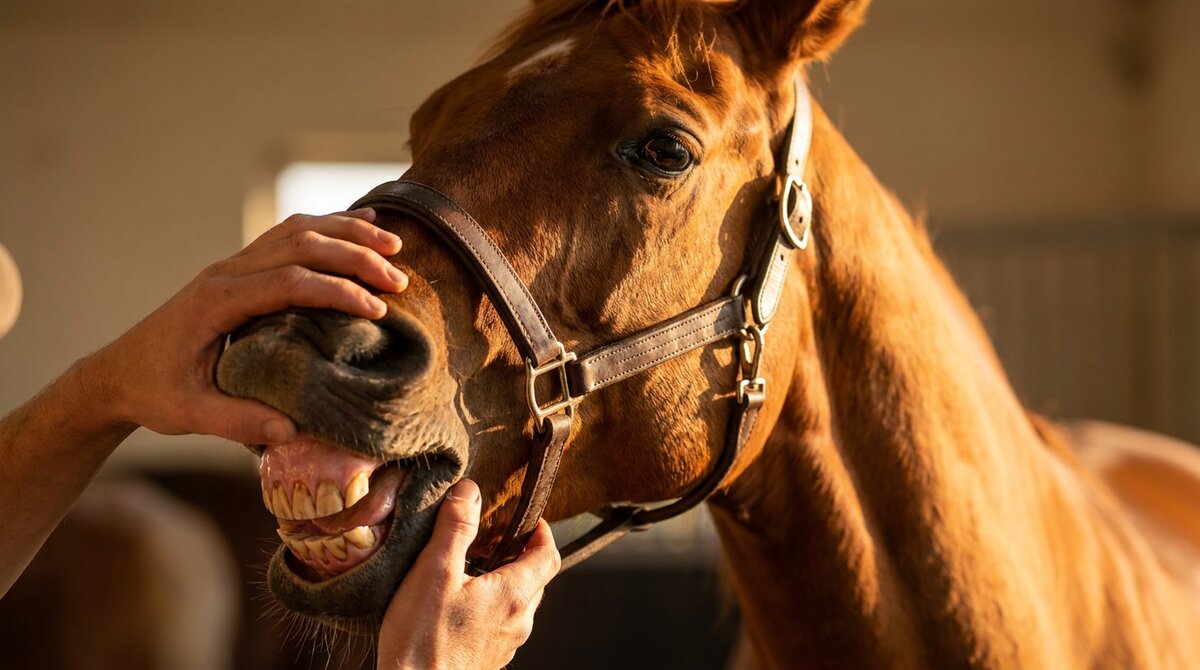
You booked the dentist, the horse got floated, and you crossed teeth off the list for another year. That is how most of us think about equine dentistry, and it is also why so many painful problems get missed. Floating is one tool for one job, smoothing the sharp enamel points on the edges of the cheek teeth. It does nothing for the horse losing weight from a gap packed with rotting hay, or the older gelding whose front teeth are quietly dissolving inside his gums. Those problems are common, they hurt, and knowing what lives beyond the float is how you catch trouble while it is still fixable. For more details, see our guide on Equine Dental Care. For more details, see our guide on Horse Dental Anatomy. For more details, see our guide on Horse Anatomy.
What makes a horse's teeth so unusual?
Horses have hypsodont teeth, meaning each tooth has an unusually long crown that keeps erupting throughout most of the horse's life. Only a small part, the clinical crown, is visible above the gum. The much longer reserve crown sits down in the jaw socket and slowly pushes up to replace what grinding forage wears away, at a rate most sources put around 2 to 3 millimeters per year (some cite up to 4). Over a lifetime, that is a lot of tooth to wear through. You may also find our article on Thrush in Horses helpful. You may also find our article on Equine Influenza helpful.
An adult horse carries roughly 36 to 44 teeth, depending on sex and whether small extra teeth are present, with male horses usually having four canine teeth (tushes) that mares typically lack. Each tooth is a layered column of enamel, dentine, and cementum, and those layers wear at different rates, which keeps the grinding surface rough enough to break down fiber. That system works beautifully in a horse eating for sixteen hours a day. It gets into trouble when wear becomes uneven, when gaps open up, or when the tooth itself breaks down from within.
Why floating is not the whole story
Floating exists because the horse's lower jaw is narrower than the upper, so the grinding surfaces do not line up perfectly. The outside edges of the upper cheek teeth and the inside (tongue side) edges of the lower cheek teeth escape the grinding motion and grow into sharp enamel points that can slice the cheeks and tongue. Rasping them smooth is genuinely important, but floating is maintenance filing, not a cure for structural disease.
A float cannot lift feed out of a gum pocket, regrow lost bone, or stop tooth resorption. When people say a horse "just needs a float," they are often describing a mouth that actually needs a diagnosis. That is why the American Association of Equine Practitioners frames the annual dental exam as an examination first, with floating as one possible outcome, not the point of the visit.
Hooks, ramps, wave mouth, and step mouth
These are all malocclusions, meaning the teeth are not meeting and wearing evenly. When a tooth has no opposing tooth grinding against it, the unopposed portion keeps erupting and overgrows. Hooks and ramps form at the front and back of the cheek tooth rows, usually because the upper and lower rows are slightly offset front to back. A hook is a sharp point on the leading upper cheek tooth or the last lower one. A ramp is a longer, sloping overgrowth, most often on the first lower cheek tooth.
Wave mouth is what it sounds like, a rolling, up-and-down profile across the grinding surface where some teeth are too tall and their opposing partners too short. Step mouth is a more abrupt version, a single tall tooth standing above its neighbors like a stair step, which often happens when the opposing tooth was lost or damaged. Left alone, these overgrowths lock the jaw into a limited chewing pattern, trap feed, and drive periodontal disease. Corrected early, most respond to skilled, gradual reduction, and gradual is the key word, because overzealous grinding can expose the sensitive pulp.
| Problem | What it is | Common cause |
|---|---|---|
| Hook | Sharp point on the first upper or last lower cheek tooth | Upper and lower tooth rows offset front to back |
| Ramp | Long sloping overgrowth, usually first lower cheek tooth | Partial or missing opposing contact |
| Wave mouth | Rolling up-and-down profile across the whole row | Long-term uneven wear, often age related |
| Step mouth | One tooth standing tall like a stair step | Loss or damage of the opposing tooth |
Diastema and periodontal disease: the painful gap
A diastema is an abnormal gap between two teeth that should sit tightly together, and it is one of the most painful dental conditions a horse can have. Normally the cheek teeth are packed so snugly they function almost like a single grinding block. When a gap opens, chewed forage gets forced into it under real pressure and jams there, rotting against the gum. That trapped feed drives periodontal disease, the infection and inflammation of the tissue and bone anchoring the tooth. Per the Merck Veterinary Manual, periodontal disease is common in older horses and almost always associated with diastemata.
Diastemata come in two forms. Developmental (primary) gaps arise when teeth erupt at slightly wrong angles or spacing. Acquired (secondary) gaps open later in life as teeth wear, drift, or are lost, which is why older horses are hit hardest. The tell is specific. A horse with painful diastemata often quids, dropping cud-like balls of half-chewed hay, and may have foul breath from the packed, decaying feed. Management centers on cleaning out the trapped material, correcting overgrowths that worsen the packing, and sometimes having a veterinarian widen the gap so feed no longer wedges in. It is ongoing management, not a one-and-done fix.
EOTRH: the older horse's hidden tooth killer
Equine odontoclastic tooth resorption and hypercementosis, mercifully shortened to EOTRH, is a progressive, painful disease of the front teeth that mostly strikes horses over 15. It works two ways at once. In resorption, the horse's own cells (odontoclasts) dissolve the tooth from the inside, giving affected roots a "moth-eaten" look on radiographs. In hypercementosis, the body lays down excess cementum around the roots, producing the classic bulbous, club-shaped swellings you can sometimes feel through the gum. Most cases involve the incisors, and sometimes the canines.
EOTRH is easy to miss because it hides at the front of the mouth, under the lip, exactly where a routine cheek-teeth float never looks closely. Early signs are subtle. Gums may look red and receded, teeth may discolor, and the horse may suddenly refuse to bite a carrot or grab grass reluctantly. As it advances you see swollen gums, small draining tracts along the gumline, bad breath, drooling, head shaking, and eventually loose or fractured incisors. Thoroughbreds and warmbloods are over-represented, and geldings appear affected more often than mares, though any horse can develop it and mild changes have been documented in horses as young as 10.
Diagnosis relies on a careful oral exam plus dental radiographs, since much of the damage is below the gumline and graded on a 0 to 3 severity scale. There is no cure short of removing the diseased teeth, but here is the encouraging part. Horses typically do remarkably well after extraction of the affected incisors, often eating comfortably within days because the constant pain is finally gone, and many manage grazing and hay perfectly well with few or no incisors.
Fractured teeth and wolf teeth
Teeth crack. A horse might bite a stone hidden in hay, take a kick or fall, or fracture a cheek tooth already weakened by decay or an overgrown, unsupported edge. A fractured tooth can expose the pulp to bacteria, and infection in the upper cheek teeth can drain into the sinuses, causing one-sided nasal discharge or facial swelling. Sharp fragments also lacerate the cheek or tongue. Depending on the tooth and the damage, a veterinarian may smooth it, perform a root canal to save it, or extract it.
Wolf teeth are a different animal entirely. These are small, mostly vestigial teeth (the first premolar, when present) that usually sit just in front of the first upper cheek tooth, and sometimes the lower. They serve no chewing purpose, and because they sit right where the bit rides, they can cause discomfort and bit resistance. Many are removed, commonly in young horses before serious bit work begins, though a wolf tooth that is not interfering does not automatically need to come out. It is a conversation to have with your veterinarian, not a default surgery for every horse.
The signs owners can actually spot
You do not need a speculum and a headlamp to catch dental trouble early, just the tells. The most useful is quidding, when a horse balls up hay or grass, sucks the juice out, and drops the wad on the ground. Quidding almost always means chewing hurts. Beyond that, watch for this cluster of changes:
- Gradual weight loss or poor condition despite good feed and a normal appetite, because the horse cannot grind fiber efficiently.
- Dropping grain or long fibers while eating, tilting the head to chew, or eating noticeably slower.
- Foul mouth odor, which often points to packed feed in a diastema or infected tissue.
- New resistance under saddle, including head tossing, fussing with the bit, going hollow, or refusing contact on one rein.
- Undigested long stems or whole grain in the manure, a sign feed is passing through poorly chewed.
- Reluctance to take treats or graze, or flinching when you handle the muzzle, which can flag incisor pain like EOTRH.
Here is the honest catch. Horses are stoic, and many hide dental pain until a problem is advanced, so waiting for symptoms is a losing strategy. Plenty of horses with significant disease keep eating right up until they crash, and the absence of obvious signs does not mean the mouth is healthy.
How often, and what a real exam looks like
Most horses should have a full dental exam at least once a year, and the AAEP notes that horses over 10, or any horse with known dental issues, often benefit from checks every six months. Young horses between roughly 2 and 5 shed 24 baby teeth and erupt their permanent set, and that transition often needs closer attention, since retained caps (baby teeth that fail to shed) can trap feed and irritate.
A thorough exam is not a thirty-second glance from the aisle. It usually means sedation, a full-mouth speculum to hold the jaw open, a bright light, a mirror or intraoral camera, and hands feeling every tooth and gum. When indicated, radiographs reveal what the eye cannot, especially for EOTRH, fractured roots, and bony changes from periodontal disease. Choose a veterinarian or a qualified equine dentist working within the rules of your region, because the tools involved can do real harm in unskilled hands. Your horse's mouth does enormous work every day, and catching the problems that live beyond the float is one of the highest-value things you can do for a long, comfortable life.
Frequently Asked Questions
Is floating enough to keep my horse's teeth healthy?
Floating alone is not enough, because it only smooths sharp enamel points. It does not detect or treat diastema, EOTRH, fractured teeth, or advanced malocclusions. What actually protects your horse is a full oral exam by a veterinarian or qualified equine dentist, with floating done only if the exam shows it is needed.
What is quidding and why does it matter?
Quidding is when a horse chews hay or grass into a ball, drops it half-eaten, and moves on. It is one of the clearest signs that chewing is painful, often from diastema, wave mouth, loose teeth, or EOTRH. Any horse that starts quidding should be examined promptly rather than left to see if it passes.
Can a horse live a normal life after losing teeth to EOTRH?
Yes, and many are far happier for it. Horses generally tolerate incisor extraction very well, often eating comfortably within days once the chronic pain is gone. They can still graze and eat hay effectively, and some owners say their horse acts years younger after surgery.
Do all wolf teeth need to be removed?
No. Wolf teeth are commonly removed when they sit where the bit rides and cause discomfort or resistance, especially in young horses starting bit work. A wolf tooth that is not interfering does not automatically require removal. Ask your veterinarian to assess whether yours is causing a problem.
How often should my horse's teeth be checked?
At least once a year for most adult horses. Horses over 10, young horses shedding baby teeth between 2 and 5, and any horse with known dental disease often benefit from exams every six months. Older horses in particular are prone to diastema, periodontal disease, and EOTRH, all of which reward early detection.
Sources
- Easley, J. & Tremaine, W.H. Dental Disorders of Horses. Merck Veterinary Manual, Horse Owners edition. merckvetmanual.com
- Periodontal Disease in Horses. Merck Veterinary Manual, Digestive System, Dentistry in Horses. merckvetmanual.com
- Odontoclastic Tooth Resorption and Hypercementosis in Horses. Merck Veterinary Manual, Digestive System, Dentistry in Horses. merckvetmanual.com
- American Association of Equine Practitioners Horse Owner Education Committee (2025). Introduction to Equine Dentistry. AAEP. aaep.org
- Equine Odontoclastic Tooth Resorption and Hypercementosis (EOTRH). UC Davis Center for Equine Health, School of Veterinary Medicine. ceh.vetmed.ucdavis.edu
- Understanding the Challenges of Equine Odontoclastic Tooth Resorption and Hypercementosis (EOTRH). Virginia-Maryland College of Veterinary Medicine, Marion duPont Scott Equine Medical Center. emc.vetmed.vt.edu