Heaves in Horses: Understanding Severe Equine Asthma and How to Manage It
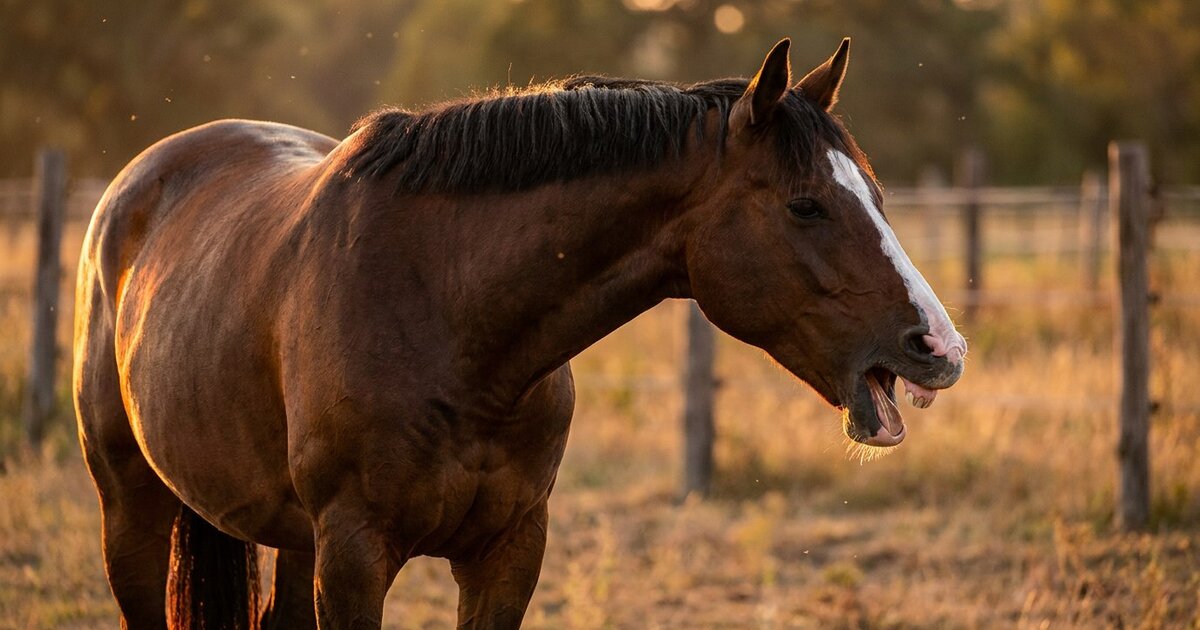
You notice it first as a cough at the start of a ride, or a horse that used to sail through a flat school and now runs out of air on the far side of the arena. Then come the flared nostrils, the double-effort push at the end of each breath, and eventually a hard ridge of muscle along the bottom of the belly. This is not a stubborn cold that will not clear. It is heaves, the horse version of a serious, lifelong asthma that lives and dies by the air in the barn. You may also find our article on Horse Anatomy helpful. You may also find our article on Equine Influenza helpful.
What exactly is heaves?
Heaves is the everyday name for the severe form of equine asthma, a chronic, non-infectious inflammatory disease of the lower airways in adult horses. The terminology has shifted over the years, which is why you will see the same condition called recurrent airway obstruction (RAO), broken wind, and the older label chronic obstructive pulmonary disease (COPD). Veterinarians now group these under the single umbrella of equine asthma, with a milder end of the spectrum (mild to moderate equine asthma, formerly inflammatory airway disease) and a severe end, which is what most people mean when they say heaves. You may also find our article on EPM in Horses helpful. You may also find our article on Strangles in Horses helpful.
This is not a rare problem. Roughly 12 to 17 percent of mature horses in northern, temperate climates carry some degree of allergen-driven lower-airway inflammation. The severe form tends to announce itself in middle age, with an average onset around nine years old, and there is a clear inherited component: the risk climbs sharply when both parents are affected. It shows up in every breed and in horses doing every job.
What is actually happening inside the lungs?
In a horse with heaves, the immune system overreacts to particles a healthy horse simply breathes past. When a susceptible horse inhales dust and mold, three things happen at once, and together they make the airways narrow and stiff.
- Inflammation. The small airways fill with inflammatory cells, chiefly neutrophils. In a healthy horse, neutrophils make up under 5 percent of the cells recovered from a lung wash. In a horse with severe asthma, that figure can run anywhere from about 25 percent up into the high double digits.
- Bronchospasm. The muscle wrapped around the small airways clamps down, physically shrinking the tubes air has to travel through. This is the part that responds quickly to bronchodilator medication.
- Mucus and remodeling. Irritated airways pump out thick mucus that further blocks the passages, and over months and years of repeated flares the airway walls thicken and scar. Some of that remodeling is permanent, which is why catching the disease early matters.
The net effect is that the horse can pull air in reasonably well but struggles to push it back out. Air gets trapped in the depths of the lung, oxygen exchange suffers, and the horse has to recruit extra muscle just to exhale. That effort is the root of nearly every outward sign you will notice.
What triggers a heaves flare-up?
The main culprits are organic dust, mold spores, and bacterial endotoxin, and the biggest single reservoir of all three is hay. Dry, dusty, or slightly moldy hay is the classic trigger, and round bales are the worst offenders because they carry high loads of mold and endotoxin and horses bury their noses deep inside them. Straw bedding, a poorly ventilated barn, hay stored in a loft overhead, and the dust kicked up when someone sweeps the aisle all add to the load.
There are two broad patterns, and knowing which one your horse fits changes the whole plan. Barn-associated (or stable-associated) heaves is by far the more common and flares worst in winter and early spring, when horses are shut inside eating hay. Summer pasture-associated asthma is the mirror image: these horses do fine in a clean stable but flare on grass in hot, humid weather, driven by pasture molds and pollens. It is most often seen in the southeastern United States.
| Feature | Barn-associated heaves | Summer pasture-associated asthma |
|---|---|---|
| Main trigger | Hay dust, mold, endotoxin, stable air | Pasture molds and grass pollens |
| Worst season | Winter and early spring | Summer and early fall |
| Where the horse feels better | Out on clean pasture | Inside a clean, well-ventilated stable |
| Geography | Temperate regions worldwide | Mainly hot, humid southeastern US |
What does the heave line and the cough tell you?
The outward signs of heaves all trace back to that struggle to exhale. Early on they can be subtle, and owners often write them off as a lingering cough or a horse that is simply out of shape. Watch for this cluster of signs, especially if they worsen in the barn or on hay and ease off on fresh pasture:
- A chronic cough, often at the start of exercise or during feeding, sometimes productive and wet-sounding.
- Flared nostrils and a longer, harder push at the end of each breath. A normal horse breathes about 8 to 16 times a minute at rest; an asthmatic horse in a flare breathes faster and with obvious effort.
- Nasal discharge, usually clear to whitish, sometimes thick.
- Exercise intolerance: running out of air, taking longer to recover, or losing the sparkle in work.
- Wheezing on exhalation that you or your vet may hear, along with a tracheal rattle in worse cases.
The heave line itself is a late sign and a telling one. When a horse spends months forcing the air out, the external abdominal oblique muscles along the flank and lower belly hypertrophy, or bulk up, from the constant work. The result is a visible ridge or groove running diagonally up the side of the barrel. A pronounced heave line means the disease has been active and uncontrolled for a while, and it is a sign to get your veterinarian involved quickly.
How is heaves diagnosed?
Diagnosis usually starts with the story and a physical exam. A history of chronic coughing and labored breathing that flares in the barn or on hay, combined with a horse that is bright, afebrile, and eating well, points toward asthma rather than infection. Your vet will listen carefully to the chest, often using a rebreathing bag (a large plastic bag held over the nose for a minute or two) to encourage deeper breaths so quiet wheezes and crackles become audible.
To confirm it and gauge severity, veterinarians turn to a few tools:
- Endoscopy of the upper airway and trachea, which lets the vet see mucus, inflammation, and swelling directly.
- Bronchoalveolar lavage (BAL), considered the test of choice. A small volume of fluid is instilled deep into the lung and drawn back, and the cells in it are counted under a microscope. A high proportion of neutrophils confirms lower-airway inflammation and helps separate severe asthma from the milder form.
- Thoracic radiographs or ultrasound, used mainly to rule out pneumonia, tumors, or other lung disease rather than to diagnose heaves itself.
Only your veterinarian can make the call and rule out the look-alikes, so resist the urge to self-diagnose off a cough alone. Several serious conditions mimic heaves, and their treatment plans are not interchangeable. For more details, see our guide on Thrush in Horses.
Why is managing the air the real treatment?
Here is the part that surprises people: the most powerful tool against heaves is not a drug, it is the environment. Medication can rescue a horse from a crisis, but there is no magic syringe for respiratory disease. If the horse goes back into the same dusty air, the disease returns once the drugs stop. Lasting improvement comes from cutting the respirable dust the horse actually breathes, especially in the small zone right around its nose.
The numbers make the case. Switching a horse to wood shavings plus a low-dust pelleted diet has been shown to cut respirable particles by around 50 percent overall and by 97 percent in the breathing zone, the pocket of air right in front of the nostrils where it matters most. Practical priorities:
- Maximize turnout. For barn-associated heaves, full-time pasture with fresh grass as the main forage is the single best move. Outdoor air is dramatically cleaner than stall air.
- Fix the bedding. Ditch straw. Use low-dust options such as wood shavings, shredded cardboard, or paper.
- Rethink the barn layout. Never store hay in a loft above the stalls, do not stable a horse inside an indoor arena, and avoid barn blowers. Turn the horse out while you muck and sweep, then bring it back once the dust settles.
- Improve ventilation. Open doors and windows. A colder, breezier barn is far better for asthmatic lungs than a warm, closed, dusty one.
For the summer pasture-associated horse, the plan flips: a clean, well-ventilated stable during the worst pollen and mold weeks can be the safer place to be.
How should you handle hay and forage?
Because hay is the biggest dust reservoir, how you feed it often decides how the horse does. The goal is to get mold spores and respirable particles out of the forage before they reach the lungs.
- Soaking hay in water swells the dust so it cannot become airborne, and it is cheap and simple. The catch is that it only helps mildly affected horses, not the most sensitive cases, and compliance tends to collapse in freezing weather, exactly when barn-associated horses need it most.
- Steaming with a purpose-built high-temperature hay steamer cuts respirable particles and endotoxin more thoroughly and does not soak nutrients out the way long soaking can. Improperly steamed or re-wet hay can grow bacteria and mold, so it must be done correctly and fed promptly.
- Low-dust alternatives sidestep hay altogether. Hay cubes, complete pelleted feeds, and properly made haylage all carry far less airborne dust. Severely affected horses sometimes do best on a fully pelleted or cubed forage program.
- Avoid round bales. Feeding from round bales is linked to markedly higher asthma severity, both because of their dust and endotoxin load and because horses press their faces deep inside them.
Where medication fits in is a conversation for you and your veterinarian. Broadly, treatment pairs bronchodilators, which open the airways fast for quick relief, with corticosteroids, which calm the underlying inflammation, and inhaled versions are increasingly used to target the lungs while limiting whole-body effects. But every reputable source lands in the same place: drugs buy relief and time, and the environment does the long-term work. Managed well, a great many heaves horses go on to be sound, happy partners for years.
Frequently Asked Questions
Can heaves in horses be cured?
No. Heaves, or severe equine asthma, is a chronic disease that cannot be cured, but it can be controlled very well in most horses. The key is aggressively reducing the dust and mold in the horse's air and forage. With good management, many affected horses stay comfortable and stay in work for years. Your veterinarian should guide the plan.
What is a heave line and what causes it?
A heave line is a visible ridge along a horse's lower flank and belly, formed when the external abdominal oblique muscles bulk up from constantly forcing air out of obstructed lungs. It is a sign the asthma has been active and uncontrolled for a while. If your horse is developing one, contact your veterinarian promptly.
Is soaking or steaming hay better for a horse with heaves?
Steaming with a proper high-temperature steamer generally removes more respirable dust and endotoxin and preserves more nutrients than soaking, which mainly helps mildly affected horses. Soaking is cheaper but harder to keep up in winter. Very sensitive horses may need to move off hay entirely to cubes, pellets, or haylage.
Is heaves contagious to other horses?
No. Heaves is an allergic, inflammatory disease, not an infection, so it does not spread from horse to horse. However, several horses in the same dusty barn can develop it independently because they share the same trigger-filled air. There is also an inherited susceptibility, so the risk is higher when both parents were affected.
Can a horse with heaves still be ridden?
Often yes, once the disease is under control. Many well-managed asthmatic horses work happily as trail, pleasure, and even competition mounts. During an active flare, though, a horse struggling to breathe should not be worked hard. Let your veterinarian confirm the horse is stable and guide how much work is appropriate.
Sources
- Merck Veterinary Manual. Asthma in Horses (Respiratory System). Merck & Co. merckvetmanual.com.
- Merck Veterinary Manual. Recurrent Airway Obstruction (Heaves) in Horses (Horse Owners). Merck & Co. merckvetmanual.com.
- University of Florida IFAS Extension. Understanding Equine Asthma (Heaves), Publication VM142. UF/IFAS. ask.ifas.ufl.edu.
- American Association of Equine Practitioners (AAEP). Be A Dust Buster: Equine Asthma Treatment & Management Hinges on Reducing Respirable Particles in the Environment. AAEP. aaep.org.
- Leguillette, R. (2003). Recurrent Airway Obstruction (Heaves). Veterinary Clinics of North America: Equine Practice, 19(1), 63-86.
- Reed, S.M., Bayly, W.M., & Sellon, D.C. (Eds.). Equine Internal Medicine (4th Ed). Elsevier Saunders, Recurrent Airway Obstruction and Equine Asthma.