Miniature Horse Care: How It Really Differs From Full-Size Horses
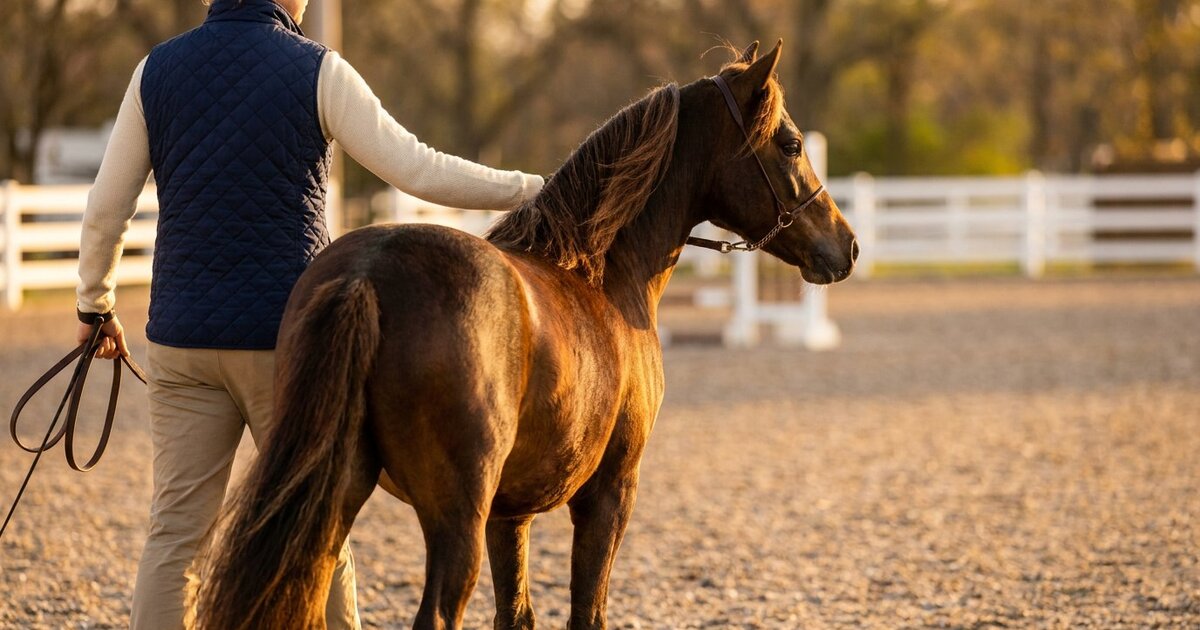
If you have ever stood next to a well-bred miniature horse, you know the feeling. Everything about them looks like a full-size horse that someone shrank in the wash, right down to the fine legs, the dished face, the flowing mane. That resemblance fools a lot of new owners into thinking care is just a smaller version of what a 1,000-pound horse needs. It is not. A mini's tiny body changes the risk math in ways that can quietly hurt them, and a few of those differences are genuinely life or death. Feed a mini like a scaled-down Quarter Horse and you will very likely end up with an obese, foundered, or metabolically sick little horse. For more details, see our guide on The Complete Guide to Horse Hoof Care. For more details, see our guide on Seasonal Horse Care. For more details, see our guide on Equine Dental Care.
How big is a miniature horse, really?
A true miniature horse tops out at 34 inches tall, which is roughly 8.5 hands. The American Miniature Horse Association (AMHA), the breed's primary registry, sets the ceiling at 34 inches measured at the base of the last hair of the mane rather than at the withers, which is where taller horses are usually measured. Go one hair over and the animal is not eligible for AMHA registration. For more details, see our guide on Arabian Horse Breed Profile. For more details, see our guide on Suffolk Punch Breed Profile.
The American Miniature Horse Registry (AMHR) is more flexible. It splits minis into two divisions by height: Division A for horses 34 inches and under, and Division B for those over 34 inches up to 38 inches. So an animal can be too tall for AMHA but still a registered AMHR miniature. That difference matters when you are buying, because "registered miniature" can mean two slightly different size ceilings depending on which papers come with the horse.
One important point: a miniature horse is a horse, not a pony. The distinction is about phenotype and breeding history, not just height. Minis were bred to keep true horse proportions in a small package, which is exactly why their care mirrors horse care and not pony shortcuts.
Why do miniature horses gain weight so easily?
Miniature horses are what many vets call easy keepers, meaning they hold weight and body fat on very little feed. Their metabolism is efficient in a way that worked beautifully for survival and works against them in a modern hay-and-pasture life. Put a mini on the same rich grass that keeps a Thoroughbred lean, and the mini gets fat.
Obesity is not a cosmetic issue in this breed. It is the on-ramp to equine metabolic syndrome (EMS), a cluster of problems built around insulin dysregulation, according to the Merck Veterinary Manual. In plain terms, the horse's body handles sugar and starch poorly, insulin runs high, and that hormonal state dramatically raises the risk of laminitis, the painful and sometimes crippling inflammation of the tissues that bond the hoof wall to the coffin bone. You will often see a cresty, hard neck and fat pads over the tailhead and shoulders in an EMS-prone mini.
Management is mostly about the feed bucket. Horses with EMS are typically fed hay with nonstructural carbohydrates below about 10 percent (confirmed by lab analysis), grazing is limited or eliminated, and grain and sugary treats are cut. Because minis need so little, precision matters more than it does with a big horse, where a handful of feed one way or the other barely registers.
What is hyperlipemia, and why is it a mini emergency?
Here is the dangerous flip side of the easy keeper. When a fat pony, donkey, or miniature horse suddenly stops eating, its body starts pulling stored fat into the bloodstream faster than the liver can process it. That flood of fat can overwhelm and infiltrate the liver, a condition called hyperlipemia (or hyperlipaemia), and it can be fatal. The Merck Veterinary Manual names ponies, miniature horses, and donkeys as the highest-risk animals, noting it occurs far less often in standard-size adult horses.
The cruel part is what triggers it: a negative energy balance. Anything that makes a mini go off feed can start the cascade, including a bout of colic, dental pain, a mare's late pregnancy or lactation demands, transport stress, cold weather, or another illness. Obese and stressed animals are especially vulnerable, and the fact that the horse then feels too sick to eat only deepens the spiral.
This is why a full-size-horse instinct ("she skipped a meal, she will be fine") is the wrong instinct with a mini. If a miniature horse has not eaten in about 24 hours, or looks dull, weak, depressed, uncoordinated, or has diarrhea, that is a call-your-veterinarian-now situation. Prognosis is guarded once hyperlipemia sets in, so the goal is catching the off-feed period early, before the liver is in trouble.
Why is dental care such a big deal in minis?
Miniature horses were bred down in body size, but their teeth did not shrink proportionally. The result is a full horse's worth of large teeth crammed into a tiny skull, and the crowding causes real problems. A study of 100 miniature horses published in Frontiers in Veterinary Science found that 95 percent of them had dental disease, and most had more than one condition at the same time.
The specifics are worth knowing. Crown elongation (overgrown teeth) showed up in 74 percent of the minis in that study, compared with roughly 2 to 12 percent reported in larger horses. Diastemata, the abnormal gaps between teeth where food packs in and gum disease starts, appeared in 34 percent, and malocclusions (teeth that do not meet correctly, including overbites and underbites) in another 34 percent. Missing teeth, or hypodontia, turned up at about ten times the rate seen in standard horses. Young minis also commonly retain their baby teeth, or caps, which jams the incoming adult teeth and sometimes needs extraction.
Because minis hide dental pain well and because that pain can send them off feed (see hyperlipemia above), regular oral exams by a veterinarian are not optional. Many minis benefit from a professional dental check at least once a year, and youngsters often need closer attention while the adult teeth come in.
Do miniature horses still need farrier care?
Yes, and just as often as big horses do. It is tempting to think a 200-pound animal barely wears its feet, so the trims can slide. They cannot. Miniature horse hooves grow continuously like any horse's, and without regular trimming they develop long toes, flares, and imbalances that stress the tiny joints and tendons above them.
The metabolic angle makes hoof care even more important. Because minis are so prone to EMS and laminitis, their feet are a frontline warning system. A good farrier and vet team will watch for the subtle hoof changes that flag past or brewing laminitis, such as abnormal growth rings and stretched white lines. Most minis do well on a trimming cycle in the neighborhood of every 6 to 8 weeks, and metabolic or laminitic cases are often trimmed more often.
What is miniature horse dwarfism?
Dwarfism is a genetic condition in miniature horses that produces disproportion rather than simple smallness. A dwarf mini typically has an oversized head, a short or roached back, short and sometimes twisted limbs, and abnormal joints, and affected foals can face serious health and mobility problems. It is important to separate this from a horse that is simply small and correctly proportioned, which is the breed ideal, not a defect.
The genetics trace largely to the ACAN gene, which codes for aggrecan, a building block of healthy cartilage. Research in the journal Animal Genetics identified several ACAN variants (labeled D1, D2, D3, and D4) associated with chondrodysplastic dwarfism in miniature horses. These behave as recessives, which is the critical part for breeders: two normal-looking parents who each carry one dwarfism variant can produce a dwarf foal, and inheriting two variants can be severe or even incompatible with life. Because these genes are widespread in the mini population, DNA testing before breeding is the responsible way to avoid producing affected foals.
What are miniature horses actually used for?
Plenty, as it turns out. Their size makes them approachable and versatile, and modern minis do real jobs beyond looking adorable in a paddock.
- Driving: A well-trained mini can pull an adult in a small cart, and driving is one of the most popular competitive and recreational disciplines for the breed.
- Showing: Minis compete in hand in halter, plus jumping and obstacle classes handled from the ground.
- Therapy and companionship: Calm, socialized minis visit hospitals, schools, and care facilities, and they make excellent companions for people and for other horses.
- Service animals: This is the surprising one. Under the Americans with Disabilities Act, miniature horses are the only species besides dogs that can be recognized as service animals. Facilities weigh four factors: whether the horse is housebroken, whether it is under the handler's control, whether the space can accommodate its type, size, and weight, and whether its presence compromises safety. Service minis generally stand 24 to 34 inches and weigh roughly 70 to 100 pounds. Their long working lifespan compared with a guide dog appeals to some handlers.
Mini vs full-size horse care, side by side
| Care area | Miniature horse | Full-size horse |
|---|---|---|
| Height | Up to 34 in (AMHA); up to 38 in (AMHR Division B) | Typically 14.2 to 17 hands (58 to 68 in) |
| Daily forage | Roughly 1.5 to 2 percent of body weight, often just a few pounds of hay | Roughly 1.5 to 2 percent of body weight, often 15 to 25 lb of hay |
| Obesity and EMS risk | Very high; easy keepers, needs restricted grazing | Variable by breed and workload |
| Hyperlipemia if off feed | High risk; a missed day of eating is an emergency | Uncommon in standard adult horses |
| Dental disease | Very common (95 percent in one study); crowding and retained caps | Common but generally less crowded |
| Farrier cycle | Still every 6 to 8 weeks; more often if laminitic | Every 6 to 8 weeks |
Frequently Asked Questions
Is a miniature horse the same as a pony?
No. Miniature horses are bred to keep true horse proportions and phenotype in a small body, while ponies are a separate category with their own conformation traits. The distinction is about breeding and build, not just height, which is why minis are cared for as horses rather than as scaled-down ponies.
How much should I feed a miniature horse?
Most minis do well on roughly 1.5 to 2 percent of their body weight per day in appropriate forage, which for a small mini can be just a few pounds of hay. Because they are prone to obesity and EMS, many need low-sugar hay and limited or no grazing. Ask your veterinarian to help set an exact ration for your horse.
Why is it an emergency when a mini stops eating?
When a miniature horse goes off feed, its body can mobilize fat faster than the liver can handle, leading to hyperlipemia, a life-threatening fatty liver condition. Minis, ponies, and donkeys are far more prone to it than full-size horses. If your mini has not eaten in about 24 hours or seems weak, dull, or uncoordinated, call your veterinarian right away.
How often do miniature horses need dental care?
Because their teeth are crowded into a small skull, minis have very high rates of dental disease, and problems can quietly cause them to stop eating. Most benefit from a veterinary oral exam at least once a year, and young minis often need closer monitoring as their adult teeth erupt and baby teeth are shed.
What causes dwarfism in miniature horses?
Dwarfism in minis is largely linked to recessive variants of the ACAN gene, which affects cartilage development. Two normal-looking carrier parents can produce an affected foal, so DNA testing before breeding is the responsible way to reduce the risk. Dwarfism is different from a horse that is simply small and well proportioned.
Can miniature horses really be service animals?
Yes. Under the Americans with Disabilities Act, miniature horses are the only species besides dogs that can be recognized as service animals. Facilities assess four factors, including whether the horse is housebroken and under the handler's control, and whether the space can safely accommodate its size and weight.
Sources
- American Miniature Horse Association. Breed Standards and How to Measure. AMHA. amha.org
- American Miniature Horse Registry. Height Divisions A and B. AMHR / ASPC.
- Divers, T.J. Hyperlipemia and Hepatic Lipidosis in Large Animals. Merck Veterinary Manual.
- Frank, N. Equine Metabolic Syndrome. Merck Veterinary Manual.
- du Toit, N. et al. (2023). The prevalence and risk factors of dental disease found in 100 miniature horses. Frontiers in Veterinary Science, 10:1239809.
- Eberth, J.E. et al. (2018). Multiple alleles of ACAN associated with chondrodysplastic dwarfism in Miniature horses. Animal Genetics, 49(5).
- U.S. Department of Justice. Service Animals (miniature horse provision, 28 CFR 35.136). ADA.gov; Northeast ADA Center.