Paint Horse vs Pinto: The Breed and Color Difference People Get Wrong
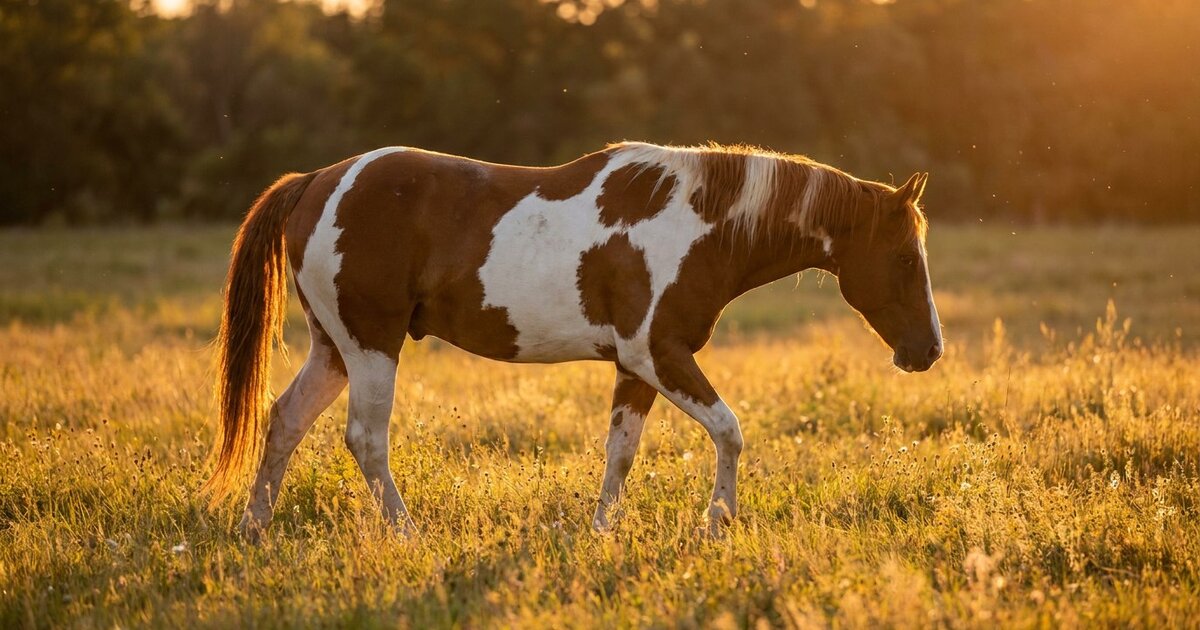
Walk down any barn aisle and you will hear someone point at a big splashy white and brown horse and call it "a paint," while the horse next to it, patterned almost identically, gets called "a pinto." Most people use the two words like they are interchangeable. They are not, and the difference is not just barn trivia. One word describes a registered breed with a specific pedigree. The other describes a color pattern that can turn up on a Thoroughbred, a Miniature, a Saddlebred, or a grade horse of unknown parentage. For more details, see our guide on American Quarter Horse Breed Profile. For more details, see our guide on Thoroughbred Breed Profile.
Is a Paint horse the same as a pinto?
No, and the cleanest way to remember it is this: Paint is a breed, pinto is a paint job. The American Paint Horse is a defined breed with strict bloodline rules. "Pinto" is a description of color, specifically a coat with large patches of white and any other color. A horse can be a pinto in coloring while belonging to a completely different breed or no registered breed at all.
The distinction is pedigree versus paint. If you can trace the horse's parents to the right registries, you may have a Paint. If you are simply describing the spots, you have a pinto. This is why breeders say every Paint is a pinto, but the reverse almost never holds.
What makes the American Paint Horse a true breed?
The American Paint Horse qualifies as a breed because it has a registry, a defined body type, and enforced bloodline requirements. The APHA, headquartered in Fort Worth, Texas, was formed in 1965 through the merger of the American Paint Stock Horse Association and the American Paint Quarter Horse Association. It grew into one of the largest breed registries in the United States.
To register a Paint, both parents must be recorded with the APHA, the American Quarter Horse Association (AQHA), or the Jockey Club, which registers Thoroughbreds, and at least one parent must be a registered Paint. That pedigree rule is the whole ballgame. It means the American Paint Horse is essentially a stock-type horse built on Quarter Horse and Thoroughbred foundations, carrying the spotting patterns those two registries historically pushed away.
The look follows the breeding. A well-made Paint shows classic stock-horse conformation: a muscular, compact frame, a deep chest, a strong hindquarter, and the low, balanced movement that suits Western work. Imagine a Quarter Horse wearing a two-tone coat, and you are close.
Why Quarter Horse blood is at the center of it
There is a real historical reason the bloodlines run this way. For years the AQHA refused to register Quarter Horses born with too much white, calling them "cropouts" and worrying the loud markings signaled impure breeding. Those excluded but well-bred horses needed a home, and the Paint registry gave them one. Once DNA testing put those fears to rest the AQHA relaxed its "white rule," but by then the Paint had become its own established breed.
What does "pinto" actually mean?
Pinto is purely a color term for a horse with large blocks of white combined with another color, and it carries no requirement about ancestry. The word comes from the Spanish for "painted" or "spotted." A pinto Thoroughbred, a pinto Shetland, and a pinto Saddlebred are all pintos, yet none are Paints, because their breeding does not meet the APHA's stock-horse pedigree rules.
There is even a registry for the color itself. The Pinto Horse Association of America (PtHA), founded in 1956, registers horses, ponies, and Miniatures based on coat pattern rather than ancestry. Oklahoma State University's breeds reference calls the pinto a "color breed," meaning it is defined by coloration instead of lineage, which is exactly what separates it from a conventional breed.
Tellingly, the PtHA sorts registered pintos into conformation types that reveal their underlying breeding. Stock type comes from Quarter Horse and Paint lines, hunter type from Thoroughbred blood, pleasure type from Arabian or Morgan influence, and saddle type from Saddlebred, Tennessee Walking Horse, or Missouri Fox Trotter ancestry. The registry does exclude horses with Appaloosa, draft, or mule breeding. So a single splashy coat can sit on four very different body types, which is precisely why "pinto" tells you about color and very little about build.
What are the coat patterns on Paints and pintos?
The white markings on both Paints and pintos fall into a handful of named patterns, and knowing them helps you read a horse at a glance. The main ones are tobiano, overo, tovero, and sabino, and they describe how and where the white lands.
- Tobiano is the most common and the most orderly. White typically crosses the topline (the back), the legs are usually white, the head stays mostly dark with normal markings, and the spots have smooth, rounded edges. It often looks like a white horse with large color patches draped over it.
- Overo is the ragged, irregular one. White usually starts on the side or belly and does not cross the back, the legs are often dark, and the face frequently carries bold white or a bald face. Overo is actually an umbrella term covering several separate patterns, including frame, sabino, and splashed white.
- Tovero is a blend of tobiano and overo genetics showing traits of both, often with blue eyes and color concentrated around the ears, chest, and flank.
- Sabino brings roaning, jagged edges, high white on the legs, belly spots, and often a lot of white on the face. One version, Sabino 1, was traced to a mutation in the KIT gene by researchers Brooks and Bailey in 2005.
A horse can carry more than one pattern gene at once, which is why two "overo" horses can look nothing alike, and why breeders increasingly rely on DNA testing rather than eyeballing a coat.
Paint vs pinto: a side-by-side comparison
If you only remember one section, make it this one. The table below lines up the two terms on the points that actually matter.
| Feature | American Paint Horse | Pinto |
|---|---|---|
| What it is | A true breed defined by pedigree | A color pattern found across many breeds |
| Registry | American Paint Horse Association (APHA), 1965 | Pinto Horse Association of America (PtHA), 1956 |
| Bloodline rule | Parents must be APHA, AQHA, or Jockey Club; one parent a registered Paint | Based on coat pattern, not ancestry |
| Body type | Stock type (Quarter Horse and Thoroughbred build) | Any type: stock, hunter, pleasure, or saddle |
| Eligible animals | Horses meeting stock-horse pedigree rules | Horses, ponies, and Miniatures (no Appaloosa, draft, or mule breeding) |
| Can be solid-colored? | Yes, solid Paint-bred horses qualify by bloodline | No, color is the whole point |
What is lethal white overo syndrome, and why should breeders care?
Lethal white overo syndrome (LWO, also called overo lethal white foal syndrome) is a fatal genetic condition tied to the frame overo pattern, and it is the single most important thing a Paint or pinto breeder needs to understand. It is caused by a mutation in the endothelin receptor B gene (EDNRB) and is inherited in an autosomal recessive way, meaning a horse needs two copies of the mutation for the disease to appear.
A horse with just one copy is a carrier. It shows no illness, often displays the attractive frame overo coat, and lives a normal life. The danger comes when two carriers are bred together, because each foal then has roughly a 25 percent chance of inheriting two copies and being affected.
An affected foal is born nearly all white and looks healthy at first, but its intestinal nerves never developed properly, a problem called aganglionosis. The foal cannot pass manure, colic sets in fast, often within the first 12 hours of life, and there is no treatment. These foals die within days or are humanely euthanized. It is heartbreaking, and it is entirely preventable.
Prevention is simple. A hair-root DNA test, available through labs such as the UC Davis Veterinary Genetics Laboratory, tells you whether a horse carries the mutation, and breeding a carrier to a non-carrier produces no affected foals. Because frame overo can hide behind minimal white, and can even lurk in horses that look nearly solid, visual guessing is not reliable. Testing before you breed is the responsible move, and any breeding decision belongs with your veterinarian.
What are Paint horses like to own and ride?
Paint horses are generally known for the same easygoing, willing temperament that made their Quarter Horse ancestors popular, which is a big part of why they suit amateur and family riders so well. The stock-horse foundation gives them a calm, trainable mind and versatility across a lot of jobs.
You will find registered Paints competing in Western pleasure, reining, barrel racing, and ranch work, and also crossing into English disciplines like hunt seat and show jumping. Their athletic, compact conformation and cooperative attitude make them common choices for trail riding, 4-H and youth programs, and all-around show homes. Temperament varies horse to horse, so judge the individual in front of you rather than the label, but as a group the breed earns its reputation as a solid, level-headed partner. The eye appeal does not hurt either, and a flashy tobiano turning heads in the show pen is part of why the breed built its devoted following.
How do the registries actually work?
Registration comes down to one question for a Paint and a different question for a pinto: who are the parents versus what does the coat look like. For the APHA, the deciding factor is pedigree. A horse with the right stock-horse parentage can be registered even if it is solid-colored, because a solid Paint-bred horse still carries valuable breeding. Horses without an APHA parent must also meet minimum white-marking requirements.
For the PtHA, the deciding factor is the coat. The horse needs a qualifying pinto pattern, and the registry then slots it into the appropriate conformation type. Because the two systems judge different things, a single horse can sometimes be registered with both, so a Paint-bred tobiano might hold APHA papers for its bloodlines and PtHA papers for its color. Knowing which paper you are looking at, breed or color, tells you what the horse really is under the flashy coat.
Frequently Asked Questions
Are all Paint horses pintos?
By color, yes, a spotted Paint is also a pinto. But not all pintos are Paints. Paint is a breed with pedigree requirements, while pinto only describes the two-tone coat, so a pinto Thoroughbred or pinto pony is a pinto but not an American Paint Horse.
Can a Paint horse be a solid color?
Yes. Because the American Paint Horse is defined by bloodlines, a solid-colored horse with the right Paint, Quarter Horse, or Thoroughbred parentage can still be registered with the APHA. These are often called "solid Paint-bred" or "breeding stock" horses and carry the same valuable pedigree.
What is the difference between tobiano and overo?
Tobiano white usually crosses the back, includes white legs, and has smooth, rounded edges with a mostly dark head. Overo white typically starts on the belly or sides, does not cross the topline, comes with dark legs, and often includes a bold or bald face with ragged edges.
Is lethal white syndrome something buyers need to worry about?
It matters most for breeders, not for owning a riding horse. A horse can safely be a healthy carrier of the frame overo gene its whole life. The risk only appears when two carriers are bred together, which is why DNA testing before breeding is strongly recommended. Discuss any breeding plans with your veterinarian.
Can one horse be registered as both a Paint and a pinto?
Yes. The APHA registers on bloodlines and the PtHA registers on color, so a Paint-bred horse with a qualifying coat can hold papers from both associations at once. The two registrations describe different things: one certifies breeding, the other certifies pattern.
Are Paint horses good for beginners?
Many are. The breed's Quarter Horse foundation tends to produce calm, willing, versatile horses that suit amateurs, youth riders, and families. Temperament still varies by individual, so evaluate the specific horse and its training rather than the breed label alone.
Sources
- American Paint Horse Association (APHA). Understanding Breed Characteristics and Bloodline Requirements. apha.com.
- Pinto Horse Association of America (PtHA). Color Breed Registry and Registration Information. pinto.org.
- Oklahoma State University, Department of Animal and Food Sciences. Breeds of Livestock: Pinto Horses. breeds.okstate.edu.
- UC Davis Center for Equine Health and Veterinary Genetics Laboratory. Lethal White Overo Syndrome (LWO). ceh.vetmed.ucdavis.edu.
- Metallinos, D.L., Bowling, A.T., & Rine, J. (1998). A missense mutation in the endothelin-B receptor gene is associated with Lethal White Foal Syndrome, an equine version of Hirschsprung disease. Mammalian Genome, 9(6), 426-431.
- Brooks, S.A., & Bailey, E. (2005). Exon skipping in the KIT gene causes a Sabino spotting pattern in horses. Mammalian Genome, 16(11), 893-902.