Swollen Legs in Horses: Causes and When to Worry |
You walk into the barn and one hind leg is the size of a fence post.
Everything you do in the next hour depends on answering a small number of questions correctly, and the difference between the answers is the difference between "turn him out and it will be gone by lunch" and "call your vet before the sun goes down." Those are not exaggerations. They are the two real ends of this.
Here is how to tell which one you are looking at.
Quick Answer
A swollen leg in a horse most often means one of five things: stocking up, cellulitis, lymphangitis, windpuffs, or a soft tissue injury. The fastest way to tell them apart is to check how many legs are affected, whether the swelling is hot or cool, whether it hurts, and whether the horse is lame. Stocking up typically affects both hind legs, is cool, painless, and improves with movement. Cellulitis typically affects one hind leg, is hot, extremely painful, and often causes severe lameness. Cellulitis and lymphangitis are veterinary emergencies and should be seen the same day.
Why a Horse's Lower Leg Fills So Easily
There is a reason it is always the legs and almost never the shoulder.
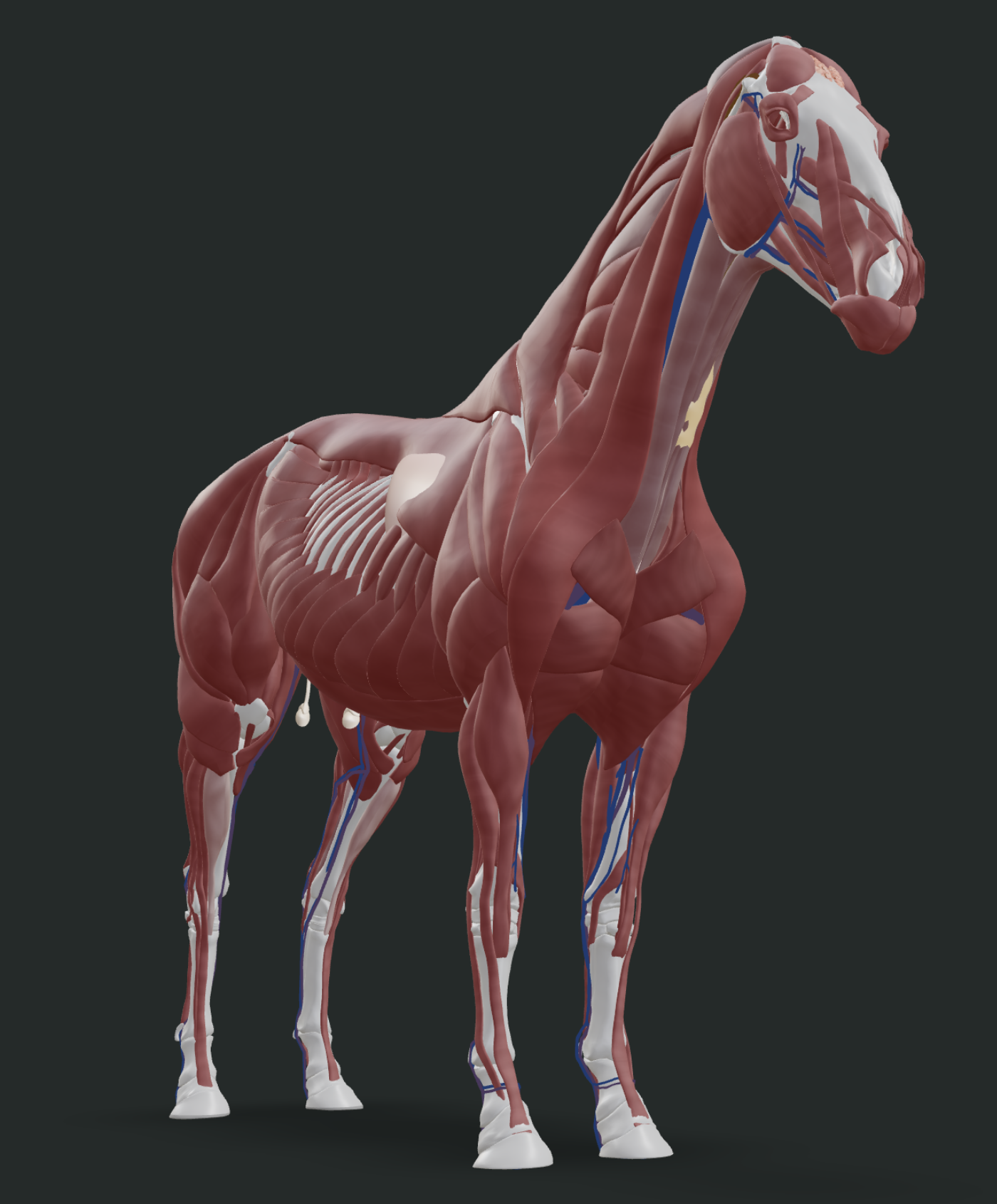
Below the knee and the hock, a horse has no muscle. None. What is down there is bone, tendon, ligament, joint capsule, and skin. That design makes the limb light and fast, which is the whole point of a prey animal built to outrun things.
But muscle does something else besides move a limb. When muscle contracts, it squeezes the vessels running through it and helps push blood and lymph fluid back up toward the heart. It is a pump. The lower leg does not have one.
So the horse's lower limb relies on something else entirely: movement. Every step compresses the frog and the digital cushion in the hoof, and that compression drives fluid upward through the vessels. A horse standing in a stall all night has almost nothing pushing fluid out of its lower legs against gravity.
Which is why the horse who has been turned out for twelve hours has clean legs, and the horse who spent the night in a stall walks out puffy. It is not a mystery. It is plumbing.
You can see the vessels this depends on in the Inside The Equine 3D explorer by turning on the circulatory and lymphatic layers on the lower limb. Once you have looked at how fine and how superficial that drainage network is, both stocking up and cellulitis start making a lot more sense.
The Five Questions That Tell You What You Are Looking At
Before you reach for a wrap, a hose, or a phone, answer these. In this order.
1. How many legs? Both hinds, or all four, points strongly toward stocking up. One leg, on its own, points toward infection or injury.
2. Is it hot or cool? Run the back of your hand down it and compare it to the opposite leg. Cool is reassuring. Hot is not.
3. Does it hurt? Press it. A horse who does not react is telling you something very different from a horse who snatches the leg away.
4. Is he lame? Walk him. Sound with a fat leg is a completely different problem from lame with a fat leg.
5. Does it pit? Press a fingertip into the swelling for a few seconds and let go. If a dent stays behind for a moment, that is pitting edema, and it is characteristic of stocking up.
One more, and it is the one people forget: take his temperature. A fever alongside a swollen leg moves the whole picture toward infection and moves the timeline to right now.
The Common Causes
Stocking up
Fluid pooling in the lower legs from inactivity. It is usually in both hind legs, sometimes all four. The swelling is cool, it does not hurt, the horse is not lame, and it pits when you press it. Most importantly, it goes away with movement. Hand-walk him or turn him out and watch it come down.
It shows up after a night in, after a layup, after a trailer ride, after a change in routine. It is the most common thing on this list by a wide margin, and it is the least serious.
That said, it is not nothing. Repeated, unaddressed lower limb edema can damage the lymphatic vessels over time, and damaged lymphatics are the road to chronic problems. A horse who stocks up every single night is telling you something about his management.
Cellulitis
This is the one that matters.
Cellulitis is a bacterial infection of the tissue underneath the skin, usually entering through a wound, a scratch, a bug bite, or a case of scratches that nobody thought twice about. Streptococcus and Staphylococcus species are common culprits.
It looks nothing like stocking up. It is usually one leg, usually a hind leg. The leg swells dramatically, sometimes to twice its normal size, from the hoof up past the hock. It is hot. It is extremely painful, often to the point where the horse does not want to bear weight. There may be a fever.
Dr. Emma Adam of the Gluck Equine Research Center puts the urgency plainly: cellulitis should be treated the day you see it, before the sun goes down. It progresses fast, it can be life-threatening, and the delay is what causes the damage.
Two more things owners deserve to know up front. Once a horse has had cellulitis, recurrence is common. And the leg may never come all the way back down to its original size, because the episode can leave lasting damage to the soft tissue and lymphatic drainage.
Lymphangitis
Cellulitis's close relative, and often talked about in the same breath. Where cellulitis is an infection of the tissue under the skin, lymphangitis involves the lymphatic vessels themselves, the very drainage network that is supposed to be clearing the fluid out.
Barn names for it tell you what it looks like: big leg disease. Stovepipe leg. The swelling is enormous and it comes on fast. Horses are often three-legged lame, run a significant fever, and go off their feed. Like cellulitis, it usually follows a wound or a break in the skin, and like cellulitis, it recurs.
The two conditions overlap heavily, frequently occur together, and are difficult to tell apart early on. That distinction is your vet's problem, not yours. Your job is to recognize that a hugely swollen, hot, painful leg on a lame horse means you call today.
Windpuffs (windgalls)
Soft, squishy, fluid-filled swellings sitting just above the fetlock on either side of the flexor tendons. They are distension of the tendon sheath or joint capsule, they are usually cool and painless, the horse is sound, and they very often stay for life.
In most horses windpuffs are a cosmetic finding rather than a health problem, especially in older horses and horses in hard work. They are worth knowing about mostly so that you do not panic about them, and so that you notice when one that has always been there suddenly becomes hot or painful. That change is worth a call.
Soft tissue injury
A strained tendon or ligament produces swelling too, but it looks different from the diffuse fill of stocking up. It is localized. It sits over a specific structure, most classically along the back of the cannon bone where the flexor tendons run. It is warm, it is sore to press, and there is usually lameness.
If the swelling has an address rather than being spread through the whole leg, treat it as an injury until your vet says otherwise. The guide to common leg injuries and rehabilitation walks through what each structure does and what recovery actually looks like.
Wounds and joint or tendon sheath infection
Any wound near a joint or a tendon sheath is an emergency, full stop, no matter how small it looks. Synovial structures have almost no defense against bacteria, and a puncture the size of a pencil lead can end a horse's career.
If there is a swollen leg and a wound anywhere near a joint, do not clean it up and see how it looks tomorrow. Call.
Telling Them Apart
| Stocking up | Cellulitis / lymphangitis | Soft tissue injury | Windpuffs | |
|---|---|---|---|---|
| Legs affected | Both hinds, or all four | Usually one, usually a hind | Usually one | Often both, symmetrical |
| Temperature of leg | Cool | Hot | Warm | Cool |
| Pain on pressure | None | Severe | Yes, localized | None |
| Lameness | None | Often severe | Yes | None |
| Fever | No | Common | No | No |
| Swelling pattern | Diffuse, pits when pressed | Massive, from hoof upward | Localized over a structure | Soft, above the fetlock only |
| Response to movement | Improves | Does not improve | May worsen | Unchanged |
| Urgency | Routine | Same day. Emergency. | Vet this week | Monitor |
When It Is an Emergency
Call your vet the same day, not tomorrow, if you see any of these:
- One leg hugely swollen while the others are normal
- Heat and severe pain in the swollen leg
- Marked lameness, especially reluctance to bear weight
- A fever
- A wound anywhere near a joint or tendon sheath
- Swelling that is visibly getting worse over hours
- A horse who is dull, off his feed, or not himself
The thing that makes cellulitis dangerous is not that it is hard to treat. It is that people wait.
What to Do While You Wait for the Vet
Keep him quiet and keep him comfortable. Do not hand-walk a horse who is severely lame on a hugely swollen leg. Do not wrap a leg you have not had assessed, because a bandage over an infected, swelling limb can do harm. Do not reach into the medicine cabinet.
No medications without your vet's say-so. This is not caution for its own sake. Giving a painkiller before the vet arrives masks the lameness and the fever, which are two of the most useful pieces of information your vet is coming to gather.
If there is a wound, note where it is and leave it alone. Take his temperature and write it down. Take a photo, because it gives your vet a baseline for whether the swelling is progressing.
For a genuinely mild case of stocking up in a sound, comfortable horse with cool legs, the treatment is the one the anatomy already told you: movement. Turnout, or hand-walking. That is what the lower limb's drainage system runs on.
Reducing the Chances of a Repeat
Turnout. More of it. This is the single biggest lever, and it is the one most often traded away for convenience. The lower leg was built to be moved.
Clean, dry legs. Cellulitis and lymphangitis almost always get in through a break in the skin. Scratches, mud fever, small nicks, and bug bites are the doorways. Checking and cleaning legs is unglamorous and it is genuinely preventive.
Look at legs every single day. Not a glance. Hands on. You cannot notice that something has changed if you do not know what normal feels like on this particular horse, and every horse's normal is a little different. Learning to assess a horse's legs by feel is the most useful barn skill on this list.
Take the first episode seriously. Horses that have had cellulitis or lymphangitis once are prone to having it again. If your horse has a history, a new swelling gets a call, not a wait.
Understanding what is under your hands makes all of this faster. Spending time in the 3D explorer with the skeletal, circulatory and lymphatic layers on the lower limb means that the next time you run your hand down a leg at 6am, you know exactly what you are feeling for.
Frequently Asked Questions
Why does my horse's leg swell overnight but go down during the day?
This is stocking up, and it is caused by inactivity. The horse's lower leg has no muscle to pump fluid back up toward the heart, so it depends on movement and hoof compression instead. Standing still all night lets fluid pool against gravity. Turnout or hand-walking usually resolves it within a few hours.
Is a swollen leg in a horse an emergency?
It depends on the pattern. Cool, painless swelling in both hind legs on a sound horse is routine. A single hugely swollen, hot, painful leg on a lame horse is an emergency and should be seen the same day, because it may be cellulitis, which progresses rapidly.
How can I tell stocking up from cellulitis?
Stocking up usually affects both hind legs, is cool, does not hurt, causes no lameness, and improves with movement. Cellulitis usually affects one leg, is hot and severely painful, often causes marked lameness and fever, and does not improve with movement. The number of legs affected is the fastest single clue.
Should I wrap a swollen horse leg?
Not before your vet has assessed it. Bandaging a limb that is infected or actively swelling can cause harm, and a wrap applied incorrectly can damage the tendons underneath. Standing wraps have a role in managing mild stocking up, but that is a decision to make with your vet, not a first response to a leg you do not yet understand.
What are windpuffs and are they serious?
Windpuffs, also called windgalls, are soft fluid-filled swellings just above the fetlock around the flexor tendon sheath. They are usually cool, painless, and cause no lameness, and in most horses they are cosmetic and permanent. A windpuff that suddenly becomes hot or painful is no longer a windpuff and should be examined.
Can cellulitis come back?
Yes. Recurrence is common after a first episode, and the affected leg may remain permanently larger than the others due to lasting damage to the soft tissue and lymphatic drainage. Horses with a history of cellulitis need prompt attention to any new swelling and any break in the skin.
Ready to tell serious swelling from benign?
Our Lameness course teaches you to evaluate limb swelling, heat, and lameness together.
Start the Lameness CoursePro members only. Try Pro free for 7 days.