Feeding the Easy Keeper: How to Safely Manage the Overweight Horse
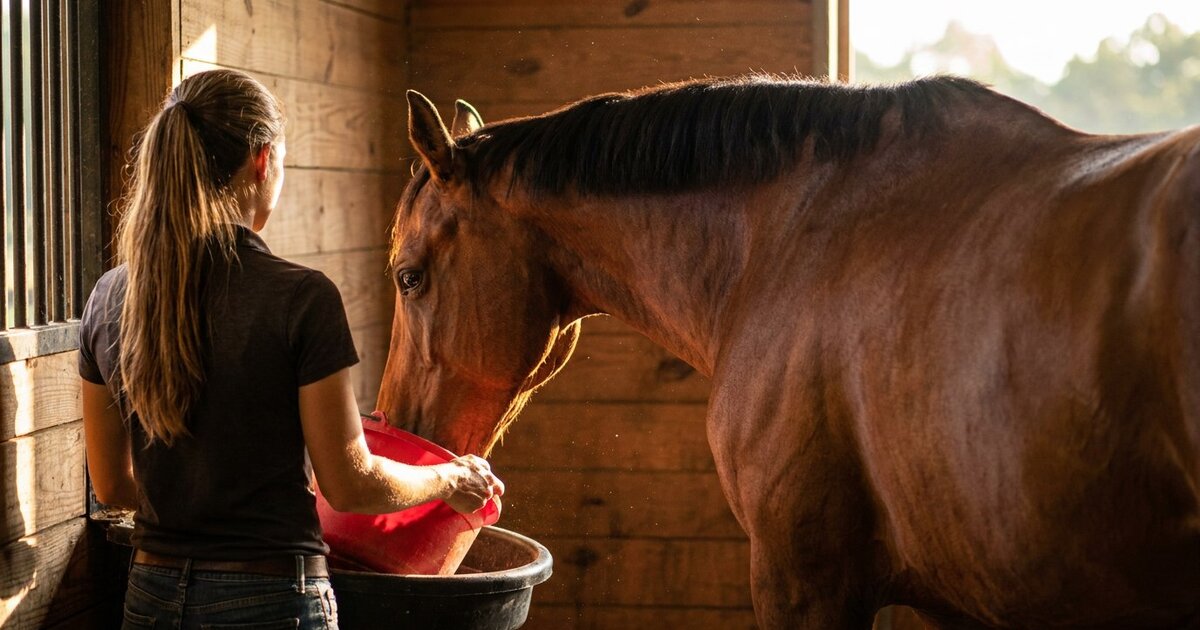
You know the type. The pony that stays round on a dry lot while the Thoroughbred beside her drops weight looking at a busy day. The mare who somehow gains a rib-covering layer of flab on a "diet" that would leave another horse ribby. These are the easy keepers, and feeding them is less about adding groceries and more about holding the line. The easy keeper is not just a barn joke about a fat pony, though. That extra fat is metabolically active, and it carries a real, well-documented risk of laminitis. The good news is that managing it is very doable once you understand what you are working with. You may also find our article on Calcium to Phosphorus Ratio in Horse Diets helpful. You may also find our article on How to Fit a Bit helpful. For more details, see our guide on Breastplate Fitting and Use. For more details, see our guide on How to Fit a Bridle.
What is an easy keeper, really?
An easy keeper is a horse that gains weight easily, even in conditions where another horse would drop weight without extra feed. Rutgers Equine Science Center defines it in almost exactly those words. It is a thrifty metabolism, and it is not a flaw. It is an inherited survival advantage that let horses and ponies bank fat in good months to survive lean winters. The problem is that domestic life rarely delivers a lean winter anymore. We give these horses year-round pasture, rich hay, and buckets of feed, and the thrifty body does exactly what it evolved to do and stores it.
Certain types are far more likely to be easy keepers. Ponies of nearly every breed top the list, along with Morgans, Saddlebreds, Tennessee Walking Horses, Paso Finos, and Mustangs. Draft breeds and many warmbloods lean this way too, while Thoroughbreds and Standardbreds are classic "hard keepers" that burn through feed. Recognizing that your horse is genetically built to hoard calories is the first step to feeding him correctly.
Why the extra weight is a real health problem
Excess fat on a horse is not just a cosmetic issue. Fat tissue, especially the fat that piles up along the crest of the neck and over the tailhead, is hormonally active and drives a cluster of problems veterinarians call equine metabolic syndrome, or EMS. According to the Merck Veterinary Manual, EMS is a collection of metabolic features that always includes insulin dysregulation and raises the risk of laminitis.
Insulin dysregulation is the core issue. In these horses the body oversecretes insulin after a carbohydrate-rich meal, and the tissues stop responding to it normally. High circulating insulin is directly damaging to the laminae, the delicate structures that suspend the coffin bone inside the hoof. Merck notes that this hyperinsulinemia-associated laminitis accounts for roughly 90 percent of laminitis cases seen in practice. Most laminitis is not a grain overload accident or a random misfortune. It is a metabolic problem that owners can see coming and often prevent, which is exactly why keeping an easy keeper lean matters so much.
How do you measure whether your horse is overweight?
You measure it two ways: hands-on body condition scoring and a weight tape used consistently over time. Eyeballing does not work, because a slowly fattening horse looks normal to the eye that sees him daily. The gold standard is the Henneke body condition scoring system, developed by Don Henneke and colleagues in 1983 and used by vets worldwide. It rates a horse from 1 (emaciated) to 9 (extremely obese) by feeling for fat over six areas: the neck, the withers, behind the shoulder, over the ribs, along the loin, and around the tailhead.
An ideal riding horse sits at a 5. Scores of 4 to 7 are generally considered acceptable, but a 7 is already too much for an easy keeper prone to metabolic trouble, and 8 to 9 is frankly obese. Here is a working reference for the scores that matter most.
| Henneke Score | Label | What you feel and see |
|---|---|---|
| 4 | Moderately thin | Faint rib outline visible; slight ridge along the back |
| 5 | Ideal | Ribs not visible but easily felt; back is level; neck blends smoothly |
| 6 | Moderately fleshy | Ribs need light pressure to feel; slight fat over the tailhead |
| 7 | Fleshy | Ribs hard to feel; fat filling in along the neck and behind the shoulder |
| 8 to 9 | Fat to obese | Cannot feel ribs; obvious cresty neck; gutter along the back; bulging tailhead |
Pair the score with a weight tape wrapped around the heart girth just behind the elbow, taken at the same time of day in the same spot. A weight tape is not perfect, and Kentucky Equine Research points out that tapes tend to underestimate a horse's true weight. But that is fine, because you are tracking the trend, not an exact number. A tape that reads the same every month tells you nothing is changing; a tape that creeps down over eight weeks tells you the plan is working.
Building a safe weight-loss diet: forage first
The foundation of any easy keeper diet is controlled forage, not grain. Horses are built to trickle-feed fibrous plants nearly all day, and cutting forage too hard causes ulcers. The standard maintenance intake is about 2 percent of body weight in forage per day. For weight loss, you tighten that. Kentucky Equine Research recommends limiting an overweight horse to roughly 1.25 to 1.5 percent of body weight on a dry matter basis. For a 1,100-pound horse, that is about 16.5 pounds of hay a day instead of the 22 pounds a horse in good flesh would get.
Two details make this safe and effective:
- Feed to target weight, not current weight. Rutgers recommends calculating the ration off the horse's goal body weight, roughly 1 to 1.5 percent of that target figure, so the diet creates a calorie deficit rather than maintaining the fat you are trying to lose.
- Choose low-sugar hay. The nonstructural carbohydrate (NSC) content of hay, which is the sugars plus starch, drives the insulin spikes that harm metabolic horses. Aim for hay tested at 10 percent NSC or lower. The only way to truly know is a hay analysis, which is inexpensive and worth every penny. If your hay tests high, soaking it in cool water for 30 to 60 minutes before feeding leaches out a meaningful portion of the sugars.
When you strip a diet down to a modest amount of grass hay, you also strip out vitamins and minerals. This is where a ration balancer earns its keep. A balancer is a low-calorie, concentrated source of protein, vitamins, and minerals fed in small daily amounts, so your horse's needs stay covered without the calories of grain or sweet feed. What you do not do is pour on a scoop of high-starch feed to "make sure he gets his vitamins," which defeats the entire purpose.
How do you slow down a horse who inhales his food?
You slow the eating down physically, so a small ration lasts longer and the horse is not standing on an empty stomach for hours. This matters because long gaps without forage invite gastric ulcers, and a bored, hungry horse is a stressed horse. Several tools stretch a limited ration across the day.
- Slow-feed hay nets. Small-hole nets (around 1 to 1.5 inch openings) can turn a 20-minute meal into a multi-hour project, keeping fiber trickling through the gut without adding a single calorie.
- Grazing muzzles. For horses on pasture, a well-fitted grazing muzzle is one of the most effective tools available. University of Minnesota research found muzzles reduced forage intake by an average of about 30 percent regardless of grass species, while still letting the horse move, graze, and stay with the herd.
- Restricting lush pasture. Spring and early fall grass can be alarmingly high in sugar, especially on sunny afternoons after cool nights. A dry lot, early-morning-only turnout, or a track system keeps the metabolic horse away from the richest grazing.
Why exercise matters as much as the feed bucket
Exercise improves how a horse's body responds to insulin, and it burns calories that diet alone struggles to reach. For an easy keeper not dealing with active laminitis, consistent work is a powerful lever. Rutgers suggests building a horse up gradually and using heart rate recovery as a rough gauge of fitness. Even a horse that cannot be ridden can often be hand-walked, ponied, or worked in hand.
One firm caveat: if a horse is currently laminitic or showing sore, pottery feet, exercise is off the table until your veterinarian clears it, because working on compromised laminae can cause real damage. When the feet are sound, movement is medicine.
What NOT to do: the danger of crash dieting
Do not lock an overweight horse in a stall with no food to make the weight fall off fast. It feels logical and it is genuinely dangerous. When a horse, especially a pony, donkey, or miniature, goes into a sudden severe calorie deficit, the body dumps large amounts of fat into the bloodstream. This can trigger hyperlipemia, a life-threatening condition in which triglycerides overwhelm the liver. According to The Horse, normal triglyceride levels sit below 100 mg/dl, while in hyperlipemia they can climb above 500 mg/dl, and the condition carries a reported mortality rate of roughly 40 to 80 percent. Rutgers is blunt about it: obese horses and ponies should not be placed on starvation diets.
Rapid, food-deprived weight loss also strips the protective forage mat from the stomach and drives gastric ulcers, leaving you with a thinner horse who now has a painful new problem. The safe path is slow and steady. Research summarized by Utah State University Extension shows that trimming forage to as low as about 1.4 percent of body weight per day can produce up to roughly 1 percent weight loss per week, and they recommend involving a nutritionist before dropping below 1.5 percent.
| Approach | Crash diet (dangerous) | Controlled plan (safe) |
|---|---|---|
| Forage amount | Little to none, long empty gaps | About 1.5 percent of target body weight, spread out |
| Speed | As fast as possible | Around 1 percent of body weight per week |
| Main risks | Hyperlipemia, liver failure, ulcers | Minimal, when monitored |
Weigh-tape your horse every two to four weeks, adjust slowly, and loop in your veterinarian, especially if your horse has a history of laminitis or metabolic disease. Slow and boring is exactly what a healthy transformation looks like.
Frequently Asked Questions
How much weight can a horse safely lose per week?
A safe, sustainable target is roughly 1 percent of body weight per week, which for a 1,000-pound horse is about 10 pounds. Faster loss driven by severe feed restriction raises the risk of hyperlipemia and ulcers. Track the trend with a weight tape every two to four weeks.
What is the best hay for an overweight or metabolic horse?
Mature grass hay tested at 10 percent NSC (sugar plus starch) or lower is ideal. The only way to know your hay's real numbers is a lab analysis. If the hay tests higher than you would like, soaking it in cool water for 30 to 60 minutes before feeding leaches out a portion of the sugars.
Do grazing muzzles really work?
Yes. University of Minnesota research found that grazing muzzles cut pasture intake by an average of about 30 percent across different grass species. They let a horse keep moving and grazing with the herd while sharply limiting consumption, which makes them one of the most practical tools for an easy keeper on turnout.
Should I stop feeding grain to my easy keeper completely?
In most cases, yes, high-calorie grain and sweet feed should be removed for an overweight easy keeper, ideally phased out over a few days. But do not simply leave gaps in nutrition. Replace the grain with a low-calorie ration balancer so vitamins, minerals, and protein stay covered without the extra calories. For more details, see our guide on Horse Nutrition Guide.
Can an easy keeper's weight cause laminitis?
Yes, and this is the central reason to manage the weight. Excess fat drives insulin dysregulation, and high insulin damages the laminae in the hoof. The Merck Veterinary Manual reports that this hyperinsulinemia-associated laminitis accounts for around 90 percent of cases, so keeping a metabolic horse lean is genuine prevention.
Sources
- Merck Veterinary Manual. Equine Metabolic Syndrome. Merck & Co., Metabolic Disorders section.
- Henneke, D.R., Potter, G.D., Kreider, J.L., & Yeates, B.F. (1983). Relationship between condition score, physical measurements and body fat percentage in mares. Equine Veterinary Journal, 15(4), 371-372.
- Williams, C.A. & Ralston, S.L. Maintenance of the "Easy Keeper" Horse. Rutgers Equine Science Center Fact Sheet.
- Kentucky Equine Research. Accurately Estimating Body Weight of Horses: Why and How. KER Equinews.
- University of Minnesota Extension. Using grazing muzzles to reduce forage intakes in horses. UMN Extension Horse Nutrition.
- Utah State University Extension. Improving Health in Overweight Equines. USU Extension Equine Program.
- Loving, N.S. Can an Obese Horse Lose Weight Too Fast? The Horse.
- National Research Council. (2007). Nutrient Requirements of Horses, 6th Revised Edition. The National Academies Press.