Feeding Senior Horses: What Changes and How to Adjust
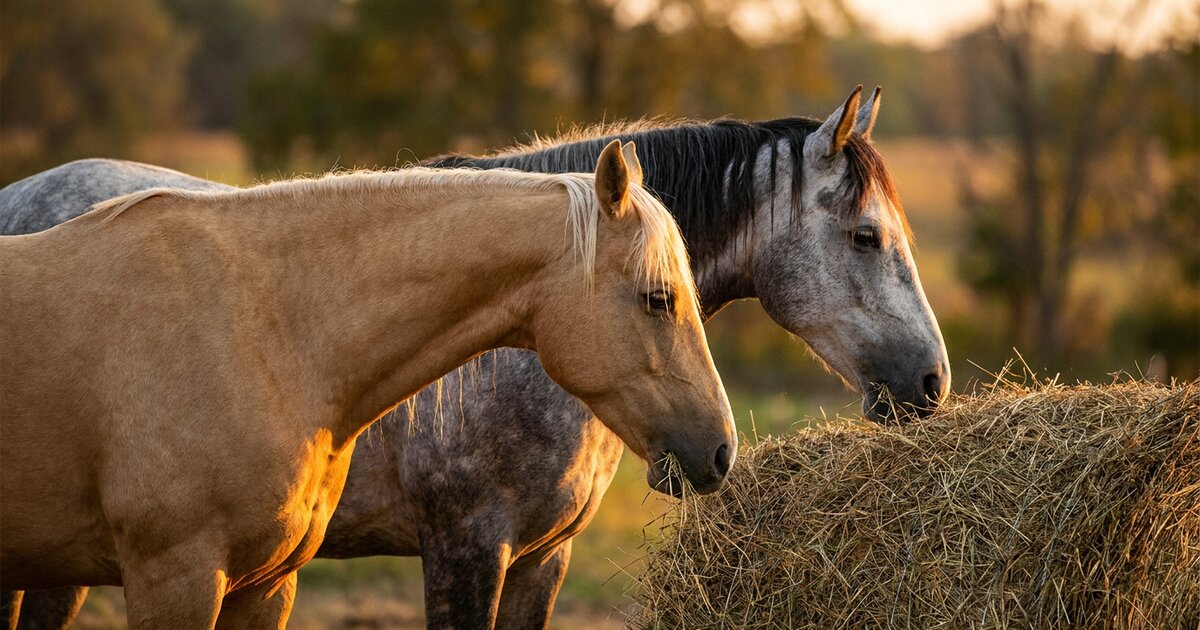
One winter your reliable old gelding is holding weight fine, and the next he is looking a little ribby, leaving wads of half-chewed hay around the stall, and slow to finish his grain. Nothing dramatic happened. He just got older, and the diet that carried him for fifteen years stopped keeping up with a body that now chews, digests, and absorbs differently than it used to. Feeding a senior horse well is less about buying a bag labeled "senior" and more about understanding what actually changed inside him, then adjusting before the weight comes off. You may also find our article on How to Fit a Bit helpful. For more details, see our guide on Breastplate Fitting and Use. For more details, see our guide on How to Fit a Bridle.
Why does getting older change a horse's nutritional needs?
Aging changes the machinery that turns feed into a healthy body on several fronts at once, and the three big ones are the teeth, the gut, and muscle maintenance. Horses are generally considered senior around 20 years of age, though this is a rough marker rather than a switch that flips, since individual horses age at very different rates. A sound-mouthed, easy-keeping 22-year-old may need almost nothing changed, while a hard-keeping 18-year-old with worn molars may need a full overhaul.
The most researched change is in digestion itself. Studies summarized by university extension programs show that the apparent digestibility of crude protein is lower in older horses, meaning they extract less usable protein from the same feed. Fiber and phosphorus absorption can decline too. Older horses also lose muscle mass more easily, and the body will break down its own muscle to cover an energy gap when calorie or protein intake falls short. Layer age-related disease on top, and you have a horse whose needs have genuinely shifted. For more details, see our guide on Calcium to Phosphorus Ratio in Horse Diets.
How dental wear quietly starves an older horse
Worn or missing teeth are the single most common reason a senior horse loses weight, and it often happens before an owner notices anything wrong with the mouth. A horse's cheek teeth erupt slowly throughout life and grind down with decades of chewing, and eventually they can wear out, loosen, or fall out entirely, most often the premolars and molars that do the real grinding. When teeth are lost unevenly, the opposing tooth has nothing to wear against and overgrows, creating what is called a wave mouth that makes an even chewing stroke almost impossible.
The classic warning sign is quidding: your horse balls up hay, chews it briefly, then drops the wad because he cannot break it down enough to swallow. Rutgers Equine Science Center notes that horses with moderate to severe dental abnormalities do poorly on a predominantly hay diet and lose weight progressively, because long-stem forage is exactly the feed that a compromised mouth cannot process. A horse missing his incisors also cannot bite and tear grass effectively, so pasture stops being reliable nutrition even in a green field. This is why a senior horse deserves a dental exam from your veterinarian at least once a year. For more details, see our guide on Horse Nutrition Guide.
What are the signs a senior horse needs a diet change?
The clearest sign is unexplained weight loss, but several others should prompt a closer look before condition slips. Watch for the horse who eats with enthusiasm yet keeps losing flesh, and the one whose topline and hindquarters are visibly shrinking even though his belly looks fine. Any of these means the current ration is no longer being turned into a healthy body.
- Quidding or dropping feed, or slow eating that suggests chewing has become work.
- Weight loss despite a good appetite and an adequate amount of feed in front of him.
- Loss of topline and muscle over the back and hindquarters, which points toward a protein and energy shortfall.
- Long or undigested fiber in the manure, a sign that feed is passing through without being broken down.
- A failure to shed out a winter coat, increased drinking, or a potbellied, muscle-wasted look, which point toward disease rather than diet alone.
Because that last cluster can signal a medical condition, weight loss in an older horse is always a reason to involve your veterinarian rather than simply pouring on more grain.
Senior feeds and forage alternatives for horses that can't chew hay
When a horse can no longer chew long-stem hay, you replace the forage with a form he can process, not simply add more concentrate. Fiber can come from many textures, not just baled hay, so soaked hay pellets or cubes, beet pulp, and complete feeds all deliver forage in a soft, easily swallowed mash.
A complete feed is the key concept here. Unlike a regular grain or ration balancer meant to be fed alongside hay, a complete senior feed has the fiber the horse needs built into the bag, so it can serve as the entire forage source when a horse cannot eat hay at all. These feeds are typically pelleted or extruded, which extension specialists favor for seniors because processed feeds are both easier to chew and more digestible.
Soaking matters for safety as well as comfort. Rutgers recommends at least one quart of water per pound of feed for soaked rations, which softens the feed and sharply reduces the risk of choke in a horse who bolts his meal or cannot chew properly. Any change from hay to alternatives should be made gradually, over several days, to let the hindgut microbes adjust.
| Forage option | Chewing demand | Best for |
|---|---|---|
| Long-stem hay or pasture | High | Seniors with sound teeth and normal incisors |
| Soaked hay pellets or cubes | Low (as a mash) | Horses that quid hay but still want forage |
| Beet pulp | Low (soaked) | Adding digestible fiber and calories |
| Complete senior feed | Low (soaked to a mash) | Horses that can no longer eat any hay |
How much protein and how many calories does a senior need?
An older horse usually needs better protein, not just more of it, along with a calorie level matched to his actual condition rather than his age. Because aging horses digest protein less efficiently and lose muscle more readily, the quality of that protein matters. Extension guidance commonly lands senior diets around 12 to 14 percent crude protein, with the caveat that the amino acid makeup counts as much as the raw percentage. Lysine and threonine, the amino acids most likely to be limiting, are what actually support topline and muscle, which is why many senior feeds are fortified with them.
Fiber should be highly digestible, and senior feeds are generally formulated to exceed roughly 10 percent crude fiber so the hindgut has something to ferment. Mineral balance shifts too. Senior formulas often carry more fortification, and calcium is usually kept below about 1 percent to protect an appropriate calcium-to-phosphorus ratio, which is one reason nutritionists caution against feeding straight alfalfa as the only forage to an older horse.
Calories are the part you tailor to the individual. Some seniors slow down and gain weight too easily, while others fight to hold flesh through winter. For hard keepers, added fat is the safest way to pack in calories without piling on starch or sugar, and beet pulp, added vegetable oil, and high-fat feeds all raise the energy density of a meal. In cold weather, energy needs climb, so a hard-keeping senior often needs a deliberate winter bump in feed before he shivers off condition.
Why body condition scoring beats the bathroom scale
Body condition scoring is the most useful hands-on tool you have for feeding a senior, because it tells you about fat cover in a way a coat can hide. The standard is the Henneke system, a 1 to 9 scale developed by Dr. Don Henneke that rates fat deposition across six areas: the neck, the withers, behind the shoulder, the ribs, the loin, and the tailhead. A score of 5 is considered ideal, a horse that carries some fat but has not become fleshy.
The critical detail for seniors is what happens at the low end. Henneke scoring is based on palpating fat, not muscle, and horses at a 3 or below have essentially no fat reserves left. Once fat is gone, the body starts breaking down muscle to meet energy needs, exactly the downward spiral you want to catch early in an old horse. A long, fuzzy winter coat can disguise a lot of weight loss, so run your hands along the ribs, loin, and tailhead every couple of weeks rather than trusting your eyes. Scoring the same horse the same way over time turns a vague worry into a trend you can act on with your veterinarian.
PPID and the metabolic picture behind stubborn weight loss
Sometimes the reason a senior will not hold weight or muscle is not the feed at all, but a hormonal disease, and PPID is the most common one. Pituitary pars intermedia dysfunction, still widely called equine Cushing's, is caused by a growth in the pituitary gland and, according to the Merck Veterinary Manual, typically affects horses 18 years and older. Any old horse showing the signs deserves a test through your veterinarian.
The signs overlap heavily with what looks like a feeding problem. The Merck manual lists a long, thick, wavy coat that fails to shed on schedule (sometimes 10 to 12 centimeters long), muscle wasting, lethargy, increased drinking and urination, abnormal fat pads, and recurrent infections such as hoof abscesses and dental disease. Laminitis is a serious risk when insulin dysregulation rides along with PPID. A PPID horse is often battling muscle loss and infection at once, so feeding matters, but diet alone will not fix a horse whose hormones are driving the problem. Managing PPID means working with your veterinarian on diagnosis and treatment while you use nutrition to support the horse, which often means a controlled sugar and starch intake alongside the protein and fiber support any senior needs.
Frequently Asked Questions
At what age is a horse considered senior?
Around 20 years is the common threshold, but it is a guideline, not a rule. Horses age at different rates, so a sound 22-year-old may need no changes while an 18-year-old with worn teeth or PPID may need a full diet adjustment. Judge the individual horse, not just the birthday.
Does every old horse need a senior feed?
No. A senior horse with good teeth who holds weight on hay and pasture may not need a special feed at all. Senior and complete feeds earn their place when a horse can no longer chew or digest hay well, or when he is losing weight or muscle. Match the feed to the problem, not to the age.
How do I feed a horse that can't chew hay at all?
Replace the hay with a forage he can process, such as soaked hay pellets or cubes, beet pulp, or a complete senior feed served as a soft mash. A complete feed can supply the whole forage requirement when hay is off the table. Add plenty of water, and make the switch gradually over several days.
Why is my senior losing topline muscle even though he eats well?
Topline loss usually points to a protein or energy shortfall, or to poor absorption, and older horses digest protein less efficiently than young ones. It can also be an early sign of PPID. Have your veterinarian assess him, and look at protein quality (lysine and threonine) rather than just the total amount of feed.
How often should I check a senior horse's body condition?
Run your hands over the ribs, loin, and tailhead every one to two weeks, especially in winter when a heavy coat can hide weight loss. Use the Henneke 1 to 9 scale and aim for a 5. Tracking the same horse over time is what lets you catch a slow decline before it becomes hard to reverse.
Can I just feed more grain to fix weight loss in an old horse?
Not as a first move. Large grain meals can raise the risk of digestive upset and do nothing for a horse whose real problem is teeth or disease. Added fat, digestible fiber, and better protein are safer tools, and any senior losing weight should be seen by your veterinarian to rule out dental problems and PPID first.
Sources
- National Research Council (2007). Nutrient Requirements of Horses, 6th Revised Edition. The National Academies Press, Washington, DC.
- Kentucky Equine Research. Feeding the Older Horse. Equinews, ker.com.
- Rutgers Equine Science Center. Care for the Older Horse: Diet and Health. Rutgers, The State University of New Jersey, esc.rutgers.edu.
- Merck Veterinary Manual. Hypertrichosis Associated With Adenomas of the Pars Intermedia in Horses (Pituitary Pars Intermedia Dysfunction, PPID). Merck & Co., merckvetmanual.com.
- University of Maine Cooperative Extension. Equine Facts: Body Condition Scoring for Your Horse, Bulletin #1010 (Henneke system). University of Maine, extension.umaine.edu.
- University of Tennessee Extension. Feeding and Nutrition for the Senior Horse. UT Institute of Agriculture, utia.tennessee.edu.