Finding the Right Farrier and Vet for Your Horse: A Practical Guide
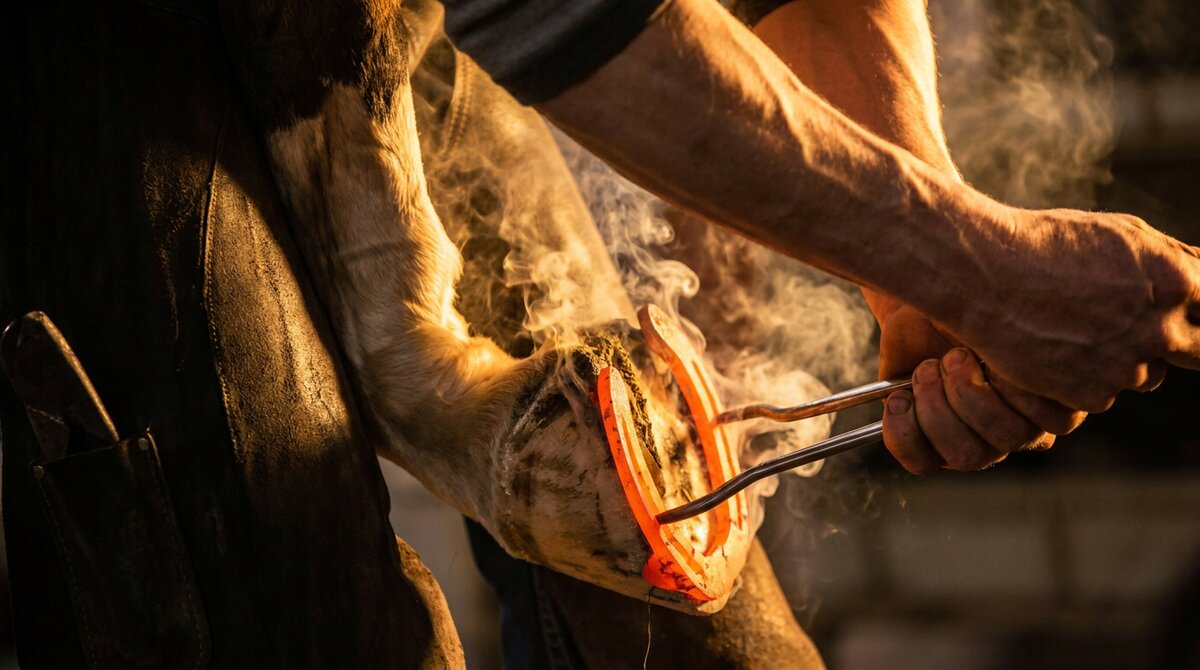
Nobody warns you that the hardest part of horse ownership is not the horse. It is building the small team of professionals who keep that horse sound and healthy, and doing it before you have an emergency at 10pm on a holiday weekend. Two of those people matter most: your farrier, who touches your horse's feet every few weeks, and your veterinarian, your first call when something goes wrong. Get these two relationships right and most of ownership feels manageable. Wait until a crisis to find them, and everything gets harder. For more details, see our guide on Hot Nail. For more details, see our guide on When to Call the Vet.
Why your farrier and vet are the foundation of horse ownership
These two relationships are foundational because they are the only ones that touch your horse on a predictable schedule, whether or not anything is wrong. A trainer coaches your riding and a barn manager handles the day to day, but your farrier is managing the structure your horse literally stands on, and your vet catches the slow problems before they become expensive ones. The old saying "no hoof, no horse" exists because it is true: a horse with failing feet cannot work or stay sound. You may also find our article on Horse Nutrition Guide helpful. You may also find our article on Calcium to Phosphorus Ratio in Horse Diets helpful.
There is a second reason to treat these as long-term relationships rather than one-off services. Both professionals get better at caring for your specific horse the longer they know him. A farrier who has trimmed the same feet for two years knows how that horse grows heel and where he flares, and a vet who examines him yearly has a baseline for his normal vitals. That history is worth more than any single visit, which is exactly why you find the right people early and keep them. You may also find our article on How to Fit a Bit helpful.
How do you find good candidates?
The best candidates come from the people already around your horse, then get verified against professional bodies. Start with the barn: ask the boarders and the barn manager who they use, who they have fired, and why. Word of mouth from owners with horses similar to yours is the single most useful signal you will get, because it reflects reliability and results over time, not a marketing page. From there, widen the net:
- Barn and boarding referrals. Many barns already have a farrier who comes on a regular day and a vet they call for the whole facility, and that existing rhythm makes scheduling far easier.
- Breed and discipline networks. A gaited horse, a reiner, and a hunter may all benefit from professionals who understand that discipline's demands. Local breed clubs, discipline associations, and show circles are full of specific recommendations.
- Professional bodies and directories. The American Association of Equine Practitioners (AAEP) maintains resources for locating equine veterinarians, and the American Farrier's Association (AFA) lists certified farriers. These directories confirm that a name you were given is a real, credentialed professional.
- Your other professional. A good vet often knows the good farriers in the area, and vice versa. Once you have one, ask who they trust.
Gather a few candidates in each category so you are choosing, not settling for whoever answers the phone.
What credentials and qualities should you look for in a farrier?
Look for a farrier who combines relevant credentials with the soft skills that keep your horse safe: reliability, communication, and calm handling. In the United States, the AFA offers certification through practical and written examinations of increasing difficulty. The three main levels are Certified Farrier (CF), Certified Tradesman Farrier (CTF), and Certified Journeyman Farrier (CJF), the highest tier, which requires hand-forging shoes (including bar shoes) to specification. Farriers can also earn specialty endorsements such as Therapeutic (TE).
Certification is a strong signal, but not the whole story. Plenty of excellent farriers built their skill through years of apprenticeship and continuing education, and some "certificates" only mean a person attended a short seminar, so it is fair to ask what a credential actually represents. What you are really evaluating is a bundle of qualities:
- Experience with your type of horse and job. Corrective and therapeutic work is a different skill set than routine trims.
- Reliability. Does the farrier show up on the scheduled day and rebook you before leaving? A brilliant farrier you can never get is not useful.
- Communication. Can they explain what they see in the foot and what they want to change over the next few cycles?
- Works well with your horse. A good farrier stays calm and does not escalate a fidgety youngster into a fight. Both of you should feel safe.
- Willingness to coordinate with your vet. The best farriers welcome radiographs and treat lameness cases as a team effort, not a turf war.
- Ongoing education. Feet are a lifetime study, and farriers who keep learning produce better long-term results.
What should you look for in an equine veterinarian?
Look for an equine-focused practice with clear emergency coverage and a communication style that fits you. A veterinarian who works primarily with horses spends their time on equine medicine, imaging, and lameness rather than splitting attention across dogs, cats, and cattle. Mixed-animal vets can be skilled, but depth of equine experience usually pays off.
According to guidance summarized by The Horse, the qualities that matter most include communication (explaining the pros and cons of different diagnostic and treatment paths, and being upfront about costs), ongoing professional development, good horsemanship, and availability. On availability, ask directly how nights and weekends are covered. Solo practitioners often partner with colleagues or refer emergencies to a clinic, and you want to understand that plan before you need it.
One practical distinction that trips up new owners is how the vet actually sees your horse.
| Ambulatory (farm call) | Haul-in (clinic) |
|---|---|
| Vet travels to your barn in a truck outfitted for routine and many urgent needs | You trailer the horse to a clinic or hospital |
| Convenient; horse stays in a familiar setting; ideal for vaccines, exams, minor issues | Access to advanced imaging, surgery, hospitalization, and on-site staff |
| Limited by what fits in the truck; a farm call fee usually applies | Requires a trailer and a horse that loads; adds travel and stress |
Many practices offer both. The ideal setup for most owners is an ambulatory vet for routine care who can refer to a full-service clinic when a horse needs advanced diagnostics or surgery. Confirm that pathway exists before you commit.
What questions should you ask before you hire?
Interview candidates before you commit. The Horse specifically recommends interviewing prospective vets rather than defaulting to the first available.
For a farrier, consider asking:
- What is your experience with horses in my discipline, and with corrective or therapeutic work?
- What certifications or continuing education do you have, and what do they involve?
- How far out are you booked, and how do you handle a thrown shoe between visits?
- Are you comfortable working from a vet's radiographs on a lameness case?
For a veterinarian, consider asking:
- Is your practice equine-focused, and are you ambulatory, haul-in, or both?
- How are emergencies and after-hours calls handled on nights, weekends, and holidays?
- What diagnostic equipment do you have access to, and where do you refer complex cases?
- How do you prefer to communicate results, costs, and treatment options?
How often should you schedule the farrier and vet?
Plan on farrier visits roughly every 6 to 8 weeks and at least one veterinary wellness exam per year. University of Minnesota Extension recommends trimming or shoeing at least every 6 to 8 weeks in summer, when hooves grow fastest, and every 6 to 12 weeks in winter when growth slows. Individual horses vary, and show, performance, young, or corrective cases often need a tighter cycle. Your farrier sets the right interval for your horse.
On the veterinary side, an annual wellness exam is the baseline that most equine sources, including AAEP-aligned guidance, describe as the minimum. That visit is where the vet updates vaccines, checks teeth, discusses deworming, and records a physical baseline. Senior horses, horses with chronic conditions, and hard-working performance horses commonly benefit from twice-yearly (semiannual) exams. Wellness care is not just box-ticking: proactive exams tend to mean fewer emergencies and fewer parasite-related colics later.
How should your farrier and vet work together?
Your farrier and vet should function as one team, especially on lameness and hoof balance, with radiographs as the shared language between them. When a horse comes up lame in the foot, the veterinarian localizes and diagnoses the problem, often taking radiographs, then shares those images with the farrier, who adjusts the trim or shoeing to match. The vet identifies what is wrong; the farrier implements the mechanical fix.
The impact of that teamwork can be surprisingly large from small changes. In cases described by The Horse, adjusting where the foot breaks over (where the hoof rolls off the ground) by as little as 25 millimeters resolved a horse's pain, with some improving within a week. Radiographs frequently reveal issues like a long-toe, low-heel conformation that the eye alone can miss. Adding your farrier's notes to the horse's medical record helps the team track hoof balance over time, and because your farrier sees the feet every few weeks, they are often the first to spot a subtle change.
How do you become a client they want to keep?
Good farriers and vets are busy, and the clients they prioritize are the ones who make their jobs easier. You do not need to be an expert, just prepared and reliable. Have your horse caught, clean, and dry when the farrier arrives, hold for the vet or arrange a handler, pay promptly, and give real notice when you cancel. Teach your horse to stand for the feet, because a mannerly horse is a gift to the professional working under him.
Communicate early: flag a loose shoe, a new lump, or a subtle off step before it becomes an emergency, and share history rather than making your vet guess. When both need to weigh in, help them talk to each other directly. Use this checklist as you evaluate candidates.
What to look for: a quick checklist
- Farrier credentials: Relevant AFA certification (CF, CTF, CJF) or a strong apprenticeship plus continuing education, verified rather than assumed.
- Farrier reliability: Shows up on schedule, rebooks before leaving, and has a plan for thrown shoes.
- Farrier handling: Stays calm with your horse and welcomes coordination with your vet.
- Vet focus: Equine-focused practice with an ambulatory or haul-in setup that fits your situation.
- Vet emergency coverage: Defined plan for nights, weekends, and holidays.
- Vet communication: Explains options, outcomes, and costs clearly and upfront.
- Scheduling in place: Farrier every 6 to 8 weeks, plus an annual or semiannual vet wellness exam.
- Team mindset: Both willing to share radiographs and coordinate on lameness and hoof balance.
- Your side: Horse caught and clean, invoices paid on time, changes reported early.
Frequently Asked Questions
How often should my farrier come out?
Most horses are trimmed or shod every 6 to 8 weeks. University of Minnesota Extension suggests that interval in summer, stretching to every 6 to 12 weeks in winter when growth slows. Show, performance, and corrective cases often need more frequent visits.
How often does my horse need a vet if nothing is wrong?
At least once a year for a wellness exam covering vaccines, dental checks, deworming, and a physical baseline. Senior horses, performance horses, and those with chronic conditions often benefit from twice-yearly exams. Proactive visits tend to reduce emergencies.
What is the difference between an ambulatory and a haul-in vet?
An ambulatory vet drives to your barn for routine and many urgent needs, which is convenient and keeps the horse in a familiar setting. A haul-in clinic requires you to trailer the horse but offers advanced imaging, surgery, and hospitalization. Many owners use an ambulatory vet who can refer to a clinic when needed.
Do my farrier and vet really need to talk to each other?
Yes, especially for lameness and hoof balance. The vet typically diagnoses the problem and takes radiographs, then the farrier uses those images to adjust the trim or shoeing. This teamwork can resolve pain with small, precise changes.
What do AFA farrier certifications mean?
The American Farrier's Association certifies farriers through written and practical exams of increasing difficulty: Certified Farrier (CF), Certified Tradesman Farrier (CTF), and Certified Journeyman Farrier (CJF), the highest level. There are also specialty endorsements such as Therapeutic (TE). Certification is a useful signal, but experience and continuing education matter too.
Sources
- American Association of Equine Practitioners (AAEP). Owner education resources and veterinarian locator. aaep.org.
- American Farrier's Association. Certification program (CF, CTF, CJF and endorsements). americanfarriers.org.
- Equus Magazine. "Farriery Credentials Explained." equusmagazine.com.
- The Horse. "Choosing the Right Equine Veterinarian." thehorse.com.
- The Horse. "Manage Lameness With Vet and Farrier Collaboration." thehorse.com.
- University of Minnesota Extension. "Caring for your horse's hooves." extension.umn.edu.