HYPP in Horses: What Every Owner Needs to Know About Hyperkalemic Periodic Paralysis
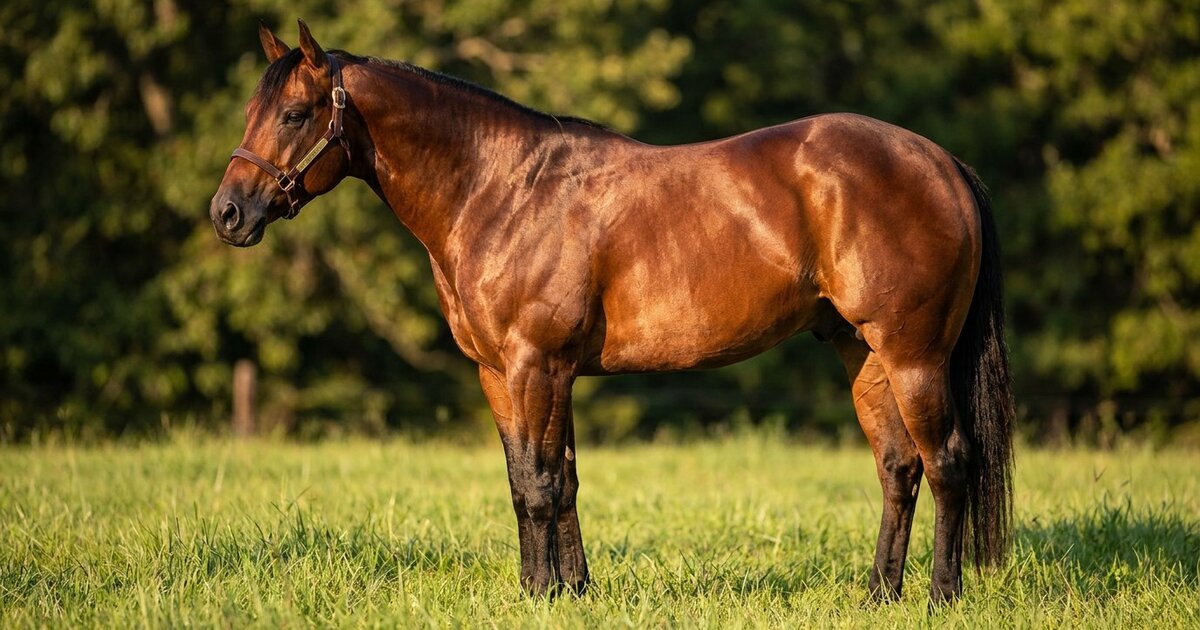
Your horse is standing in the crossties, perfectly calm, when the muscles along his flank start twitching. Then his hindquarters tremble. Within minutes, he's staggering, struggling to stay on his feet. You've never seen anything like it, and you're terrified. If your horse carries certain Quarter Horse bloodlines, what you just witnessed may be an HYPP episode, and it's something you need to understand before it happens again.
What Exactly Is HYPP?
HYPP stands for Hyperkalemic Periodic Paralysis. Breaking that down: "hyperkalemic" means elevated potassium in the blood, "periodic" means it comes and goes in episodes, and "paralysis" refers to the muscle weakness or inability to move that occurs during an attack.
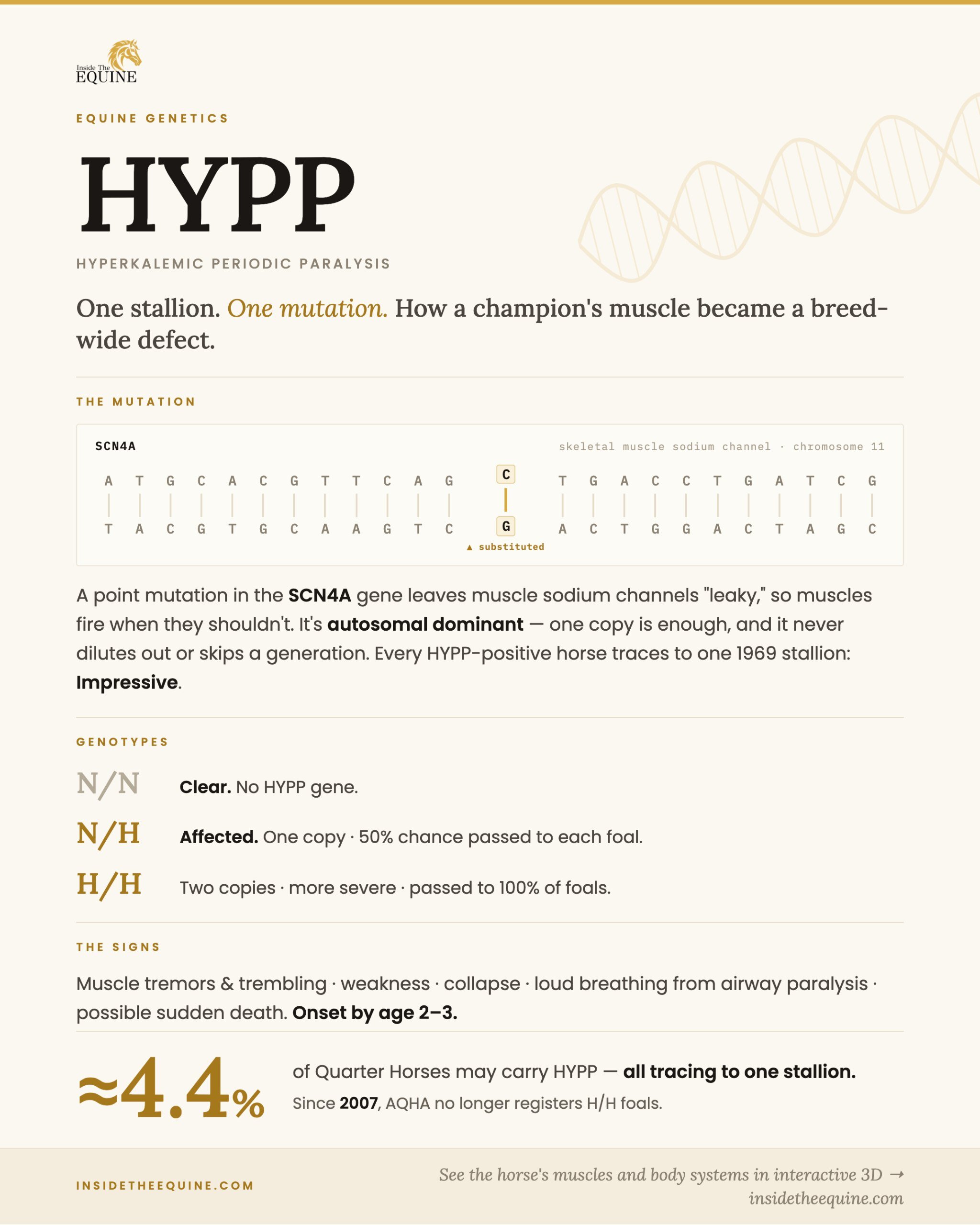
At the cellular level, HYPP is a defect in the sodium channels of muscle cells. Normally, sodium channels open and close in a tightly controlled way to allow muscles to contract and relax. In horses with HYPP, the sodium channels don't close properly. When blood potassium rises even slightly above normal, these faulty channels allow too much sodium to flow into the muscle cells, causing uncontrolled electrical activity. The result is involuntary muscle contractions, tremors, and in severe cases, complete paralysis.
Think of it like a light switch that's supposed to flip cleanly on and off. In an HYPP horse, that switch is loose and flickery. Most of the time it works fine, but certain triggers cause it to malfunction, and the lights go haywire.
It's worth understanding your horse's health baseline so you can recognize when something is off. With HYPP, knowing what "normal" looks like for your horse makes spotting the early signs of an episode much easier.
The Impressive Connection: How One Stallion Changed Everything
Every single confirmed case of HYPP traces back to one horse: Impressive, an AQHA stallion born in 1969. Impressive was, by halter show standards, a game-changer. He was massively muscled with a physique that dominated the show ring. He won the World Championship and the AQHA Supreme Champion title, and he went on to sire over 2,000 foals during his breeding career.
Here's the uncomfortable truth: the very mutation that causes HYPP likely contributed to the heavy muscling that made Impressive and his offspring so successful in halter classes. The same sodium channel defect that triggers paralytic episodes also promotes increased muscle mass. Breeders were selecting for a body type that was, in part, a symptom of a genetic disease.
Impressive died in 2004, but his genetic legacy is enormous. His bloodlines run through hundreds of thousands of registered Quarter Horses, Paints, Appaloosas, and Quarter Horse-cross breeds. The mutation is autosomal dominant, which means a horse only needs one copy of the gene from one parent to be affected. Researchers at the University of Pittsburgh identified the specific mutation in 1992, and genetic testing has been available ever since.
If you're buying a horse with any stock-type breeding, asking about HYPP status should be on your checklist right next to the pre-purchase exam.
Recognizing the Signs: What an HYPP Episode Looks Like
HYPP episodes can range from barely noticeable to life-threatening. Knowing the full spectrum helps you catch problems early.
Mild episodes may include:
- Intermittent muscle twitching or fasciculations, especially along the flanks, shoulders, or neck
- A "shivery" appearance without any change in temperature
- Brief periods of muscle stiffness
- Third eyelid prolapse (the third eyelid becomes visible across the eye)
- Yawning or lip twitching
Moderate episodes can involve:
- Pronounced muscle trembling across large muscle groups
- Staggering or swaying while standing
- Difficulty moving or reluctance to walk
- Apparent anxiety or distress
- Sweating unrelated to exercise or heat
Severe episodes are emergencies:
- Dog-sitting posture (hindquarters collapse while the front end stays up)
- Complete recumbency (the horse goes down and can't get up)
- Respiratory distress from paralysis of the muscles involved in breathing
- Cardiac arrhythmia from dangerously high potassium levels
- In rare cases, sudden death from cardiac arrest or airway obstruction
Episodes can last anywhere from a few minutes to over an hour. They're often triggered by stress, fasting, sudden dietary changes, cold weather, trailer rides, or anesthesia. Some horses have episodes frequently, while others may go months or even years between attacks. The unpredictability is part of what makes the condition so stressful for owners.
Getting a Diagnosis: Genetic Testing and What the Results Mean
The gold standard for diagnosing HYPP is a genetic test. It requires only a blood sample or hair follicles, and results typically come back within a few weeks from labs like the UC Davis Veterinary Genetics Laboratory.
Results will show one of three genotypes:
N/N (Normal/Normal): The horse does not carry the HYPP mutation. It cannot develop the condition and cannot pass it to offspring. You're in the clear.
N/H (Normal/HYPP): The horse carries one copy of the mutation. It is heterozygous for HYPP and can experience episodes, though they tend to be milder and less frequent than in homozygous horses. This horse will pass the mutation to approximately 50% of its offspring.
H/H (HYPP/HYPP): The horse carries two copies of the mutation. It is homozygous for HYPP and typically experiences more frequent, more severe episodes. Every foal this horse produces will inherit at least one copy of the gene.
Since 2007, AQHA has required HYPP testing for all foals descended from Impressive. Horses testing H/H born after 2007 are not eligible for registration. However, N/H horses can still be registered with a notation on their papers. Other breed registries, including APHA and ApHC, have similar but not identical policies.
If you own a stock-type horse and don't know its HYPP status, get it tested. The test costs around $25 to $40 and gives you information that directly affects how you feed, manage, and make decisions about that horse for the rest of its life.
Managing HYPP: Diet, Exercise, and Daily Life
There's no cure for HYPP, but the condition is manageable. The cornerstone of management is controlling dietary potassium intake, because elevated blood potassium is the primary trigger for episodes.
Diet adjustments:
- Keep total dietary potassium below 1% of the total ration. Your vet or an equine nutritionist can help you calculate this.
- Avoid high-potassium feeds like alfalfa hay, brome hay, canola oil, molasses-based supplements, and electrolyte products that contain potassium chloride.
- Timothy hay, Bermuda grass hay, and oat hay tend to be lower in potassium and are better choices.
- Feed small, frequent meals rather than two large ones. This prevents spikes in blood potassium after eating.
- Always provide free-choice access to water and a plain white salt block. Proper salt supplementation helps maintain electrolyte balance and encourages water intake, which supports potassium excretion through the kidneys.
- Grain and pelleted feeds are generally lower in potassium than forages, but always check the guaranteed analysis on the label.
Exercise:
- Regular, consistent exercise helps HYPP horses. Light to moderate daily turnout or riding keeps muscles conditioned and helps regulate potassium levels.
- Avoid long periods of stall rest followed by sudden exertion. The pattern of inactivity then stress is a common episode trigger.
- If your horse has been off work due to illness or injury, bring it back into exercise gradually.
Medication:
- Acetazolamide is the most commonly prescribed medication for HYPP management. It's a mild diuretic that promotes potassium excretion through the kidneys and helps stabilize muscle cell membranes.
- Hydrochlorothiazide is another diuretic option your vet may consider.
- Some horses with well-controlled diets never need medication. Others require daily drugs to keep episodes at bay.
During an episode:
- If your horse is having a mild episode, offer light Karo corn syrup (about 2 to 4 ounces) orally. The sugar stimulates insulin release, which drives potassium back into cells and can help resolve mild attacks.
- Light exercise (walking in hand) can also help during mild episodes.
- For moderate to severe episodes, call your vet immediately. IV calcium gluconate and dextrose are the standard emergency treatments.
- Never try to force a recumbent horse to stand. Keep the area safe and wait for veterinary help.
Breeding Decisions: The Ethical Side of HYPP
This is where HYPP gets into uncomfortable territory. The mutation has persisted in stock-type breeds partly because carriers often display the heavily muscled conformation that wins in halter classes. For years, the show ring rewarded the very phenotype associated with a painful, potentially fatal genetic disease.
The breed registries have taken steps to address this. AQHA's decision to ban H/H horses from registration after 2007 was significant, but many breeders and veterinarians argue it didn't go far enough. N/H horses can still be registered, shown, and bred, which means the mutation continues to circulate.
If you're making breeding decisions, here's the math:
- N/H bred to N/N: 50% chance each foal is N/H, 50% chance it's N/N
- N/H bred to N/H: 25% N/N, 50% N/H, 25% H/H
- H/H bred to N/N: 100% of foals will be N/H
Many responsible breeders have moved away from breeding N/H horses entirely. The argument is straightforward: when a simple, inexpensive genetic test can identify carriers, and when the condition causes real suffering and management challenges, continuing to breed affected horses is hard to justify. Others counter that N/H horses can live perfectly normal lives with proper management and that eliminating them from the gene pool sacrifices valuable bloodlines.
Where you land on this is a personal decision, but it should be an informed one. If you breed an N/H horse, every buyer of those foals deserves to know the HYPP status and what it means for long-term care.
Prognosis: What to Expect Long-Term
The good news is that many HYPP horses live full, productive lives. With careful dietary management and veterinary oversight, N/H horses in particular can be ridden, shown, and enjoyed just like any other horse. Some competitive horses at high levels of performance carry the N/H genotype and do just fine.
H/H horses face a tougher road. Their episodes tend to be more frequent and more severe, and management is more intensive. Some H/H horses do well with aggressive dietary control and daily medication, while others continue to have breakthrough episodes despite best efforts. The risk of a fatal episode, while relatively low on any given day, is always present.
A few factors influence prognosis:
- Genotype matters most. N/H horses generally have a better outlook than H/H horses.
- Owner compliance is critical. HYPP management isn't hard, but it requires consistency. A boarder who doesn't follow the diet plan or a new caretaker who doesn't know the horse's status can trigger a crisis.
- Stress management helps. Horses that live in low-stress environments with regular routines and consistent turnout tend to have fewer episodes.
- Age isn't a major factor. Episodes can begin in foals as young as a few weeks old or may not appear until a horse is well into adulthood. The condition doesn't typically worsen with age, but it doesn't go away either.
The biggest risk factor for a bad outcome isn't the disease itself. It's lack of knowledge. Owners who don't know their horse's HYPP status, who don't recognize episode signs, or who feed high-potassium diets without realizing it are the ones most likely to face emergencies. Education is the best medicine here.
Frequently Asked Questions
Can a horse develop HYPP without having Impressive in its pedigree?
No. Every documented case of equine HYPP traces directly back to the stallion Impressive. The mutation originated with him, and the only way a horse can have HYPP is by inheriting the gene from a parent who carries it. If there is no Impressive blood in the pedigree, the horse does not have HYPP. That said, pedigree records can have gaps, so if you have any doubt, the genetic test is cheap and definitive.
Is it safe to ride a horse with HYPP?
Most N/H horses can be ridden safely and regularly. In fact, consistent exercise is part of good HYPP management. The key is avoiding sudden, intense exertion after periods of inactivity and keeping the horse on a proper low-potassium diet. Riding during an active episode is dangerous for both horse and rider, so learn to recognize the early warning signs. If your horse starts muscle twitching or seems "off" before a ride, dismount and monitor rather than pushing through.
What should I feed an HYPP horse?
Focus on low-potassium forages like timothy hay, Bermuda grass, or oat hay. Avoid alfalfa, brome, and any feed containing molasses or potassium-based electrolytes. Feed small, frequent meals throughout the day rather than two large feedings. Provide free-choice plain white salt and unlimited fresh water. Work with your vet or an equine nutritionist to analyze your hay and design a ration that keeps total dietary potassium below 1%.
How much does HYPP genetic testing cost?
Genetic testing for HYPP typically costs between $25 and $40 through labs like the UC Davis Veterinary Genetics Laboratory. The test can be done from a blood sample drawn by your vet or from pulled mane or tail hairs with intact follicles. Results usually come back within one to three weeks. Given the low cost and the importance of the information, there's no good reason to skip it for any stock-type horse.
Can HYPP be cured?
No. HYPP is a genetic condition written into the horse's DNA, and there is no cure. However, it can be effectively managed in most cases through dietary control, regular exercise, stress reduction, and medication when needed. Many N/H horses live long, comfortable lives with minimal episodes when their owners are diligent about management. The goal is control, not cure, and for most horses, that's entirely achievable.
Quick Reference Table
| Genotype | Status | Symptom Risk | Breeding Implications | AQHA Registration |
|---|---|---|---|---|
| N/N | Negative (clear) | No risk of HYPP episodes | Safe to breed; will not pass the mutation | Fully eligible |
| N/H | Heterozygous (carrier) | Can have mild to severe episodes | Will pass mutation to ~50% of offspring | Must be tested and results recorded |
| H/H | Homozygous (affected) | Highest risk of severe, potentially fatal episodes | Will pass mutation to 100% of offspring | Foals born after 2007 are not eligible for registration |
Sources
- Naylor, J.M. "Hyperkalemic Periodic Paralysis." Current Therapy in Equine Medicine, 5th ed., Saunders, 2003.
- Rudolph, J.A., et al. "Periodic paralysis in Quarter Horses: a sodium channel mutation disseminated by selective breeding." Nature Genetics, vol. 2, 1992, pp. 144-147.
- Spier, S.J., et al. "Hyperkalemic periodic paralysis in horses." Journal of the American Veterinary Medical Association, vol. 197, no. 8, 1990, pp. 1009-1017.
- UC Davis Veterinary Genetics Laboratory. "Hyperkalemic Periodic Paralysis (HYPP)." UC Davis School of Veterinary Medicine, vgl.ucdavis.edu.
- American Quarter Horse Association. "HYPP Testing Requirements and Registration Rules." AQHA Official Handbook, aqha.com.
- Reynolds, J.A., et al. "Genetic-diet interactions in the hyperkalemic periodic paralysis syndrome in Quarter Horses." Journal of Animal Science, vol. 76, no. 10, 1998, pp. 2726-2735.