Tennessee Walking Horse: The Breed Behind the Running Walk
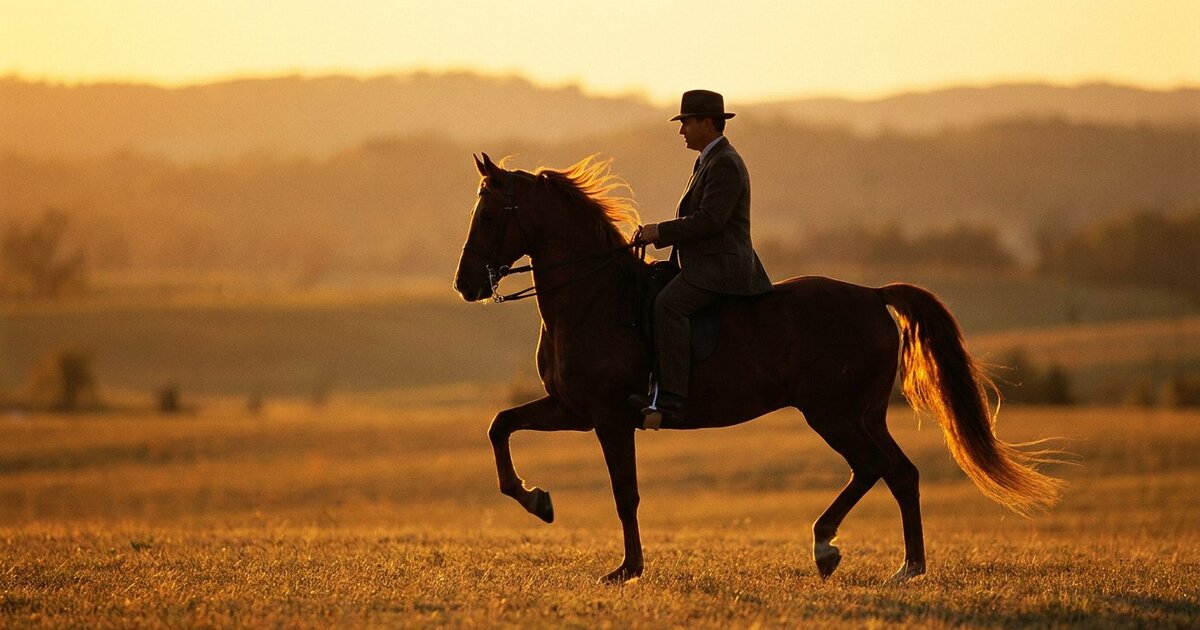
If you have ever watched a Tennessee Walking Horse cross a field and thought the rider looked like they were sitting on a rocking chair with wheels, you were not imagining it. This is a breed built around a single remarkable trick: a four-beat gait that covers ground faster than a walk while staying so smooth you could carry a full coffee cup through it. Add a temperament so steady that beginners and nervous riders gravitate to them, and you have one of the most beloved trail and show breeds in the United States. But the Tennessee Walking Horse also carries a harder story, one involving federal law, and any honest look at the breed has to include it. For more details, see our guide on Arabian Horse Breed Profile. For more details, see our guide on Suffolk Punch Breed Profile. For more details, see our guide on Shetland Pony Breed Guide. For more details, see our guide on Standardbred Horse Breed Profile.
Where did the Tennessee Walking Horse come from?
The breed was built in the limestone-rich Basin region of Middle Tennessee as a working utility horse for farmers and plantation owners who needed one animal that could plow in the morning, carry a rider comfortably over rough ground all afternoon, and pull a buggy to town. To get that all-around horse, breeders in the 1800s crossed a genetic melting pot of stock: Narragansett and Canadian Pacers, Standardbreds, Thoroughbreds, Morgans, and American Saddlebreds.
The foundation sire is a black stallion named Allan, later known as Allan F-1, foaled in 1886 and carrying Morgan and Hambletonian (Standardbred) blood. When the Tennessee Walking Horse Breeders' and Exhibitors' Association (TWHBEA) was founded in 1935 to formalize the breed, Allan was designated the number one foundation sire, and he is widely credited as the single greatest contributor to the modern Walking Horse. The studbook was later closed to outside blood, meaning that to be registered today a horse must have two registered Tennessee Walking Horse parents. By the mid-2000s more than 450,000 horses had been registered, making it one of the most popular breeds in the country.
What is the running walk, and how is it different from the flat walk?
The running walk is the signature gait, and it is an inherited, genetic trait rather than something trained into the horse. It is a smooth, four-beat gait, which means each of the four feet hits the ground at a separate, evenly spaced moment. That even footfall is what makes it feel glassy under saddle, because there is no moment of suspension where the horse leaves the ground and drops back down the way a trot does.
Here is the piece that makes people stare: overstride. In the running walk, the horse reaches so far forward that each hind foot lands well ahead of where the front foot on the same side just lifted off. That overstride commonly measures 6 to 18 inches, and in the show ring the longer the reach, the more it is rewarded. As the horse works, it nods its head in rhythm with the gait and often flicks its ears and clicks its teeth in time. Speed is the other difference between the breed's two flat gaits.
- Flat walk: a bold, even, ground-covering walk, typically around 4 to 8 miles per hour.
- Running walk: the same footfall pattern accelerated, commonly cited around 10 to 20 miles per hour, with the pronounced head nod and deep overstride.
The breed's third gait, the canter, is often called the "rocking chair" gait for its slow, high, rolling motion. Modern genetic research has traced natural gaitedness in horses to a mutation in a gene called DMRT3, sometimes nicknamed the "gait keeper," which helps explain why these smooth gaits run in families and cannot simply be taught to a horse that does not carry the trait.
What does a Tennessee Walking Horse look like?
A well-made Walking Horse looks refined and elegant but is still solidly built for a full day of work. Height ranges from about 14.3 to 17 hands, averaging near 15.2 hands, with most horses weighing between 900 and 1,200 pounds. The frame is designed to support that big overstriding gait.
Look for a long, graceful neck, a fairly short back, and long, sloping shoulders and hips that let the legs swing far forward and back. The bottom line of the body is often longer than the top line, which gives the hindquarters room to reach underneath. The head is refined with small, well-shaped ears and a bright eye, and the feet should be sound and well proportioned. Tennessee Walking Horses come in essentially every color and pattern, including black, bay, chestnut, roan, palomino, gray, and flashy tobiano and sabino patterns, so coat color tells you nothing about quality or bloodline. For more details, see our guide on Appaloosa Coat Patterns.
Why are Tennessee Walking Horses known for such calm minds?
Temperament is arguably the breed's second superpower after the gait. Walking Horses are consistently described as calm, docile, gentle, affectionate, and intelligent, and that reputation is a big reason they end up as first horses, family horses, and confidence-builders for riders coming back after a scare.
Part of this is simply what they were bred for. A plantation horse that spooked, jigged, or fought its rider for hours was useless, so generations of selection favored an even, willing disposition alongside the gait. Combine that steady mind with a ride so smooth it reduces the pounding on a rider's joints and back, and you understand why the breed is so popular with older riders, people managing back or hip issues, and anyone who just wants to enjoy the scenery instead of bracing for the next bounce. A calm temperament is never a guarantee, and every individual is different, but as a breed tendency it is real and well documented.
What are Tennessee Walking Horses used for today?
The single biggest job for the breed today is trail and pleasure riding, and it is easy to see why. A gait that eats up miles without beating up the rider is exactly what you want on a long trail day. Beyond the trail, you will find Walking Horses working as:
- Show horses, in both flat-shod pleasure classes and the controversial performance division discussed below.
- Family and beginner mounts, thanks to that steady temperament.
- Endurance and distance riding partners for owners who value a smooth, efficient gait over many hours.
- Driving and ranch or utility horses, echoing the breed's original all-purpose roots.
- Therapeutic and comfort mounts for riders who cannot tolerate the concussion of a trot.
The breed's own marketing line, that there is "a price range for every person's pocketbook," reflects how accessible and widespread these horses have become across North America.
Flat-shod versus performance: what is the "big lick," and why is it controversial?
This is where you have to understand the split inside the breed, because it is the most important thing a prospective owner can learn. Show Walking Horses fall into two broad camps, and they are not the same animal at all in how they are shod and presented.
The flat-shod horse, sometimes called a "sound" or "plantation" horse, wears normal keg horseshoes, moves in its natural gait, and is the version most trail and pleasure owners ride. The performance horse, which produces the exaggerated, extreme high-stepping action known as the "big lick," is shown in tall stacked pads (often called "stacks") built up under the front feet, along with weighted shoes and, historically, chains or other action devices around the pasterns.
| Feature | Flat-Shod / Sound Horse | Performance / "Big Lick" Horse |
|---|---|---|
| Shoeing | Standard flat keg shoes | Tall stacked pads, weighted shoes |
| Front-leg devices | None | Historically chains and action devices |
| Action | Natural running walk | Extreme, exaggerated high step |
| Soring risk | Low | Historically high, the focus of federal enforcement |
| Typical use | Trail, pleasure, family, most showing | A narrow slice of the show world |
It is worth saying plainly: the vast majority of Tennessee Walking Horses in the world are sound, flat-shod trail and pleasure horses, and the running walk itself is a beautiful, natural gait that requires no gimmicks. The controversy lives almost entirely in the performance division.
Soring and the Horse Protection Act: what every owner should know
Soring is the deliberate infliction of pain on a horse's front legs and hooves to force an even more exaggerated high step, and it is illegal. The methods have included applying caustic chemicals such as mustard oil, diesel, or kerosene to the pasterns, then wrapping them so the skin burns, as well as mechanical tricks like inserting hard objects between the pad and sole or trimming the hoof painfully short. A horse in pain snatches its sore front legs up and forward faster, producing the flashy action some judges have historically rewarded. That is the ugly engine behind the worst of the "big lick."
Congress responded with the Horse Protection Act of 1970, a federal law that makes it illegal to show, sell, or transport a horse that has been sored. Despite that, enforcement struggled for decades, in part because inspections at shows were long run by industry-affiliated inspectors rather than independent officials. In recent years the U.S. Department of Agriculture, through its Animal and Plant Health Inspection Service (APHIS), strengthened the rules. A final rule effective February 1, 2025 bans all action devices and nontherapeutic pads, prohibits substances on the lower legs at shows, and shifts inspections to APHIS-trained officials who palpate the front legs to check for pain responses. Major organizations including the U.S. Equestrian Federation and the National Walking Horse Association had already moved to prohibit stacks and action devices at their sanctioned shows.
None of this should scare you away from the breed. It should make you a more informed buyer. If you are shopping for a Tennessee Walking Horse, favor sound, flat-shod horses, ask about a horse's show history, look closely at the pasterns and hooves for scarring or sensitivity, and involve your veterinarian and farrier in any purchase decision. The running walk you fell in love with does not require a single ounce of pain to produce.
Frequently Asked Questions
Is the running walk natural or trained into the horse?
It is natural and inherited. Gaited breeds like the Tennessee Walking Horse carry a genetic basis for their smooth, four-beat gaits, linked to a mutation in the DMRT3 gene. Good training and conditioning refine and develop the gait, but you cannot install a running walk in a horse that does not carry the trait.
Are Tennessee Walking Horses good for beginners?
Often, yes. The breed is known for a calm, gentle, willing temperament, and the smooth gait is far easier and less intimidating than a bouncy trot. As with any horse, temperament varies by individual, so match the specific horse to the rider and get an experienced trainer or your veterinarian to help evaluate before you buy.
Is the "big lick" the same as soring?
Not automatically, but they are historically linked. "Big lick" describes the extreme, exaggerated high-stepping action shown in the performance division, produced with stacked pads and weighted shoes. Soring is the illegal practice of causing pain to force that action, and it has been documented in parts of that division, which is why federal law and USDA rules target it.
How fast is a running walk?
A flat walk usually runs around 4 to 8 miles per hour, while the running walk is commonly cited in the range of 10 to 20 miles per hour. The exact speed depends on the individual horse and its conditioning, but the point is that it covers serious ground while staying smooth enough to sit comfortably.
How big do Tennessee Walking Horses get?
Most stand between 14.3 and 17 hands, averaging around 15.2 hands, and weigh roughly 900 to 1,200 pounds. They are refined but solidly built, with a long neck, short back, and sloping shoulders that support their big overstriding gait.
What colors do Tennessee Walking Horses come in?
Essentially all of them. The breed appears in black, bay, brown, chestnut, roan, palomino, gray, and white, along with pinto patterns like tobiano and sabino. Coat color has no bearing on registration or gait quality, so choose the horse, not the color.
Sources
- Tennessee Walking Horse Breeders' and Exhibitors' Association (TWHBEA). "The Breed." twhbea.com.
- Oklahoma State University, Department of Animal and Food Sciences. "Tennessee Walking Horses," Breeds of Livestock. breeds.okstate.edu.
- U.S. Department of Agriculture, Animal and Plant Health Inspection Service (APHIS). "USDA Strengthens Regulations to Protect Horses from Soring Abuse" (final rule effective February 1, 2025). aphis.usda.gov.
- American Veterinary Medical Association. "APHIS bolsters regulations against horse soring." avma.org.
- The Horse Staff. "Horse Gaitedness: It's in the Genes" and "They've Got the Beat: Gaited Horses." The Horse (thehorse.com).